
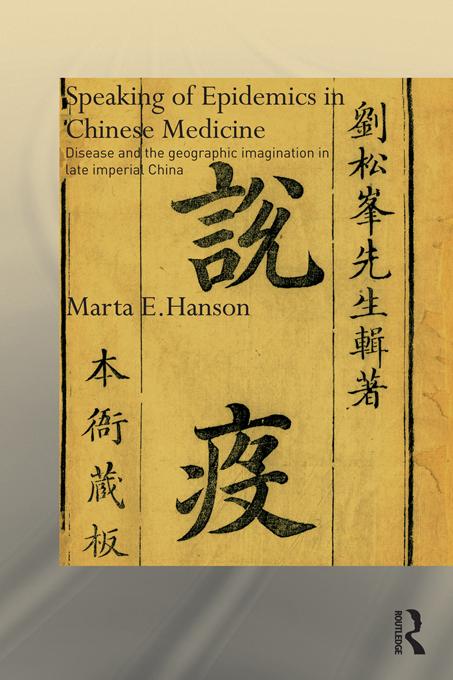
This book traces the history of the Chinese concept of "Warm diseases" (wenbing) from antiquity to the SARS epidemic. Following wenbing from its birth to maturity and even life in modern times Marta Hanson approaches the history of Chinese medicine from a new angle. She explores the possibility of replacing older narratives that stress progress and linear development with accounts that pay attention to geographic, intellectual, and cultural diversity. By doing so her book integrates the history of Chinese medicine into broader historical studies in a way that has not so far been attempted, and addresses the concerns of a readership much wider than that of Chinese medicine specialists.
The persistence of wenbing and other Chinese disease concepts in the present can be interpreted as resistance to the narrowing of meaning in modern biomedical nosology. Attention to conceptions of disease and space reveal a previously unexamined discourse the author calls the Chinese geographic imagination. Tracing the changing meanings of "Warm diseases" over two thousand years allows for the exploration of pre-modern understandings of the nature of epidemics, their intersection with this geographic imagination, and how conceptions of geography shaped the sociology of medical practice and knowledge in late imperial China.
Speaking of Epidemics in Chinese Medicine opens a new window on interpretive themes in Chinese cultural history as well as on contemporary studies of the history of science and medicine beyond East Asia.
Płać wygodnie kartą, Klarną, Apple Pay lub Google Pay. Nie jesteś zadowolony? Zawsze masz 14-dniową gwarancję zwrotu pieniędzy. Więcej przeczytasz w naszych warunkach. Masz pytania? Napisz do nas na hello@memmo.org.
Memmo ułatwia naukę – gdziekolwiek jesteś na świecie. U nas znajdziesz podręczniki i sprytne narzędzia do nauki w jednym miejscu: streszczenia, quizy, podcasty i fiszki. A do tego Ted, Twój kumpel do nauki, który odpowie na wszystko, co Cię nurtuje. Ponad 50 000 studentów już tu się uczy – stworzone, byś uczył się szybciej i mniej stresował.