
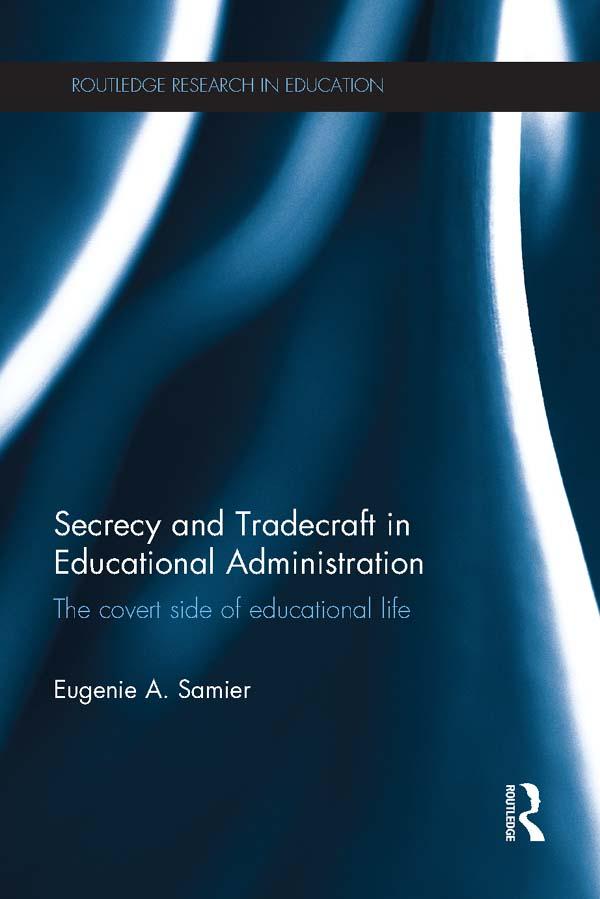
During the last couple of decades, there has been an expansion in a number of related and overlapping fields producing evidence of covert activities: toxic cultures, destructive leadership styles, micropolitics, ethical problems in organisations and administration, abusive power and authority, and many other topics of dysfunctional management and leadership studies that frequently make reference to secretive and deceptive behaviour.
In this book, Eugenie A. Samier draws on a range of disciplines including education, psychology, administration and management studies and organizational theory to provide a comprehensive examination of the ways in which organisational leaders and administrators carry out their roles in a secretive or deceptive manner. Samier presents a theory of covert administration that can be used to:
- provide an analysis and interpretation of secretive and deceptive activity
- inform decision-making both theoretically and practically
- offer a means of diagnosing errant management using secretive and deceptive practices
- provide a general set of guidelines for determining when clandestine activities may be legitimate and moral
Alongside a detailed presentation of the theory of covert administration, the book explores covert administration in practice, factors leading to it, and the results of attempts to combat its many forms. It will be key reading for researchers and postgraduates with an interest in the field, as well as administrators and policy makers.
Płać wygodnie kartą, Klarną, Apple Pay lub Google Pay. Nie jesteś zadowolony? Zawsze masz 14-dniową gwarancję zwrotu pieniędzy. Więcej przeczytasz w naszych warunkach. Masz pytania? Napisz do nas na hello@memmo.org.
Memmo ułatwia naukę – gdziekolwiek jesteś na świecie. U nas znajdziesz podręczniki i sprytne narzędzia do nauki w jednym miejscu: streszczenia, quizy, podcasty i fiszki. A do tego Ted, Twój kumpel do nauki, który odpowie na wszystko, co Cię nurtuje. Ponad 50 000 studentów już tu się uczy – stworzone, byś uczył się szybciej i mniej stresował.