
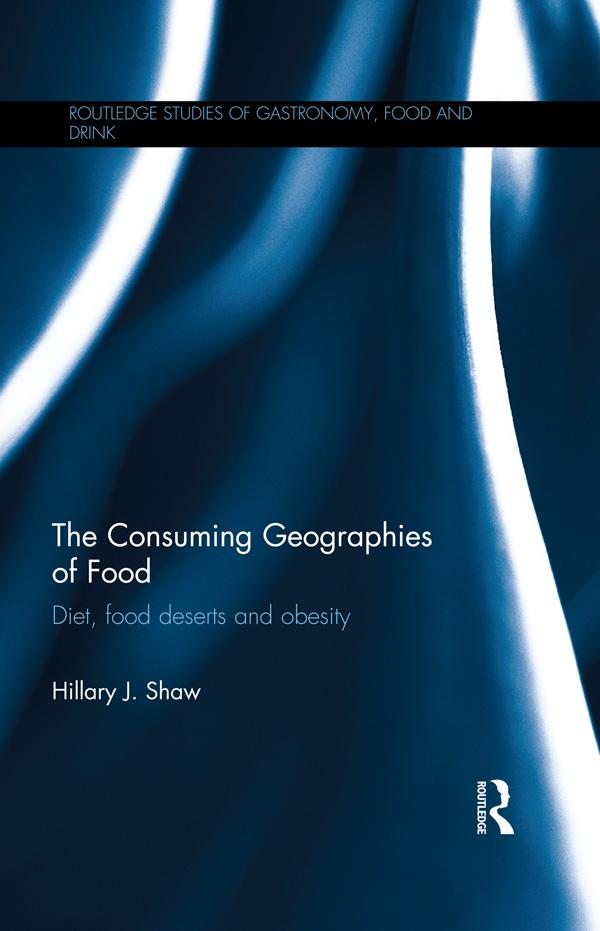
The consumption and distribution of food, as well as its production, has become a major public policy issue over the past few decades; what we eat is no longer merely a private matter but carries significant externalities for wider society. Its increasing significance within the public arena implies a dissonance regarding the boundaries of food; where do we draw the line between food as private and food as public? What are the rights of society to impinge upon individual food consumption, and what conflicts will ensue when this boundary is disputed?
The Consuming Geographies of Food explores these multiple issues of food across different regions of the world from the consumer’s perspective. It uniquely explicates the factors that lead customers towards certain typologies of consumption and towards certain types of retailing, offering a comprehensive review of the obesity problem, the phenomenon of food deserts and the issue of exclusion from a healthy diet. It then considers the effects of food on the consumer, the dynamic relationship between food and people, and the issue of food exclusion before concluding with possible futures for food consumption, from low-technology projects to high-technology scenarios.
Based on original research into food access, ethics and consumption in both developed and less-developed countries this book will be of interest to students, researchers and academics in the fields of geography, economics, hospitality health, marketing, nutrition and sociology.
Płać wygodnie kartą, Klarną, Apple Pay lub Google Pay. Nie jesteś zadowolony? Zawsze masz 14-dniową gwarancję zwrotu pieniędzy. Więcej przeczytasz w naszych warunkach. Masz pytania? Napisz do nas na hello@memmo.org.
Memmo ułatwia naukę – gdziekolwiek jesteś na świecie. U nas znajdziesz podręczniki i sprytne narzędzia do nauki w jednym miejscu: streszczenia, quizy, podcasty i fiszki. A do tego Ted, Twój kumpel do nauki, który odpowie na wszystko, co Cię nurtuje. Ponad 50 000 studentów już tu się uczy – stworzone, byś uczył się szybciej i mniej stresował.