
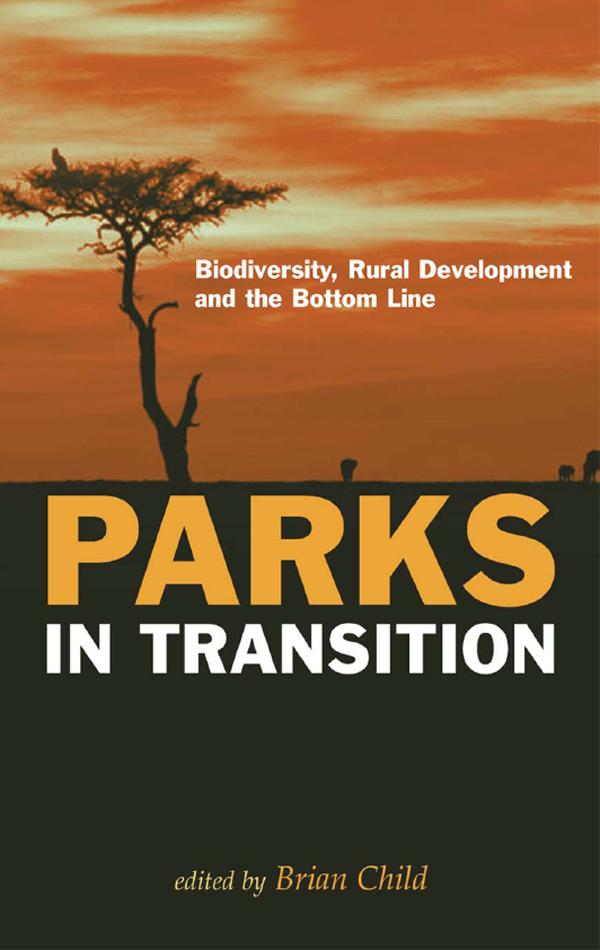
Parks face intense pressure from both environmental and developmental perspectives to conserve biodiversity and provide economic opportunities for rural communities. These imperatives are often in conflict, while potential solutions may be subject to theoretical and practical disagreement and complicated by pressing economic, political and cultural considerations.
Parks in Transition collects the work of the most distinguished scholars and practitioners in this field, drawing on insight from over 50 case studies and synthesizing them into lessons to guide park management in transitional economies where the challenges of poverty and governance can be severe.
The central message of the book is that parks are common property regimes that are supposed to serve society. It analyses and sheds light on the crucial questions arising from this perspective. If parks are set aside to serve poor people, should conservation demands over-rule demands for jobs and economic growth? Or will deliberately using parks as bridgeheads for better land use and engines for rural development produce more and better conservation? The issue that arises at all levels is that of accountability, including the problematic linkages between park authorities and political systems, and the question of how to measure park performance.
This book provides vital new insights for park management, regarding the relationship between conservation and commercialization, performance management, new systems of governance and management, and linkages between parks, landscape and the land-use economy.
Płać wygodnie kartą, Klarną, Apple Pay lub Google Pay. Nie jesteś zadowolony? Zawsze masz 14-dniową gwarancję zwrotu pieniędzy. Więcej przeczytasz w naszych warunkach. Masz pytania? Napisz do nas na hello@memmo.org.
Memmo ułatwia naukę – gdziekolwiek jesteś na świecie. U nas znajdziesz podręczniki i sprytne narzędzia do nauki w jednym miejscu: streszczenia, quizy, podcasty i fiszki. A do tego Ted, Twój kumpel do nauki, który odpowie na wszystko, co Cię nurtuje. Ponad 50 000 studentów już tu się uczy – stworzone, byś uczył się szybciej i mniej stresował.