
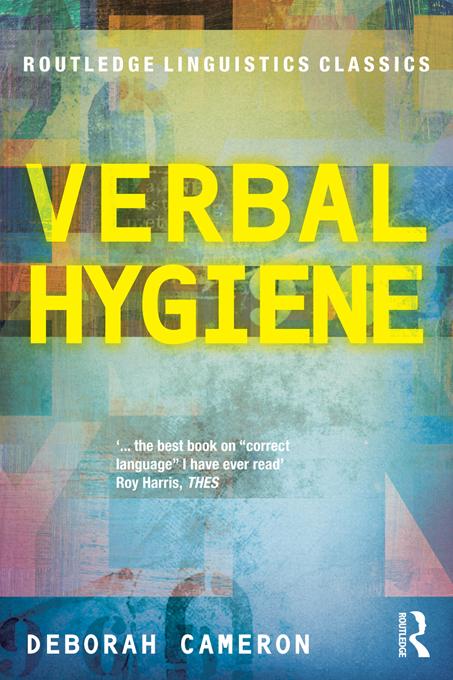
In Verbal Hygiene, Deborah Cameron takes a serious look at popular attitudes towards language and examines the practices by which people attempt to regulate its use. Instead of dismissing the practice of ‘verbal hygiene’, as a misguided and pernicious exercise, she argues that popular discourse about language values – good and bad, right and wrong – serves an important function for those engaged in it. A series of case studies deal with specific examples of verbal hygiene: the regulation of ‘style’ by editors, the teaching of English grammar in schools, the movements for and against so-called ‘politically correct’ language and the advice given to women on how they can speak more effectively.
This Routledge Linguistics Classic includes a new foreword which looks at how the issues covered in the case studies have developed over time and a new afterword which discusses new concerns which have emerged in the last 15 years, from the regimentation of language in the workplace to panics about immigration and terrorism, which are expressed in linguistic terms.
Addressed to linguists, to professional language-users of all kinds, and to anyone interested in language and culture, Verbal Hygiene calls for legitimate concerns about language and value to be discussed, by experts and lay-speakers alike, in a rational and critical spirit.
Płać wygodnie kartą, Klarną, Apple Pay lub Google Pay. Nie jesteś zadowolony? Zawsze masz 14-dniową gwarancję zwrotu pieniędzy. Więcej przeczytasz w naszych warunkach. Masz pytania? Napisz do nas na hello@memmo.org.
Memmo ułatwia naukę – gdziekolwiek jesteś na świecie. U nas znajdziesz podręczniki i sprytne narzędzia do nauki w jednym miejscu: streszczenia, quizy, podcasty i fiszki. A do tego Ted, Twój kumpel do nauki, który odpowie na wszystko, co Cię nurtuje. Ponad 50 000 studentów już tu się uczy – stworzone, byś uczył się szybciej i mniej stresował.