
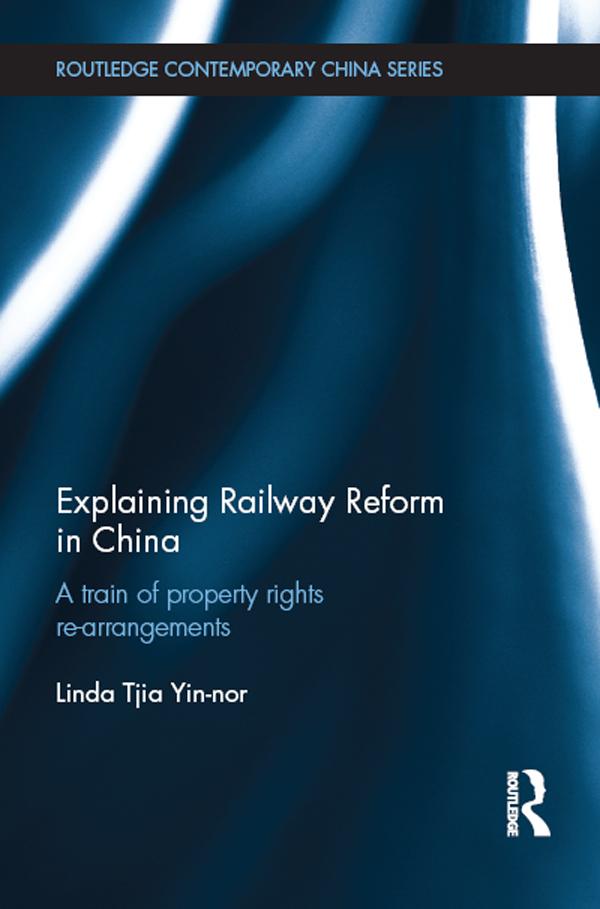
Having been state-owned for decades, the railway reform in China confused many people, particularly in terms of its ownership and property rights arrangements. Western literature always prescribes that the best model for railway reform is privatization. China’s leadership has also enunciated the state’s determination to re-arrange property rights and rejuvenate corporate governance. But is China’s railway reform really a story of convergence and will the Chinese government follow the western model of railway reform?
Addressing these questions, this book provides a positive explanation of the reform in China’s railway sector between 1978 and the dissolution of the Ministry of Railways. It bridges the socialist reform and transport policy literature, and studies the empirical changes of the property rights arrangements in China’s railway system. Refuting the convergence theory, it concludes that the cyclical reform policies of decentralization and re-centralization were actually an exploratory and interactive mechanism of "assets discovery" and "assets recovery". This in-depth study is based on 21 face-to-face interviews with railway cadres as well as field trips to collect first-hand information in Guangzhou, Beijing, Shanghai, Tianjin and Wuhan.
As one of the only empirical studies on the reform of the railway sector in China, this book will be of interest to students and scholars of China studies, Transport studies and Political Economy.
Płać wygodnie kartą, Klarną, Apple Pay lub Google Pay. Nie jesteś zadowolony? Zawsze masz 14-dniową gwarancję zwrotu pieniędzy. Więcej przeczytasz w naszych warunkach. Masz pytania? Napisz do nas na hello@memmo.org.
Memmo ułatwia naukę – gdziekolwiek jesteś na świecie. U nas znajdziesz podręczniki i sprytne narzędzia do nauki w jednym miejscu: streszczenia, quizy, podcasty i fiszki. A do tego Ted, Twój kumpel do nauki, który odpowie na wszystko, co Cię nurtuje. Ponad 50 000 studentów już tu się uczy – stworzone, byś uczył się szybciej i mniej stresował.