
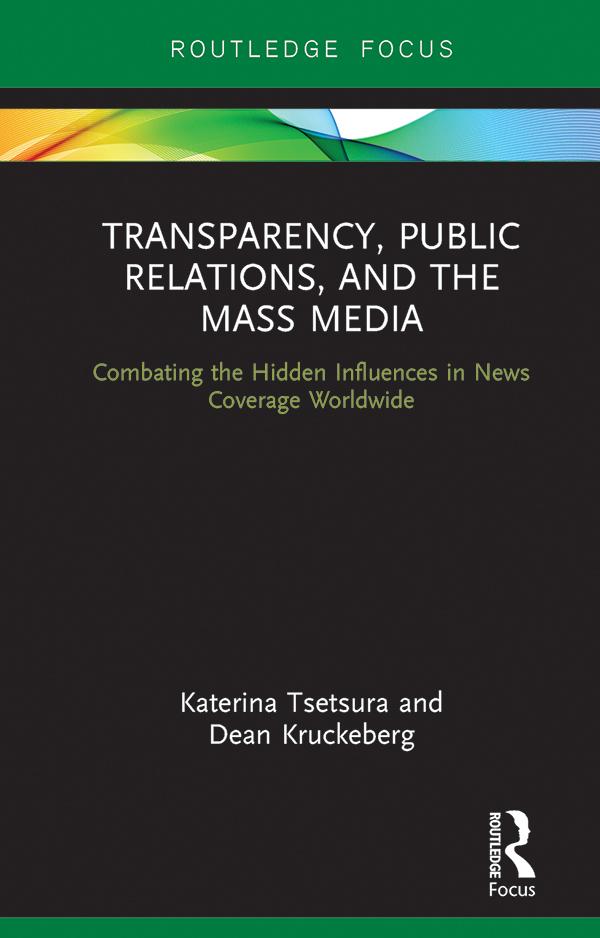
This book is about media transparency and good-faith attempts of honesty by both the sources and the gate-keepers of news and other information that the mass media present as being unbiased. Specifically, this book provides a theoretical framework for understanding media transparency and its antithesis--media opacity--by analyzing extensive empirical data that the authors have collected from more than 60 countries throughout the world. The practice of purposeful media opacity, which exists to greater or lesser extents worldwide, is a powerful hidden influencer of the ostensibly impartial media gate-keepers whose publicly perceived role is to present news and other information based on these gate-keepers’ perception of this information’s truthfulness. Empirical data that the authors have collected globally illustrate the extent of media opacity practices worldwide and note its pervasiveness in specific regions and countries. The authors examine, from multiple perspectives, the complex question of whether media opacity should be categorically condemned as being universally inappropriate and unethical or whether it should be accepted—or at least tolerated—in some situations and environments.
Płać wygodnie kartą, Klarną, Apple Pay lub Google Pay. Nie jesteś zadowolony? Zawsze masz 14-dniową gwarancję zwrotu pieniędzy. Więcej przeczytasz w naszych warunkach. Masz pytania? Napisz do nas na hello@memmo.org.
Memmo ułatwia naukę – gdziekolwiek jesteś na świecie. U nas znajdziesz podręczniki i sprytne narzędzia do nauki w jednym miejscu: streszczenia, quizy, podcasty i fiszki. A do tego Ted, Twój kumpel do nauki, który odpowie na wszystko, co Cię nurtuje. Ponad 50 000 studentów już tu się uczy – stworzone, byś uczył się szybciej i mniej stresował.