
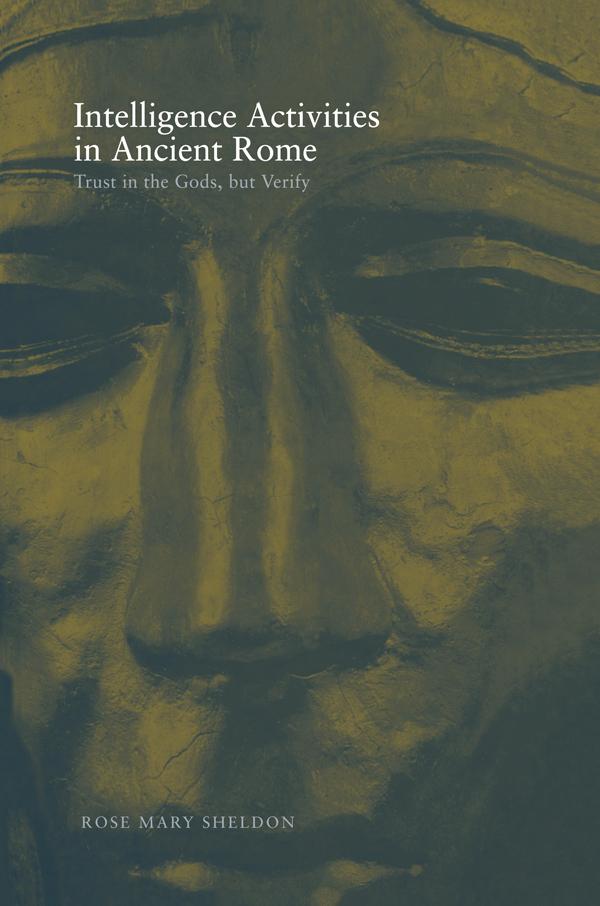
Professor Sheldon uses the modern concept of the intelligence cycle to trace intelligence activities in Rome whether they were done by private citizens, the government, or the military.
Examining a broad range of activities the book looks at the many types of espionage tradecraft that have left their traces in the ancient sources:
* intelligence and counterintelligence gathering
* covert action
* clandestine operations
* the use of codes and ciphers
Dispelling the myth that such activities are a modern invention, Professor Sheldon explores how these ancient spy stories have modern echoes as well. What is the role of an intelligence service in a free republic? When do the security needs of the state outweigh the rights of the citizen? If we cannot trust our own security services, how safe can we be? Although protected by the Praetorian Guard, seventy-five percent of Roman emperors died by assassination or under attack by pretenders to his throne. Who was guarding the guardians?
For students of Rome, and modern social studies too - this will provide a fascinating read.
Płać wygodnie kartą, Klarną, Apple Pay lub Google Pay. Nie jesteś zadowolony? Zawsze masz 14-dniową gwarancję zwrotu pieniędzy. Więcej przeczytasz w naszych warunkach. Masz pytania? Napisz do nas na hello@memmo.org.
Memmo ułatwia naukę – gdziekolwiek jesteś na świecie. U nas znajdziesz podręczniki i sprytne narzędzia do nauki w jednym miejscu: streszczenia, quizy, podcasty i fiszki. A do tego Ted, Twój kumpel do nauki, który odpowie na wszystko, co Cię nurtuje. Ponad 50 000 studentów już tu się uczy – stworzone, byś uczył się szybciej i mniej stresował.