
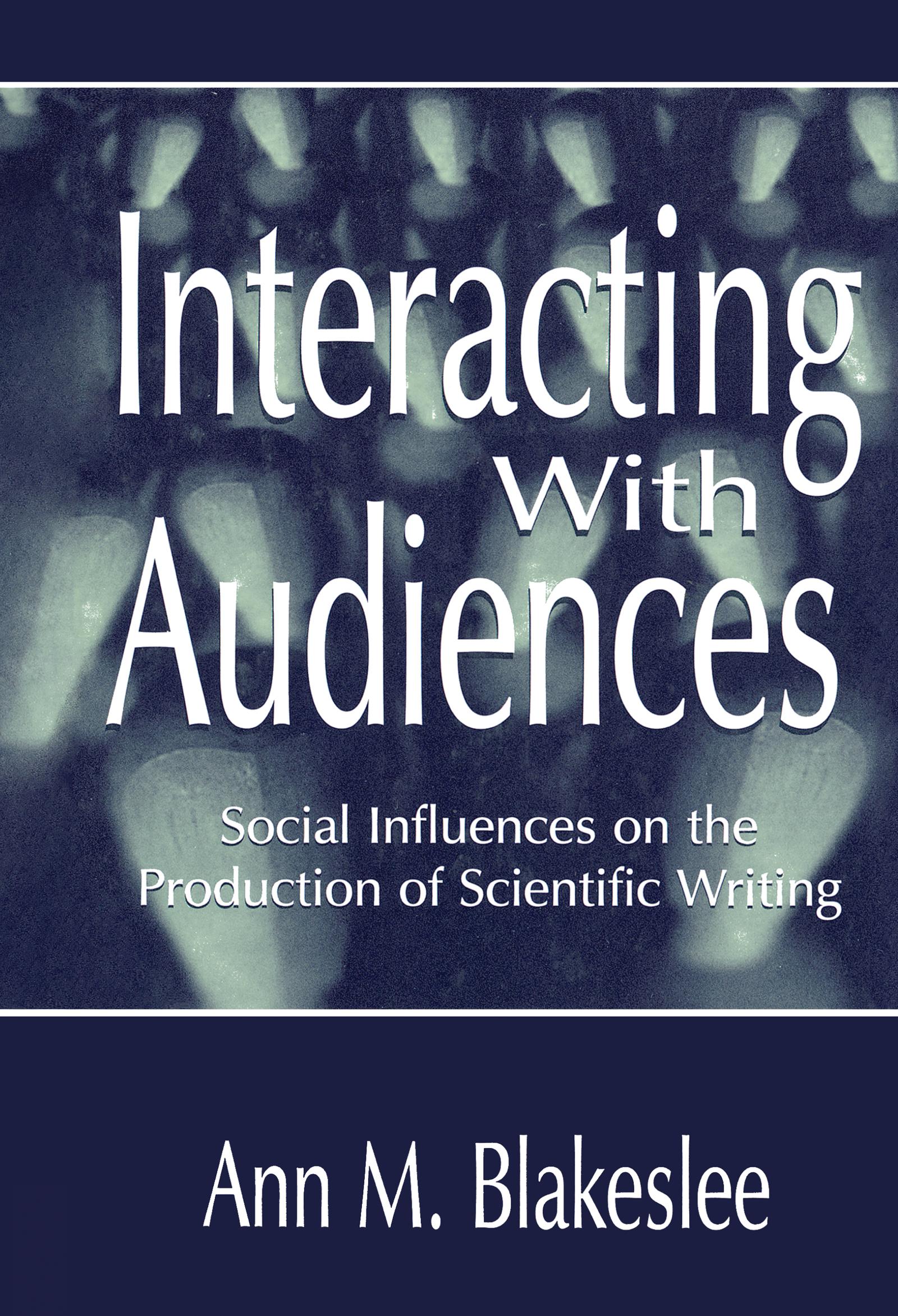
This distinctive monograph examines the dynamic rhetorical processes by which scientists shape, negotiate, and position their work within an interdisciplinary community. Author Ann M. Blakeslee studies the everyday rhetorical practices of a group of condensed matter theoretical physicists, and presents here the first substantial qualitative study of the planning and implementation of discursive practices by a group of scientists. This volume also represents one of the first studies to use situated cognition and learning theory to study how knowledge of a domain's discursive practices is acquired by newcomers.
Unlike previous studies of scientists' rhetorical practices, which have focused primarily on the finished or published texts, Blakeslee's involvement with the physicists as they engaged in the composing processes--from jotting down planning notes through publishing a scientific paper--suggests an alternative view of audience based on cooperative interaction between authors and their interlocutors. From this innovative perspective, functional knowledge of audiences comes only by entering into some community of practice, in which readers also become self-defining interlocutors and even participants in joint projects. Blakeslee's research follows the physicists' work into communal, interactive dynamics, looking at their overt attempts to get feedback from members of their audiences, what that feedback was, and how they responded to it.
This work addresses and extends a model for audience analysis that consists of two primary operations: getting to know and understand one's interlocutors, and determining how to reach and influence them. In doing so, it offers important insights into the dissemination of scientific information, and thus will be of great interest to scholars and students in the areas of rhetoric of science and technology, composition, rhetorical theory, and scientific writing.
Płać wygodnie kartą, Klarną, Apple Pay lub Google Pay. Nie jesteś zadowolony? Zawsze masz 14-dniową gwarancję zwrotu pieniędzy. Więcej przeczytasz w naszych warunkach. Masz pytania? Napisz do nas na hello@memmo.org.
Memmo ułatwia naukę – gdziekolwiek jesteś na świecie. U nas znajdziesz podręczniki i sprytne narzędzia do nauki w jednym miejscu: streszczenia, quizy, podcasty i fiszki. A do tego Ted, Twój kumpel do nauki, który odpowie na wszystko, co Cię nurtuje. Ponad 50 000 studentów już tu się uczy – stworzone, byś uczył się szybciej i mniej stresował.