
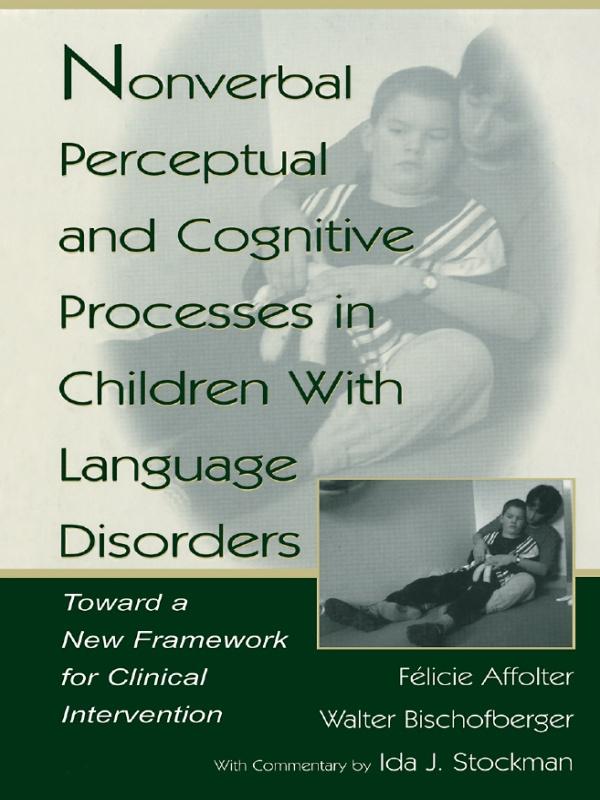
A growing body of literature is suggesting that many children with language disorders and delays--even those with so-called specific language impairment--have difficulties in other domains as well. In this pathbreaking book, the authors draw on more than 40 years of research and clinical observations of populations ranging from various groups of children to adults with brain damage to construct a comprehensive model for the development of the interrelated skills involved in language performance, and trace the crucial implications of this model for intervention. Early tactual feedback, they argue, is more critical for the perceptual/cognitive organization of experiences that constitutes a foundation for language development than either visual or auditory input, and the importance of tactually-anchored nonverbal interaction cannot be ignored if efforts at treatment are to be successful.
All those professionally involved in work with children and adults with language problems will find the authors' model provocative and useful.
Płać wygodnie kartą, Klarną, Apple Pay lub Google Pay. Nie jesteś zadowolony? Zawsze masz 14-dniową gwarancję zwrotu pieniędzy. Więcej przeczytasz w naszych warunkach. Masz pytania? Napisz do nas na hello@memmo.org.
Memmo ułatwia naukę – gdziekolwiek jesteś na świecie. U nas znajdziesz podręczniki i sprytne narzędzia do nauki w jednym miejscu: streszczenia, quizy, podcasty i fiszki. A do tego Ted, Twój kumpel do nauki, który odpowie na wszystko, co Cię nurtuje. Ponad 50 000 studentów już tu się uczy – stworzone, byś uczył się szybciej i mniej stresował.