
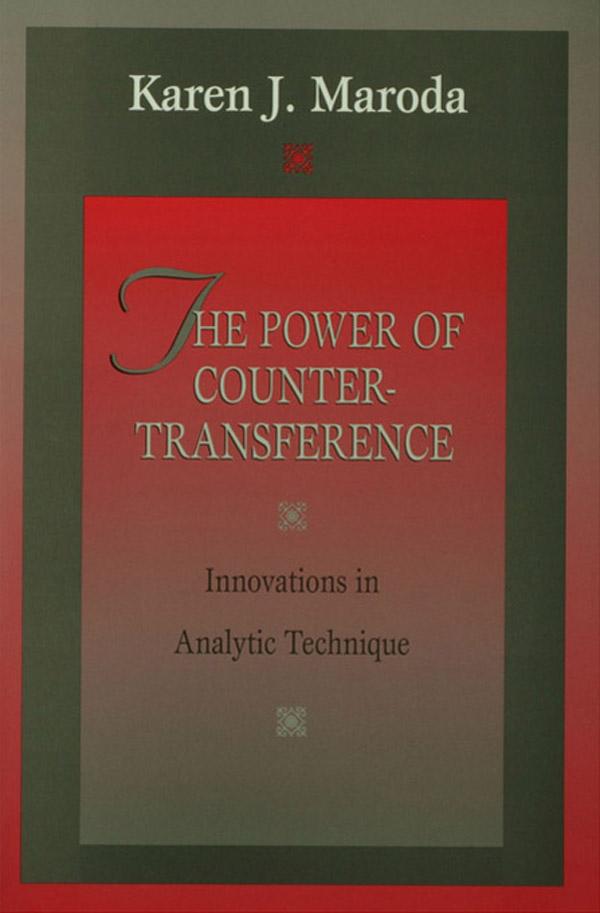
A signpost of the relational turn in contemporary psychoanalysis, Karen Maroda's The Power of Countertransference, published in 1991, is perhaps the first systematic effort to integrate the need for mutual emotional exchanges, which may include the analyst's own self-disclosures, into an interactive model of psychoanalytic practice. Maroda's call for emotional honesty and affective self-disclosure had an immediate impact on the field and led Harold Searles to comment, "If we follow the example set by Maroda, we shall be minimally likely to 'act in' our emotions in our sessions with our patients. They will benefit greatly as a result; we practitioners shall benefit; and the profession of psychoanalysis and psychoanalytic therapy will become healthier and stronger than it is at present." This revised edition includes a new Foreword by Lewis Aron and an Afterword in which Maroda clarifies her own position and comments on the evolution of psychoanalytic technique since the publication of The Power of Countertransference.
Płać wygodnie kartą, Klarną, Apple Pay lub Google Pay. Nie jesteś zadowolony? Zawsze masz 14-dniową gwarancję zwrotu pieniędzy. Więcej przeczytasz w naszych warunkach. Masz pytania? Napisz do nas na hello@memmo.org.
Memmo ułatwia naukę – gdziekolwiek jesteś na świecie. U nas znajdziesz podręczniki i sprytne narzędzia do nauki w jednym miejscu: streszczenia, quizy, podcasty i fiszki. A do tego Ted, Twój kumpel do nauki, który odpowie na wszystko, co Cię nurtuje. Ponad 50 000 studentów już tu się uczy – stworzone, byś uczył się szybciej i mniej stresował.