
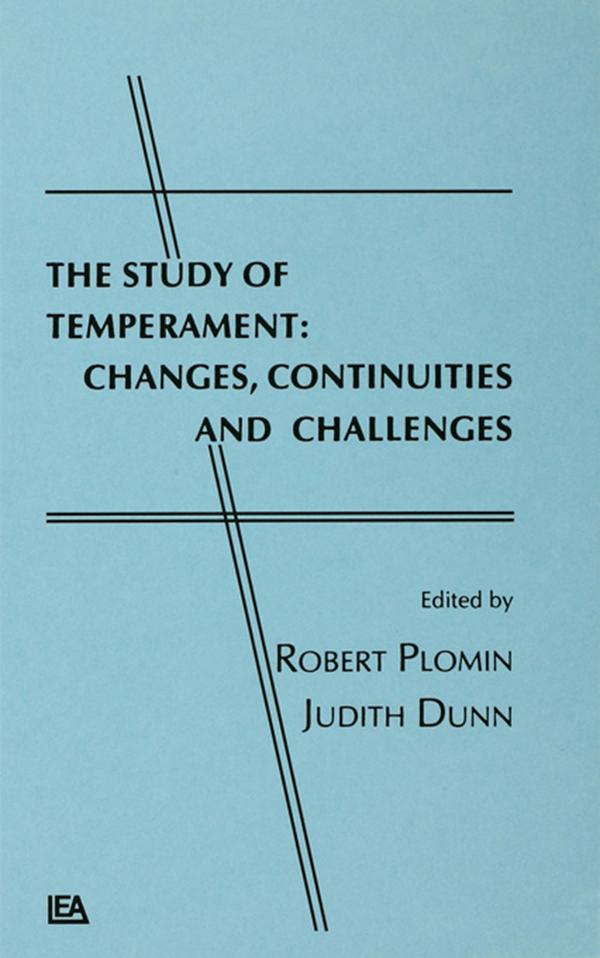
First Published in 1986. The modern history of temperament research began in the late 1950s with the New York Longitudinal Study. Twenty-five years later, temperament has become a major focus of research on early developing emotional and social traits. The impetus for this growth in temperament research stems from the merging of several shifts in child development research: from a view of the child as passive to a model of the child as an active, transacting partner with the environment; increasing interest in individual differences in development; an expansion of research on emotional and social development; and a clear change from an exclusive reliance on environmental explanations of developmental differences to a more balanced perspective that recognizes the possibility of biological as well as environmental influences. Most stimulating is the multidisciplinary flavor of temperament research-clinicians, infancy researchers, cultural anthropologists, and behavioral geneticists have, each for their own reasons, been drawn to the study of temperament. Each of these fields is represented in the present volume, which provides the first overview of the growing field of temperament.
Płać wygodnie kartą, Klarną, Apple Pay lub Google Pay. Nie jesteś zadowolony? Zawsze masz 14-dniową gwarancję zwrotu pieniędzy. Więcej przeczytasz w naszych warunkach. Masz pytania? Napisz do nas na hello@memmo.org.
Memmo ułatwia naukę – gdziekolwiek jesteś na świecie. U nas znajdziesz podręczniki i sprytne narzędzia do nauki w jednym miejscu: streszczenia, quizy, podcasty i fiszki. A do tego Ted, Twój kumpel do nauki, który odpowie na wszystko, co Cię nurtuje. Ponad 50 000 studentów już tu się uczy – stworzone, byś uczył się szybciej i mniej stresował.
Może Ci się spodobać
Kup książkę0