
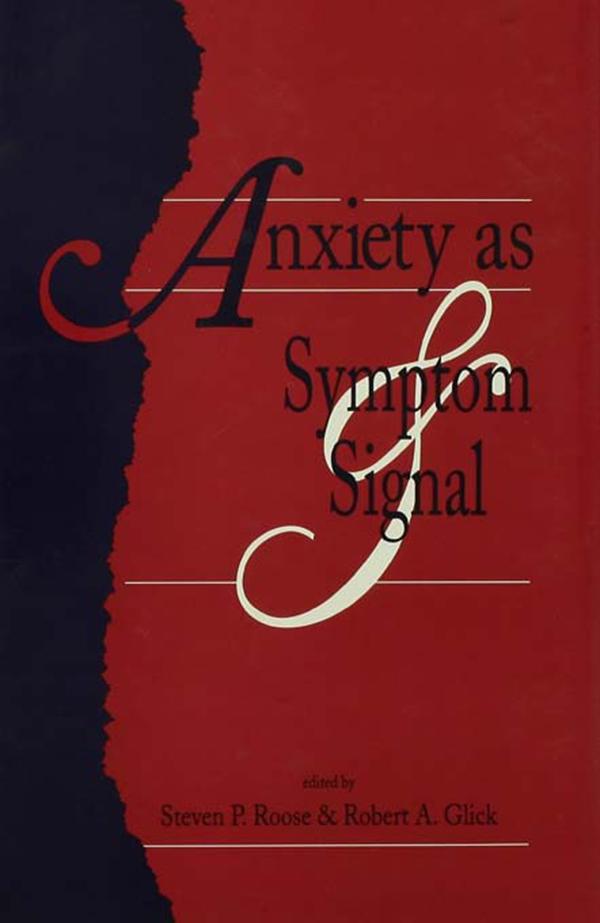
The concept of anxiety has long held a central place in psychoanalytic theories of mind and treatment. Yet, in recent years, data from the neurosciences and from pharmacological studies have posed a compelling challenge to psychoanalytic models of anxiety. One major outcome of these studies is the realization that anxiety both organizes and disorganizes, that it can be both symptom and signal. In Anxiety as Symptom and Signal, editors Steven Roose and Robert Glick have brought together distinguished contributors to address these different dimensions of anxiety. A section of original papers on "Anxiety as Symptom" covers evolutionary, neuroanatomical, genetic, and developmental perspectives. A complementary section on "Anxiety as Signal" focuses on the meanings and functions of anxiety in the clinical process; contributions address anxiety in its ego-psychological, intersubjective, and relational dimensions.
The illuminating, readable collection will broaden clinicians' awareness of the diverse research findings that now inform our understanding of anxiety. No less importantly, it will deepen their appreciation of the richly variegated ways that anxiety can shape, and be shaped by, the clinical process.
Płać wygodnie kartą, Klarną, Apple Pay lub Google Pay. Nie jesteś zadowolony? Zawsze masz 14-dniową gwarancję zwrotu pieniędzy. Więcej przeczytasz w naszych warunkach. Masz pytania? Napisz do nas na hello@memmo.org.
Memmo ułatwia naukę – gdziekolwiek jesteś na świecie. U nas znajdziesz podręczniki i sprytne narzędzia do nauki w jednym miejscu: streszczenia, quizy, podcasty i fiszki. A do tego Ted, Twój kumpel do nauki, który odpowie na wszystko, co Cię nurtuje. Ponad 50 000 studentów już tu się uczy – stworzone, byś uczył się szybciej i mniej stresował.