
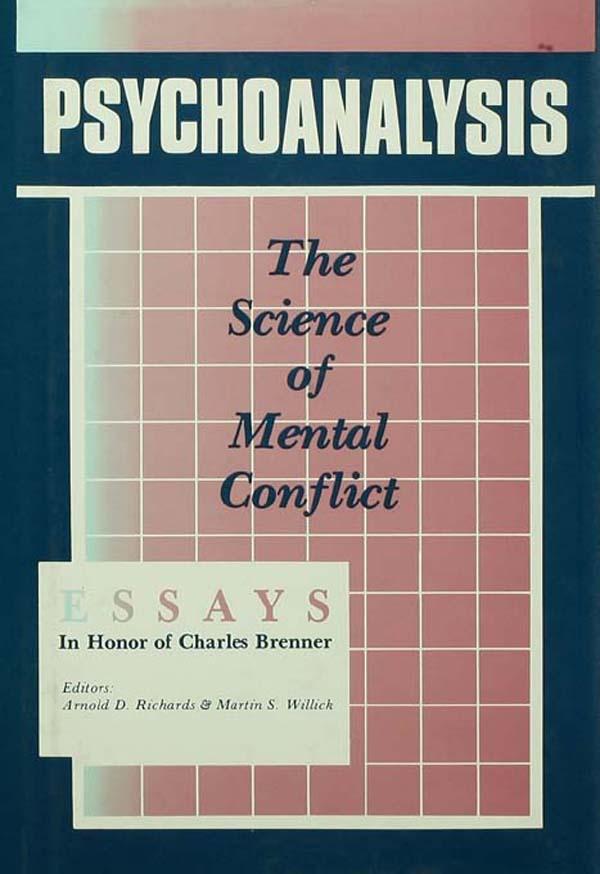
Over the course of three decades, in works spanning questions of theory, technique, and clinical practice, Charles Brenner has emerged as one of the preeminent analysts of his generation, a thinker whose probing estimation of mental conflict has promoted the evolutionary growth of analysis as theory even as it has clarified the clinical import of analysis as therapy. In Psychoanalysis: The Science of Mental Conflict, distinguished theorists and clinicians pay homage to Brenner by presenting original essays that converge in their estimation of analysis as "the science of mental conflict."
In sections that encompass "The Theory of Psychoanalysis," "The Concepts of Psychoanalysis," "The Technique of Psychoanalysis," "The Clinical Practice of Psychoanalysis," "The Teaching of Psychoanalysis," and "The Application of Psychanalysis," the contributors show how the perspective of conflict - broadened and refined by the clinical findings of recent decades - offers a vehicle for creative theory-building and, as such, a conceptual handle for apprising the indications for, and action of, psychoanalytic therapy. Arnold Richards' comprehensive overview of Brenner's ranging contributions to theory and practice, along with Martin Willick's critical introductions to the various sections of the book, round out a collections whose scope is complimented by its unusual coherence and thematic unity.
Taken together, the essays comprising this book present readers with a cogent summary of current psychoanalytic thinking, along with an exciting preview of where it is heading in the future. As such, this volume will be welcomed not only by analysts, but by all mental health professionals who draw on, and learn from, the psychoanalytic assessment of conflict in mental life. It is a work that follows Brenner's own example in promoting the critical understanding of a generation of theorists, clinicians, and educators.
Płać wygodnie kartą, Klarną, Apple Pay lub Google Pay. Nie jesteś zadowolony? Zawsze masz 14-dniową gwarancję zwrotu pieniędzy. Więcej przeczytasz w naszych warunkach. Masz pytania? Napisz do nas na hello@memmo.org.
Memmo ułatwia naukę – gdziekolwiek jesteś na świecie. U nas znajdziesz podręczniki i sprytne narzędzia do nauki w jednym miejscu: streszczenia, quizy, podcasty i fiszki. A do tego Ted, Twój kumpel do nauki, który odpowie na wszystko, co Cię nurtuje. Ponad 50 000 studentów już tu się uczy – stworzone, byś uczył się szybciej i mniej stresował.