
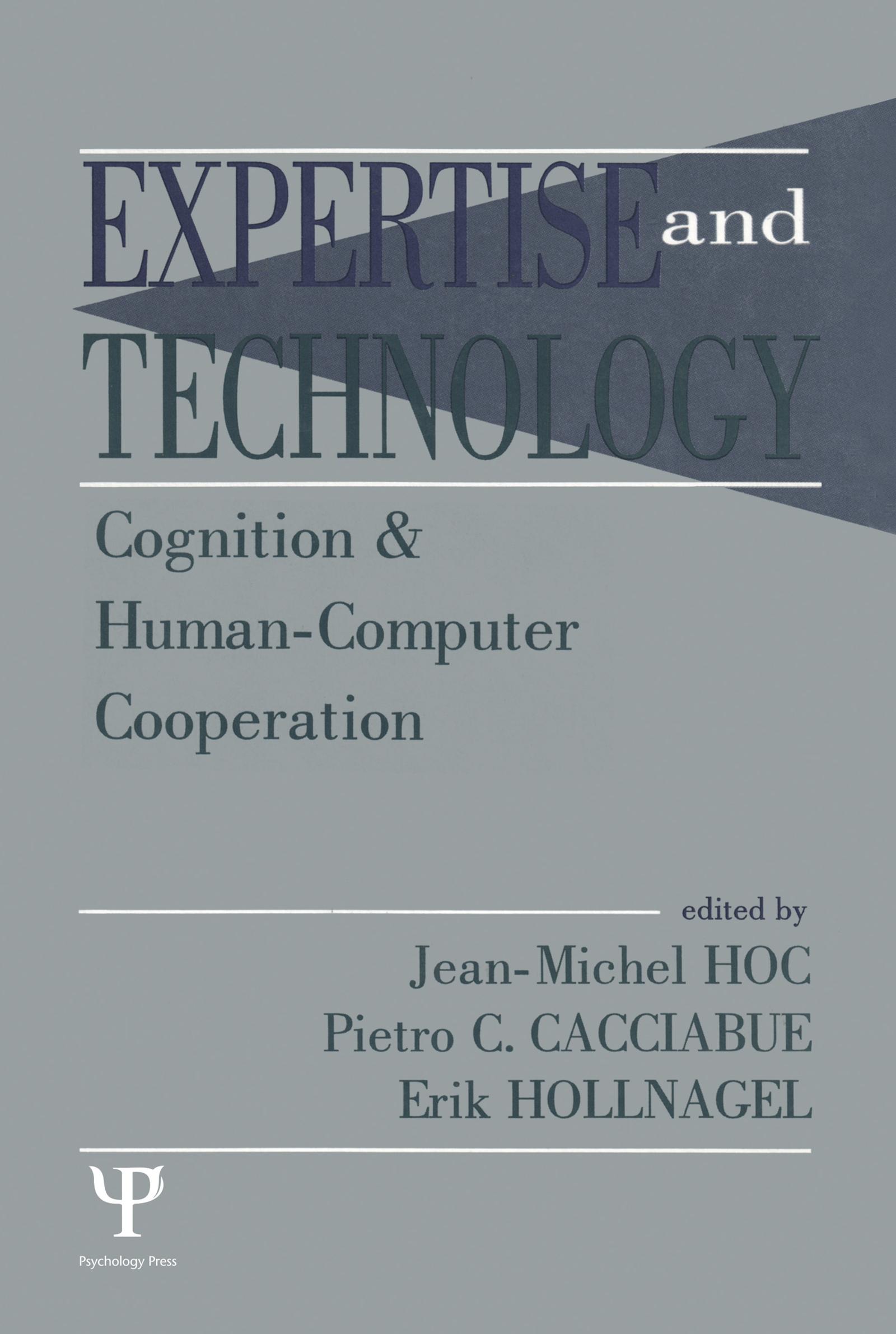
Technological development has changed the nature of industrial production so that it is no longer a question of humans working with a machine, but rather that a joint human machine system is performing the task. This development, which started in the 1940s, has become even more pronounced with the proliferation of computers and the invasion of digital technology in all wakes of working life. It may appear that the importance of human work has been reduced compared to what can be achieved by intelligent software systems, but in reality, the opposite is true: the more complex a system, the more vital the human operator's task. The conditions have changed, however, whereas people used to be in control of their own tasks, today they have become supervisors of tasks which are shared between humans and machines.
A considerable effort has been devoted to the domain of administrative and clerical work and has led to the establishment of an internationally based human-computer interaction (HCI) community at research and application levels. The HCI community, however, has paid more attention to static environments where the human operator is in complete control of the situation, rather than to dynamic environments where changes may occur independent of human intervention and actions.
This book's basic philosophy is the conviction that human operators remain the unchallenged experts even in the worst cases where their working conditions have been impoverished by senseless automation. They maintain this advantage due to their ability to learn and build up a high level of expertise -- a foundation of operational knowledge -- during their work. This expertise must be taken into account in the development of efficient human-machine systems, in the specification of training requirements, and in the identification of needs for specific computer support to human actions. Supporting this philosophy, this volume
*deals with the main features of cognition in dynamic environments, combining issues coming from empirical approaches of human cognition and cognitive simulation,
*addresses the question of the development of competence and expertise, and
*proposes ways to take up the main challenge in this domain -- the design of an actual cooperation between human experts and computers of the next century.
Płać wygodnie kartą, Klarną, Apple Pay lub Google Pay. Nie jesteś zadowolony? Zawsze masz 14-dniową gwarancję zwrotu pieniędzy. Więcej przeczytasz w naszych warunkach. Masz pytania? Napisz do nas na hello@memmo.org.
Memmo ułatwia naukę – gdziekolwiek jesteś na świecie. U nas znajdziesz podręczniki i sprytne narzędzia do nauki w jednym miejscu: streszczenia, quizy, podcasty i fiszki. A do tego Ted, Twój kumpel do nauki, który odpowie na wszystko, co Cię nurtuje. Ponad 50 000 studentów już tu się uczy – stworzone, byś uczył się szybciej i mniej stresował.