
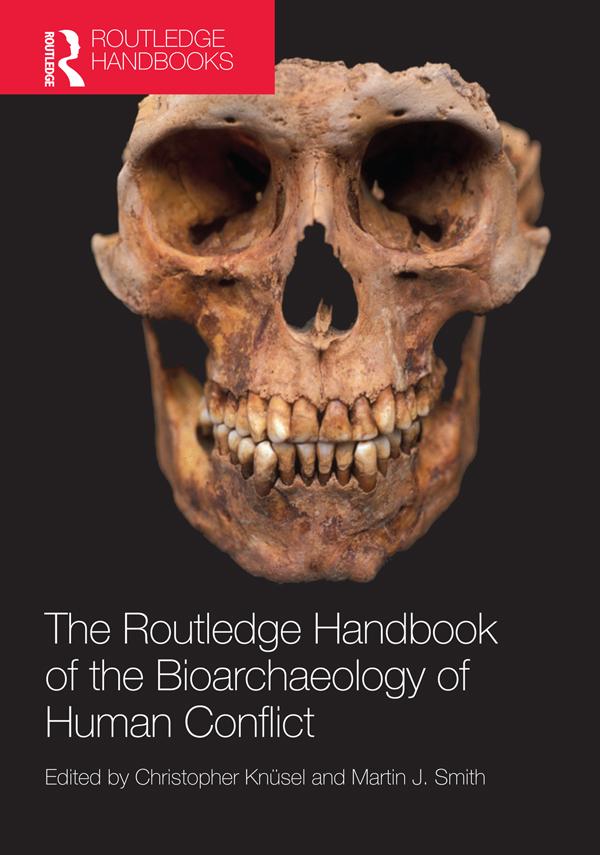
If human burials were our only window onto the past, what story would they tell? Skeletal injuries constitute the most direct and unambiguous evidence for violence in the past. Whereas weapons or defenses may simply be statements of prestige or status and written sources are characteristically biased and incomplete, human remains offer clear and unequivocal evidence of physical aggression reaching as far back as we have burials to examine.
Warfare is often described as ‘senseless’ and as having no place in society. Consequently, its place in social relations and societal change remains obscure. The studies in The Routledge Handbook of the Bioarchaeology of Human Conflict present an overview of the nature and development of human conflict from prehistory to recent times as evidenced by the remains of past people themselves in order to explore the social contexts in which such injuries were inflicted. A broadly chronological approach is taken from prehistory through to recent conflicts, however this book is not simply a catalogue of injuries illustrating weapon development or a narrative detailing ‘progress’ in warfare but rather provides a framework in which to explore both continuity and change based on a range of important themes which hold continuing relevance throughout human development.
Płać wygodnie kartą, Klarną, Apple Pay lub Google Pay. Nie jesteś zadowolony? Zawsze masz 14-dniową gwarancję zwrotu pieniędzy. Więcej przeczytasz w naszych warunkach. Masz pytania? Napisz do nas na hello@memmo.org.
Memmo ułatwia naukę – gdziekolwiek jesteś na świecie. U nas znajdziesz podręczniki i sprytne narzędzia do nauki w jednym miejscu: streszczenia, quizy, podcasty i fiszki. A do tego Ted, Twój kumpel do nauki, który odpowie na wszystko, co Cię nurtuje. Ponad 50 000 studentów już tu się uczy – stworzone, byś uczył się szybciej i mniej stresował.