
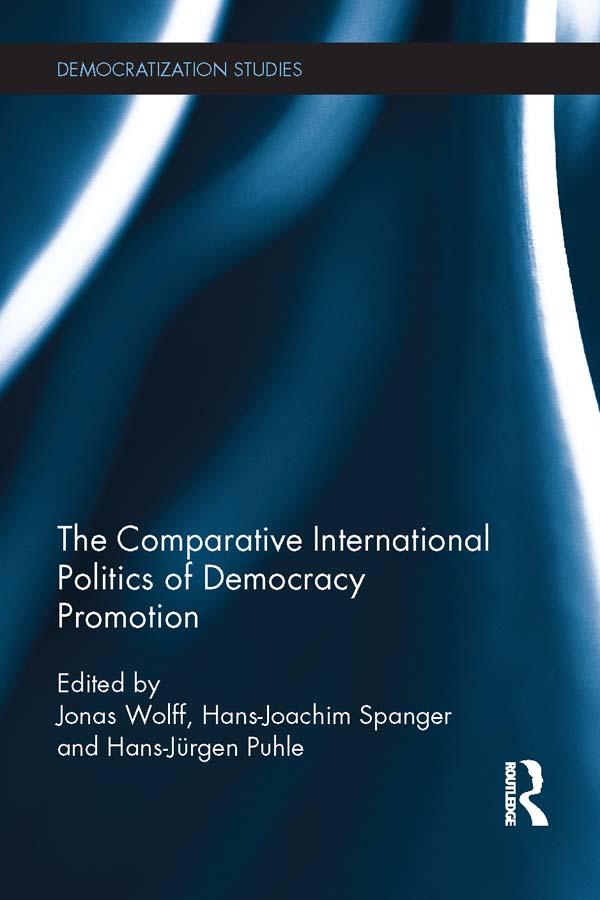
Though scholarly attention to democracy promotion is increasing, there is still little comparative and theoretically-based work on the protagonists of democracy promotion. This book investigates the motives that drive democracy promotion in a comparative and theoretically oriented manner, exploring how democracy promoters deal with conflicting objectives and the factors that shape their behaviour. It also addresses the more policy-oriented debate on the contemporary challenges to democracy promotion, focusing on US and German policies towards three kinds of challenges: the emergence of ‘radical’ leftist governments in Bolivia and Ecuador, the political rise of Islamist movements in Turkey and Pakistan, and the consolidation of (semi-)authoritarian rule in Belarus and Russia. In each case, North-Western democracy promoters have been confronted with serious conflicts of objectives between security, economic interests and democracy promotion. The analysis and comparison of such situations in which democracy promoters have to deal with competing objectives and make tough decisions provides powerful evidence as to the factors that shape democracy promotion.
The Comparative International Politics of Democracy Promotion will be of interest to students and scholars of international relations, comparative politics, democratization studies and foreign policy.
Płać wygodnie kartą, Klarną, Apple Pay lub Google Pay. Nie jesteś zadowolony? Zawsze masz 14-dniową gwarancję zwrotu pieniędzy. Więcej przeczytasz w naszych warunkach. Masz pytania? Napisz do nas na hello@memmo.org.
Memmo ułatwia naukę – gdziekolwiek jesteś na świecie. U nas znajdziesz podręczniki i sprytne narzędzia do nauki w jednym miejscu: streszczenia, quizy, podcasty i fiszki. A do tego Ted, Twój kumpel do nauki, który odpowie na wszystko, co Cię nurtuje. Ponad 50 000 studentów już tu się uczy – stworzone, byś uczył się szybciej i mniej stresował.