
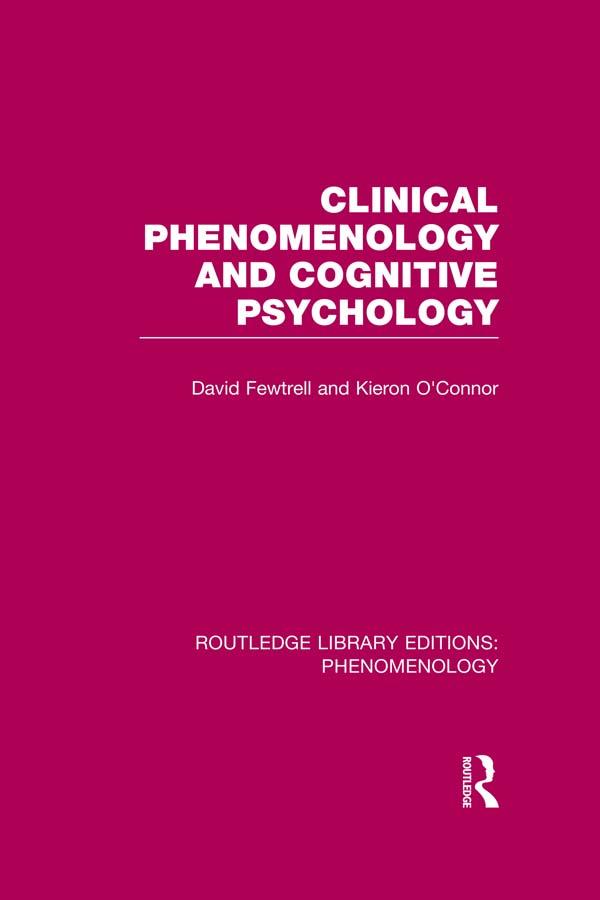
Cognitive therapies are often biased in their assessment of clinical problems by their emphasis on the role of verbally-mediated thought in shaping our emotions, and in stressing the influence of thought upon feeling. Alternatively, a more phenomenological appraisal of psychological dysfunction suggests that emotion and thinking are complementary processes which influence each other.
Cognitive psychology developed out of information-processing models, whereas phenomenological psychology is rooted in a philosophical perspective which avoids the assumptions of positivist methodology. But, despite their different origins, the two disciplines overlap and complement each other. This book, originally published in 1995, illustrates how feeling states are a crucial component of mental health problems and, if adequately differentiated, can result in a greater understanding of mental health.
Płać wygodnie kartą, Klarną, Apple Pay lub Google Pay. Nie jesteś zadowolony? Zawsze masz 14-dniową gwarancję zwrotu pieniędzy. Więcej przeczytasz w naszych warunkach. Masz pytania? Napisz do nas na hello@memmo.org.
Memmo ułatwia naukę – gdziekolwiek jesteś na świecie. U nas znajdziesz podręczniki i sprytne narzędzia do nauki w jednym miejscu: streszczenia, quizy, podcasty i fiszki. A do tego Ted, Twój kumpel do nauki, który odpowie na wszystko, co Cię nurtuje. Ponad 50 000 studentów już tu się uczy – stworzone, byś uczył się szybciej i mniej stresował.