
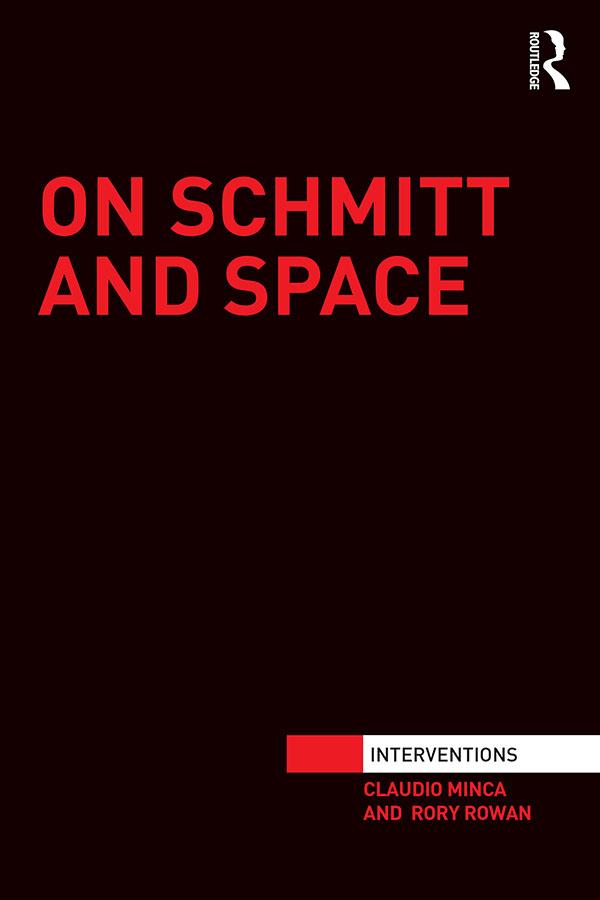
This book represents the first comprehensive study of the influential German legal and political thinker Carl Schmitt’s spatial thought, offering the first systematic examination from a Geographic perspective of one of the most important political thinkers of the twentieth century.
It charts the development of Schmitt’s spatial thinking from his early work on secularization and the emergence of the modern European state to his post war analysis of the spatial basis of global order and international law, whilst situating his thought in relation to his changing biographical and intellectual context, controversial involvement in Weimar politics and disastrous support for the Nazi regime. It argues that spatial concepts play a crucial structural role throughout Schmitt’s work, from his well-known analyses of sovereign power and states of exception to his often overlooked spatial history of modernity. Locating a fundamental relationship between space and ‘the political’ lies at the core of his thought.
The book explores the critical insight that Schmitt’s spatial thought bears on some of the key political questions of the twentieth century whilst tracking his profound and enduring influence on key debates on sovereignty, international relations, war and the nature of world order at the start of the twenty first century.
Płać wygodnie kartą, Klarną, Apple Pay lub Google Pay. Nie jesteś zadowolony? Zawsze masz 14-dniową gwarancję zwrotu pieniędzy. Więcej przeczytasz w naszych warunkach. Masz pytania? Napisz do nas na hello@memmo.org.
Memmo ułatwia naukę – gdziekolwiek jesteś na świecie. U nas znajdziesz podręczniki i sprytne narzędzia do nauki w jednym miejscu: streszczenia, quizy, podcasty i fiszki. A do tego Ted, Twój kumpel do nauki, który odpowie na wszystko, co Cię nurtuje. Ponad 50 000 studentów już tu się uczy – stworzone, byś uczył się szybciej i mniej stresował.