
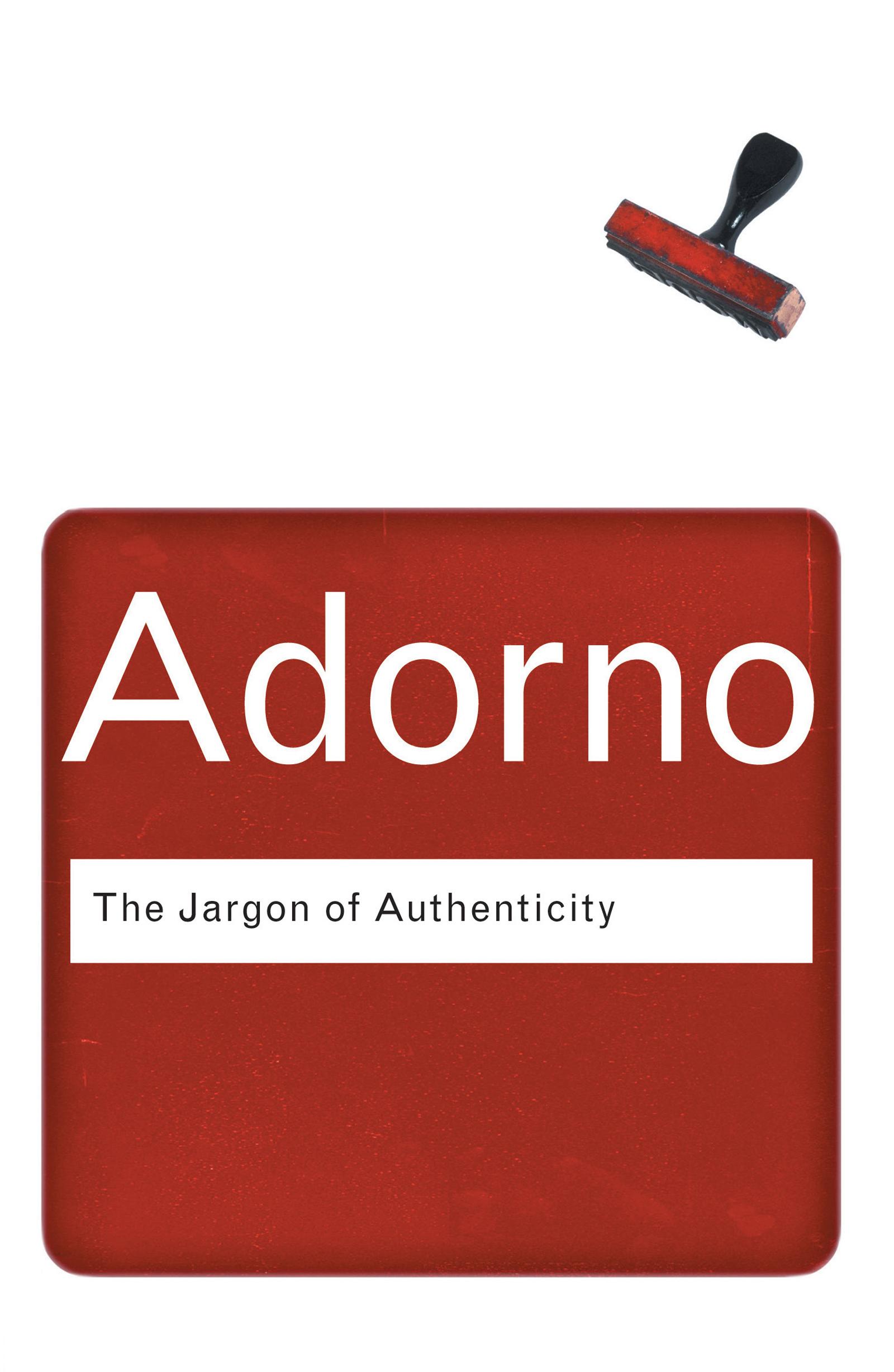
Theodor Adorno was no stranger to controversy. In The Jargon of Authenticity he gives full expression to his hostility to the language employed by certain existentialist thinkers such as Martin Heidegger. With his customary alertness to the uses and abuses of language, he calls into question the jargon, or 'aura', as his colleague Walter Benjamin described it, which clouded existentialists' thought. He argued that its use undermined the very message for meaning and liberation that it sought to make authentic. Moreover, such language - claiming to address the issue of freedom - signally failed to reveal the lack of freedom inherent in the capitalist context in which it was written. Instead, along with the jargon of the advertising jingle, it attributed value to the satisfaction of immediate desire. Alerting his readers to the connection between ideology and language, Adorno's frank and open challenge to directness, and the avoidance of language that 'gives itself over either to the market, to balderdash, or to the predominating vulgarity', is as timely today as it ever has been.
Płać wygodnie kartą, Klarną, Apple Pay lub Google Pay. Nie jesteś zadowolony? Zawsze masz 14-dniową gwarancję zwrotu pieniędzy. Więcej przeczytasz w naszych warunkach. Masz pytania? Napisz do nas na hello@memmo.org.
Memmo ułatwia naukę – gdziekolwiek jesteś na świecie. U nas znajdziesz podręczniki i sprytne narzędzia do nauki w jednym miejscu: streszczenia, quizy, podcasty i fiszki. A do tego Ted, Twój kumpel do nauki, który odpowie na wszystko, co Cię nurtuje. Ponad 50 000 studentów już tu się uczy – stworzone, byś uczył się szybciej i mniej stresował.