
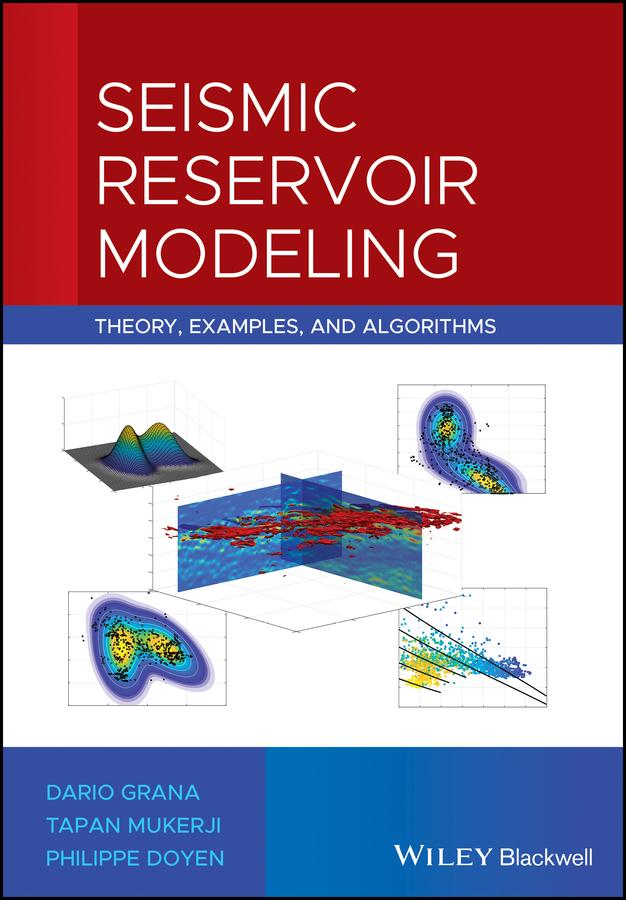
Seismic reservoir characterization aims to build 3-dimensional models of rock and fluid properties, including elastic and petrophysical variables, to describe and monitor the state of the subsurface for hydrocarbon exploration and production and for CO₂ sequestration. Rock physics modeling and seismic wave propagation theory provide a set of physical equations to predict the seismic response of subsurface rocks based on their elastic and petrophysical properties. However, the rock and fluid properties are generally unknown and surface geophysical measurements are often the only available data to constrain reservoir models far away from well control. Therefore, reservoir properties are generally estimated from geophysical data as a solution of an inverse problem, by combining rock physics and seismic models with inverse theory and geostatistical methods, in the context of the geological modeling of the subsurface. A probabilistic approach to the inverse problem provides the probability distribution of rock and fluid properties given the measured geophysical data and allows quantifying the uncertainty of the predicted results. The reservoir characterization problem includes both discrete properties, such as facies or rock types, and continuous properties, such as porosity, mineral volumes, fluid saturations, seismic velocities and density.
Seismic Reservoir Modeling: Theory, Examples and Algorithms presents the main concepts and methods of seismic reservoir characterization. The book presents an overview of rock physics models that link the petrophysical properties to the elastic properties in porous rocks and a review of the most common geostatistical methods to interpolate and simulate multiple realizations of subsurface properties conditioned on a limited number of direct and indirect measurements based on spatial correlation models. The core of the book focuses on Bayesian inverse methods for the prediction of elastic petrophysical properties from seismic data using analytical and numerical statistical methods. The authors present basic and advanced methodologies of the current state of the art in seismic reservoir characterization and illustrate them through expository examples as well as real data applications to hydrocarbon reservoirs and CO₂ sequestration studies.
Płać wygodnie kartą, Klarną, Apple Pay lub Google Pay. Nie jesteś zadowolony? Zawsze masz 14-dniową gwarancję zwrotu pieniędzy. Więcej przeczytasz w naszych warunkach. Masz pytania? Napisz do nas na hello@memmo.org.
Memmo ułatwia naukę – gdziekolwiek jesteś na świecie. U nas znajdziesz podręczniki i sprytne narzędzia do nauki w jednym miejscu: streszczenia, quizy, podcasty i fiszki. A do tego Ted, Twój kumpel do nauki, który odpowie na wszystko, co Cię nurtuje. Ponad 50 000 studentów już tu się uczy – stworzone, byś uczył się szybciej i mniej stresował.