
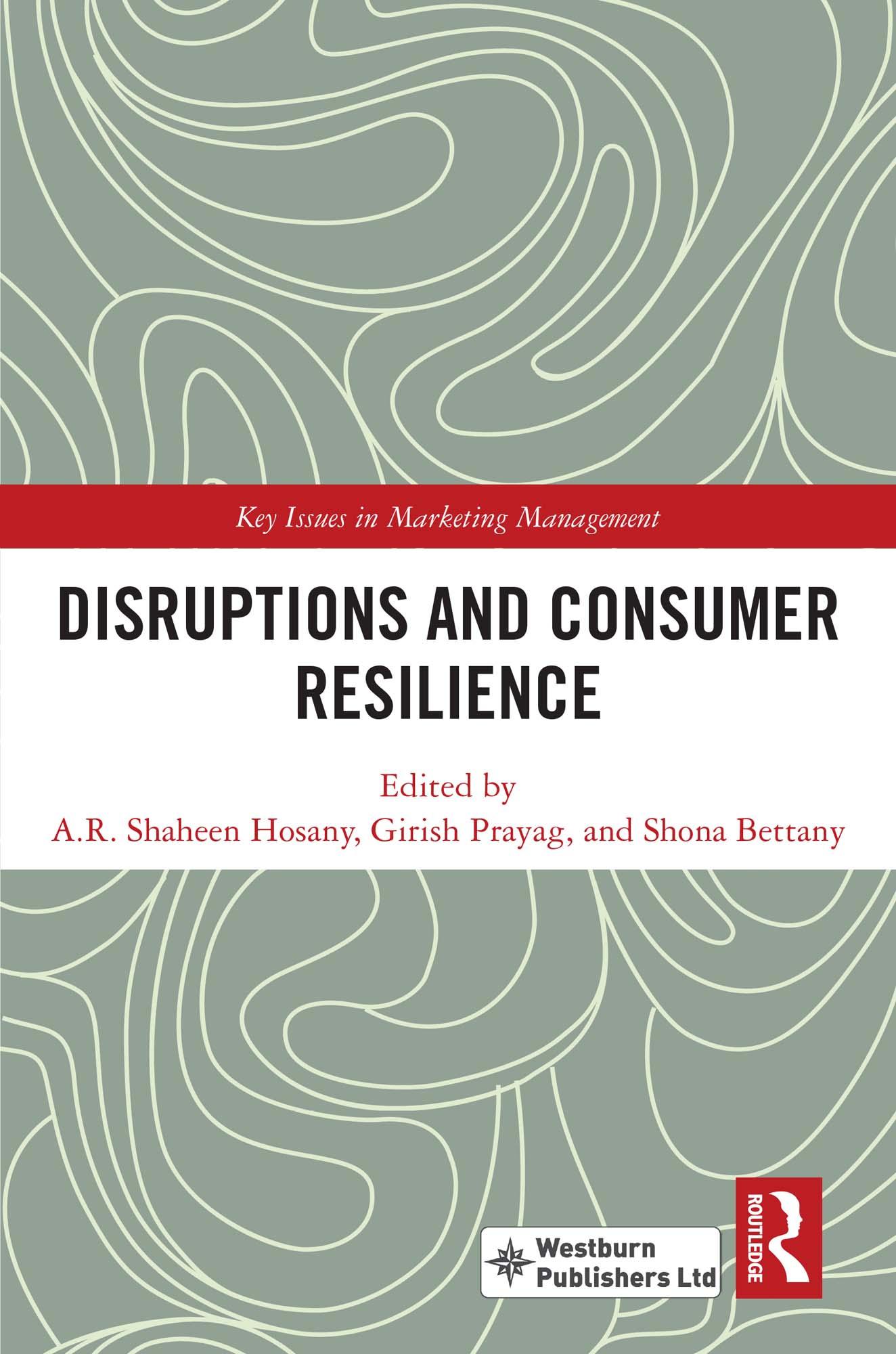
This book offers a comprehensive examination of how consumers develop resilience in response to disruptive events. Bringing together a diverse collection of studies spanning low-income consumers, families displaced by conflict, and individuals interacting with disrupted material objects, it demonstrates the varied ways in which people adapt to challenging circumstances, rebuild identities, reconstruct roles and routines. This book highlights the important influence of religiosity on consumer adaptation and behaviour during periods of major socio-economic disruption.
This book advances understanding of resilience as relational, cautioning against the over-individualisation of responsibility and emphasising the essential role of stakeholders, such as governments in shaping consumers’ adaptive capacities. Extending these insights, the book explores disruptions in higher education, where marketisation and digitalisation have transformed expectations for both students and staff. The book also examines the rise of consumer prepping, raising concerns about inequalities embedded within the resilience discourse and illustrating how expectations to “be resilient” can reinforce existing socioeconomic and gender disparities.
The chapters, originally published as part of a special issue in Journal of Marketing Management, offer a rich, multidimensional perspective on consumer resilience and are valuable resources for researchers and practitioners across marketing, consumer research, sociology, and related fields.
Płać wygodnie kartą, Klarną, Apple Pay lub Google Pay. Nie jesteś zadowolony? Zawsze masz 14-dniową gwarancję zwrotu pieniędzy. Więcej przeczytasz w naszych warunkach. Masz pytania? Napisz do nas na hello@memmo.org.
Memmo ułatwia naukę – gdziekolwiek jesteś na świecie. U nas znajdziesz podręczniki i sprytne narzędzia do nauki w jednym miejscu: streszczenia, quizy, podcasty i fiszki. A do tego Ted, Twój kumpel do nauki, który odpowie na wszystko, co Cię nurtuje. Ponad 50 000 studentów już tu się uczy – stworzone, byś uczył się szybciej i mniej stresował.