
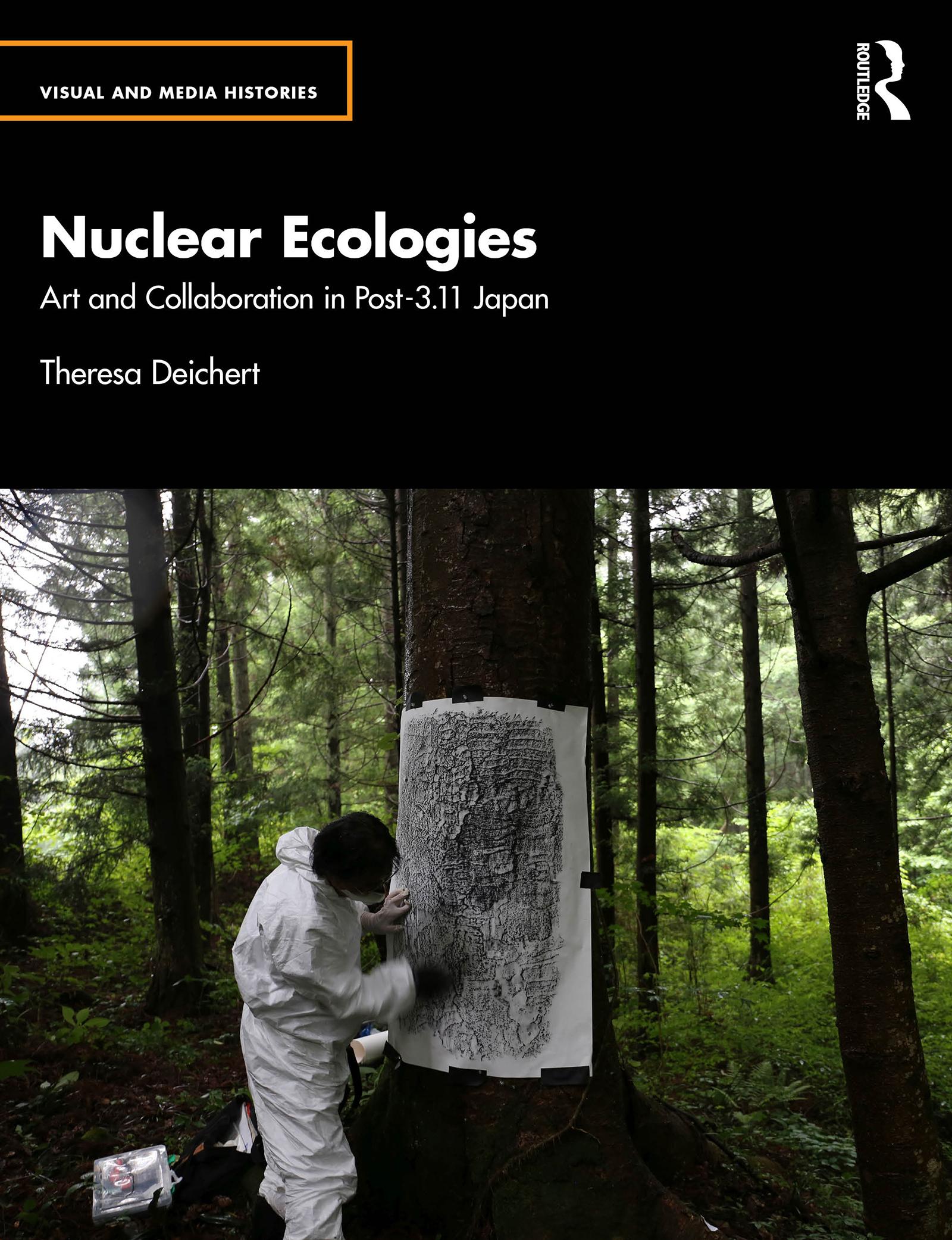
The Fukushima nuclear disaster of March 2011 left Japan grappling with profound social, political, and environmental consequences. Yet, in its wake, art emerged as a powerful response: artists turned to collaborative and ecological practices to make sense of the crisis, challenging official narratives and responding to the slow violence of radioactive contamination. This book examines how contemporary Japanese artists—among them Chim↑Pom, Kyun-Chome, Akira Takayama, Dokuyama Bontaro, Ei Arakawa-Nash, and others—have adopted strategies of collaboration that extend beyond the human, engaging with animals, plants, and even radioactivity itself as active agents in the artistic process.
Bringing ecological thought into conversation with transcultural art history, Nuclear Ecologies reconsiders collaboration not simply as a method of shared authorship, but as a distributed process shaped by complex networks of human and nonhuman agencies. Through close analysis of post-3.11 artworks, including site-specific projects within the Fukushima exclusion zone to participatory installations in Tokyo, the book explores how artists respond to, and are shaped by, local ecologies and the post-disaster politics of visibility and expression. Five in-depth case studies trace how artistic collaborations confront pressing post-disaster concerns: from radioactive contamination and structural inequalities to the lived realities of both human and nonhuman disaster victims.
Situating post-3.11 artistic practices within wider trajectories of socially engaged art and global art systems, this book—part of the Visual Media Histories series—challenges persistent boundaries between nature and culture, aesthetics and politics. It will be of interest to scholars and students in art history, Japanese studies, transcultural studies, environmental humanities, and those working across eco-aesthetics, posthumanism, and disaster studies.
Płać wygodnie kartą, Klarną, Apple Pay lub Google Pay. Nie jesteś zadowolony? Zawsze masz 14-dniową gwarancję zwrotu pieniędzy. Więcej przeczytasz w naszych warunkach. Masz pytania? Napisz do nas na hello@memmo.org.
Memmo ułatwia naukę – gdziekolwiek jesteś na świecie. U nas znajdziesz podręczniki i sprytne narzędzia do nauki w jednym miejscu: streszczenia, quizy, podcasty i fiszki. A do tego Ted, Twój kumpel do nauki, który odpowie na wszystko, co Cię nurtuje. Ponad 50 000 studentów już tu się uczy – stworzone, byś uczył się szybciej i mniej stresował.