
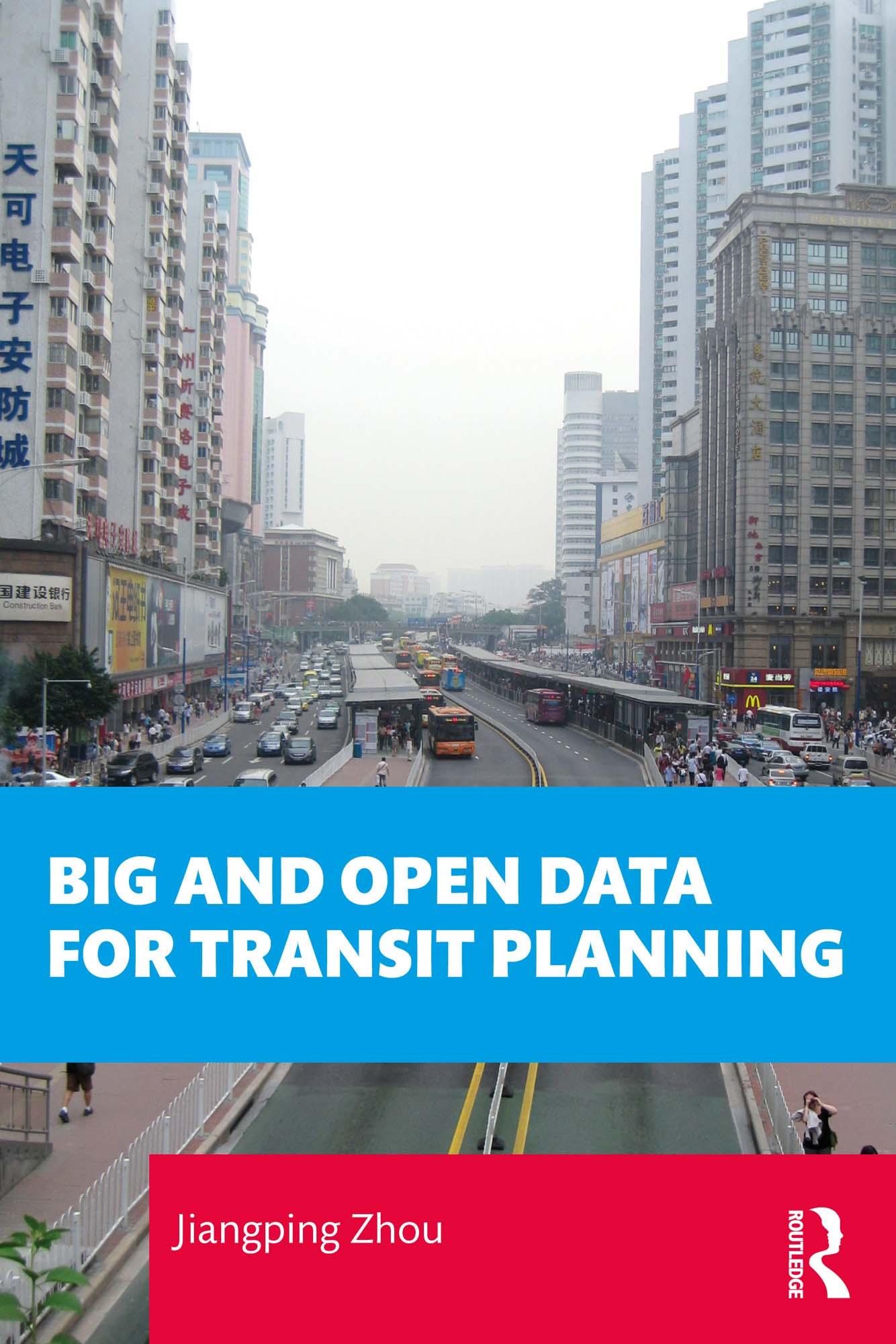
This book revisits the concept of the transit catchment area (TCA) and examines evolving practices in TCA planning against the backdrop of expanding big and open data (BOD) in transit-oriented land use planning.
In many developed countries and regions, car dependence and urban sprawl have led to undesirable outcomes. Improved transit and land use planning can help create well-connected areas where people, businesses, and employers want to be. But how can we make these transit zones more appealing? BOD is transforming how we understand and address this challenge. Drawing on empirical data and case studies, this book shows how TCAs can be defined across two dimensions—feature (form) and performance (function)—and how BOD, combined with traditional sources, can be used to characterize these dimensions while revealing their complex interrelationships. The author employs a mixed-method approach that includes desktop research, survey data, and quantitative analysis with visualization. Readers will learn how to redefine TCAs and enhance planning practices by leveraging BOD sources such as smartcard data, OpenStreetMap, and social media—making transit areas more attractive while addressing car dependence, urban sprawl, and related challenges such as congestion, pollution, and declining social capital.
Big and Open Data for Transit Planning will be useful for planners, officials, students, and academics who are interested in the nexus of transit/transportation, land use, and sustainable development.
Płać wygodnie kartą, Klarną, Apple Pay lub Google Pay. Nie jesteś zadowolony? Zawsze masz 14-dniową gwarancję zwrotu pieniędzy. Więcej przeczytasz w naszych warunkach. Masz pytania? Napisz do nas na hello@memmo.org.
Memmo ułatwia naukę – gdziekolwiek jesteś na świecie. U nas znajdziesz podręczniki i sprytne narzędzia do nauki w jednym miejscu: streszczenia, quizy, podcasty i fiszki. A do tego Ted, Twój kumpel do nauki, który odpowie na wszystko, co Cię nurtuje. Ponad 50 000 studentów już tu się uczy – stworzone, byś uczył się szybciej i mniej stresował.