
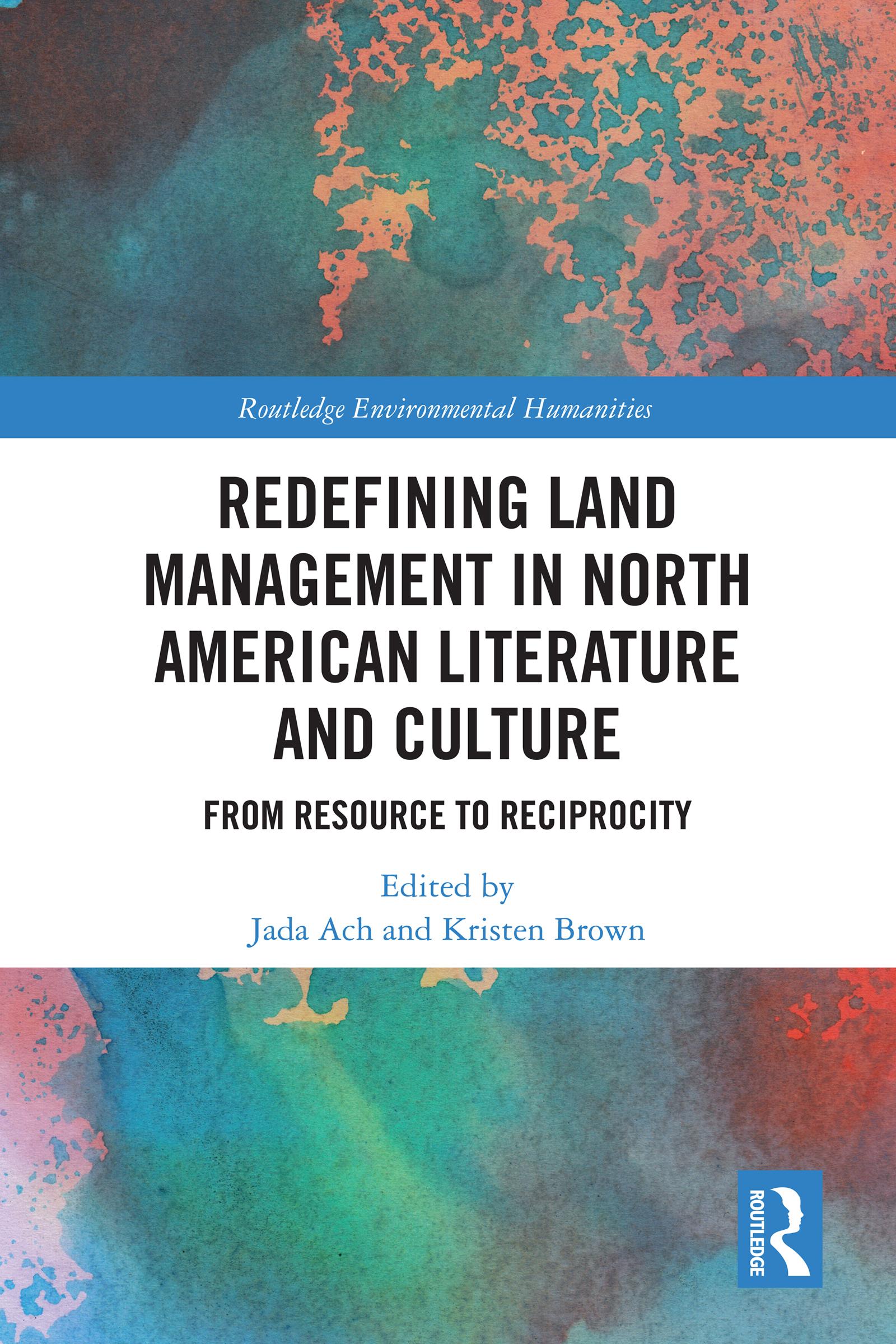
Exploring the ongoing histories of human-centered ecosystem management in the lands and waters that comprise what is now known as North America, this book tracks the diverse ways in which human-environmental relations have been presented across different forms of media.
Including literature, film, visual arts, performing arts, park interpretive materials, and more, the book analyzes the many ways in which human-environmental relations have been articulated, experienced, understood, represented, and regulated. The collection encourages a reimagining of what it means to manage environmental elements beyond the limits of utility, commodification, and control. To that end, the contributions interrogate the concept of "management" itself, arguing instead for a more expansive conception of reciprocal relations among humans and the more-than-human world. These relations encompass many kinds of human-environmental engagements, ranging from constructing dams and using prairie soils for paint pigments, to gathering pollen and cultivating grass for memorial sites. In particular, the book highlights the potential in Indigenous ecological approaches to living with lands and waters, underscoring the need to lovingly engage with the world that sustains us. In the spirit of inquiry and reorientation, this interdisciplinary book begins with a “Keywords” section. Entries for key terms, such as wilderness, allotment, reclamation, fugitive sand, and reciprocity, detail the word’s history, outline its role in various discourses, and/or suggest possibilities for future research.
This book will be of value to a wide range of readers, including researchers and students in environmental humanities, literature, ecocritical theory, history, Indigenous studies, legal studies, natural resources, sociology, environmental studies, and anthropology.
Płać wygodnie kartą, Klarną, Apple Pay lub Google Pay. Nie jesteś zadowolony? Zawsze masz 14-dniową gwarancję zwrotu pieniędzy. Więcej przeczytasz w naszych warunkach. Masz pytania? Napisz do nas na hello@memmo.org.
Memmo ułatwia naukę – gdziekolwiek jesteś na świecie. U nas znajdziesz podręczniki i sprytne narzędzia do nauki w jednym miejscu: streszczenia, quizy, podcasty i fiszki. A do tego Ted, Twój kumpel do nauki, który odpowie na wszystko, co Cię nurtuje. Ponad 50 000 studentów już tu się uczy – stworzone, byś uczył się szybciej i mniej stresował.