
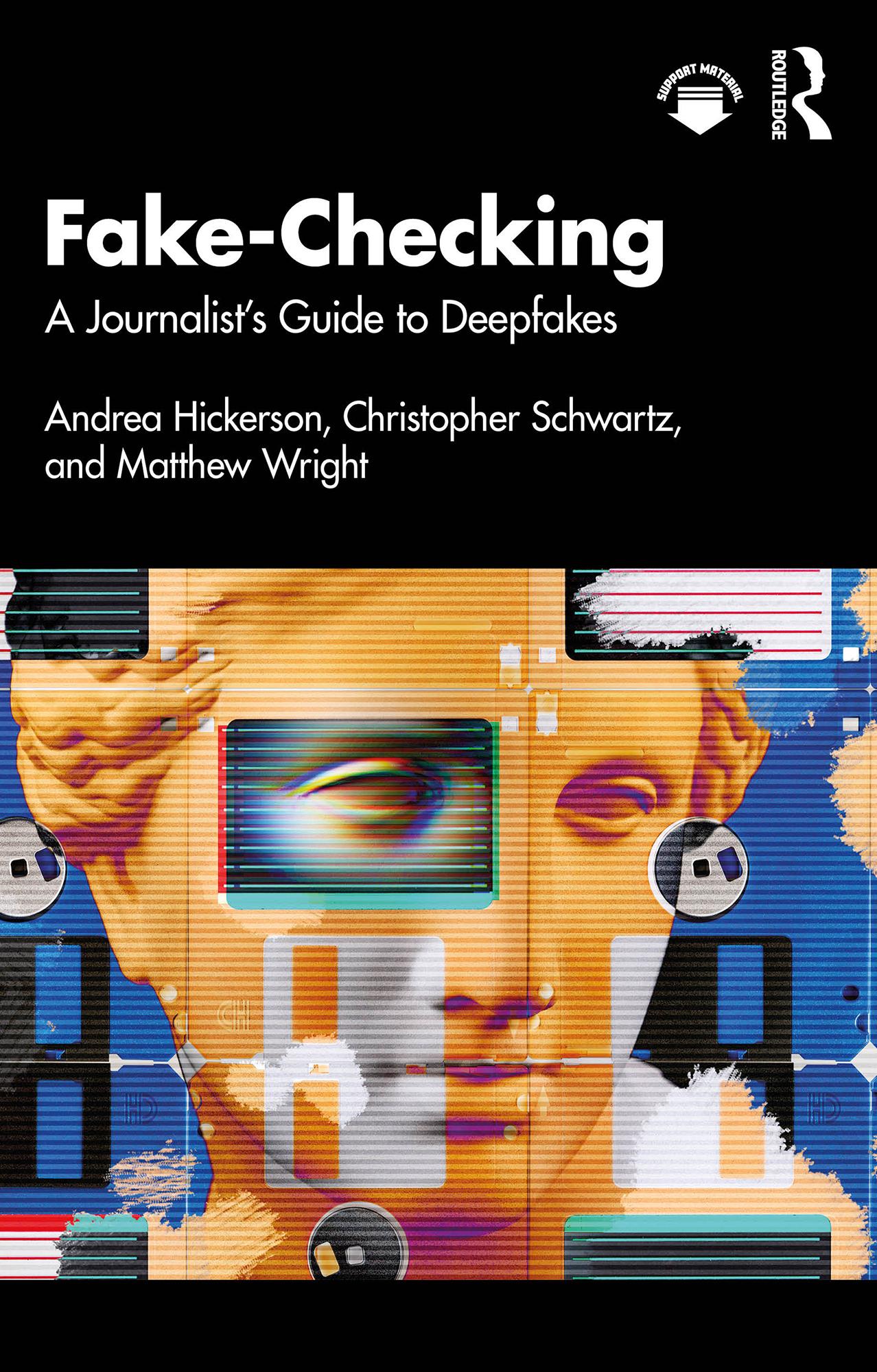
Designed to help journalists keep pace with the rapid evolution of deepfakes as well as integrate ‘fake-checking’ methods into their routine reporting practices, this book offers a concise and accessible guide for reporters navigating this evolving challenge.
This guide aims to assist journalists in understanding the complexities of deepfakes from a number of angles including philosophical, historical, technical, and methodological. Rather than approaching deepfakes as a ‘journalistic apocalypse,’ this book contextualises them in the larger historical practice of fact-checking and on a continuum of technological advances in image and video manipulation. Encouraging readers to view fact-checking as a multimodal process, it stresses the importance of combining philosophical and technical tools, especially ones based in epistemology and artifical intelligence (AI), in addition to the ‘pavement pounding’ essentials of good journalism. The book concludes with a chapter addressing how to explain deepfakes to a public progressively more concerned about the realities and consequences of AI and misinformation.
Fake-Checking serves as a practical reference for journalists and advanced media students who are increasingly required to identify and verify potential deepfakes and their future iterations.
This book is supported by online resources which can be accessed at www.routledge.com/9781032741321.
Płać wygodnie kartą, Klarną, Apple Pay lub Google Pay. Nie jesteś zadowolony? Zawsze masz 14-dniową gwarancję zwrotu pieniędzy. Więcej przeczytasz w naszych warunkach. Masz pytania? Napisz do nas na hello@memmo.org.
Memmo ułatwia naukę – gdziekolwiek jesteś na świecie. U nas znajdziesz podręczniki i sprytne narzędzia do nauki w jednym miejscu: streszczenia, quizy, podcasty i fiszki. A do tego Ted, Twój kumpel do nauki, który odpowie na wszystko, co Cię nurtuje. Ponad 50 000 studentów już tu się uczy – stworzone, byś uczył się szybciej i mniej stresował.