
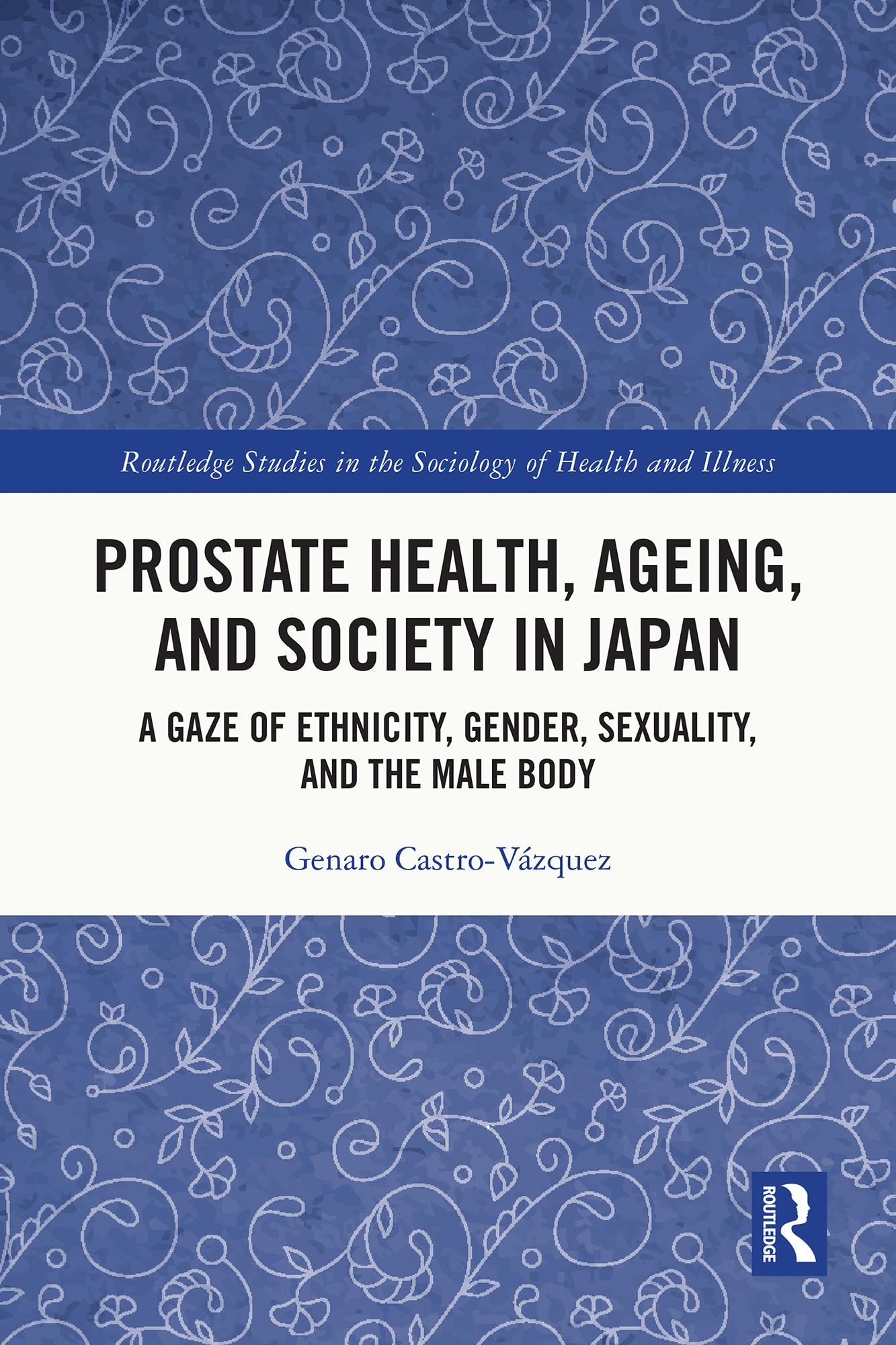
This ethnographic investigation of prostate health in the super-aged, Japanese society analyses prostate cancer and benign prostate hyperplasia. Castro-Vázquez examines how biomedical perspectives link prostate health to ethnicity and lifestyle choices, where a clinical issue renders a social matter, and early detection and prevention become an individual responsibility.
Grounded in symbolic interactionism, the book presents the viewpoints of Japanese urologists, and men who navigate prostate conditions from an eclectic and multidimensional perspective. It explores the impact of ‘Westernised’ eating habits, ethnicity, gender and sexuality on prostate health, while critically analysing health economics, through medical, pharmaceutical, and insurance industries that commodify men’s health. The research introduces the concept of ‘prostate-self’ to fathom how Japanese men journey prostate health, highlighting how their embodied experiences connect. It contributes significant insights to global debates on benign prostate hyperplasia and prostate cancer prevention, detection, and treatment.
An essential resource for scholars, researchers and students in medical sociology, gender and sexuality studies, medical anthropology, Japanese studies as well as those interested in gender, sexuality, sociology of health, and the body and society.
Płać wygodnie kartą, Klarną, Apple Pay lub Google Pay. Nie jesteś zadowolony? Zawsze masz 14-dniową gwarancję zwrotu pieniędzy. Więcej przeczytasz w naszych warunkach. Masz pytania? Napisz do nas na hello@memmo.org.
Memmo ułatwia naukę – gdziekolwiek jesteś na świecie. U nas znajdziesz podręczniki i sprytne narzędzia do nauki w jednym miejscu: streszczenia, quizy, podcasty i fiszki. A do tego Ted, Twój kumpel do nauki, który odpowie na wszystko, co Cię nurtuje. Ponad 50 000 studentów już tu się uczy – stworzone, byś uczył się szybciej i mniej stresował.