
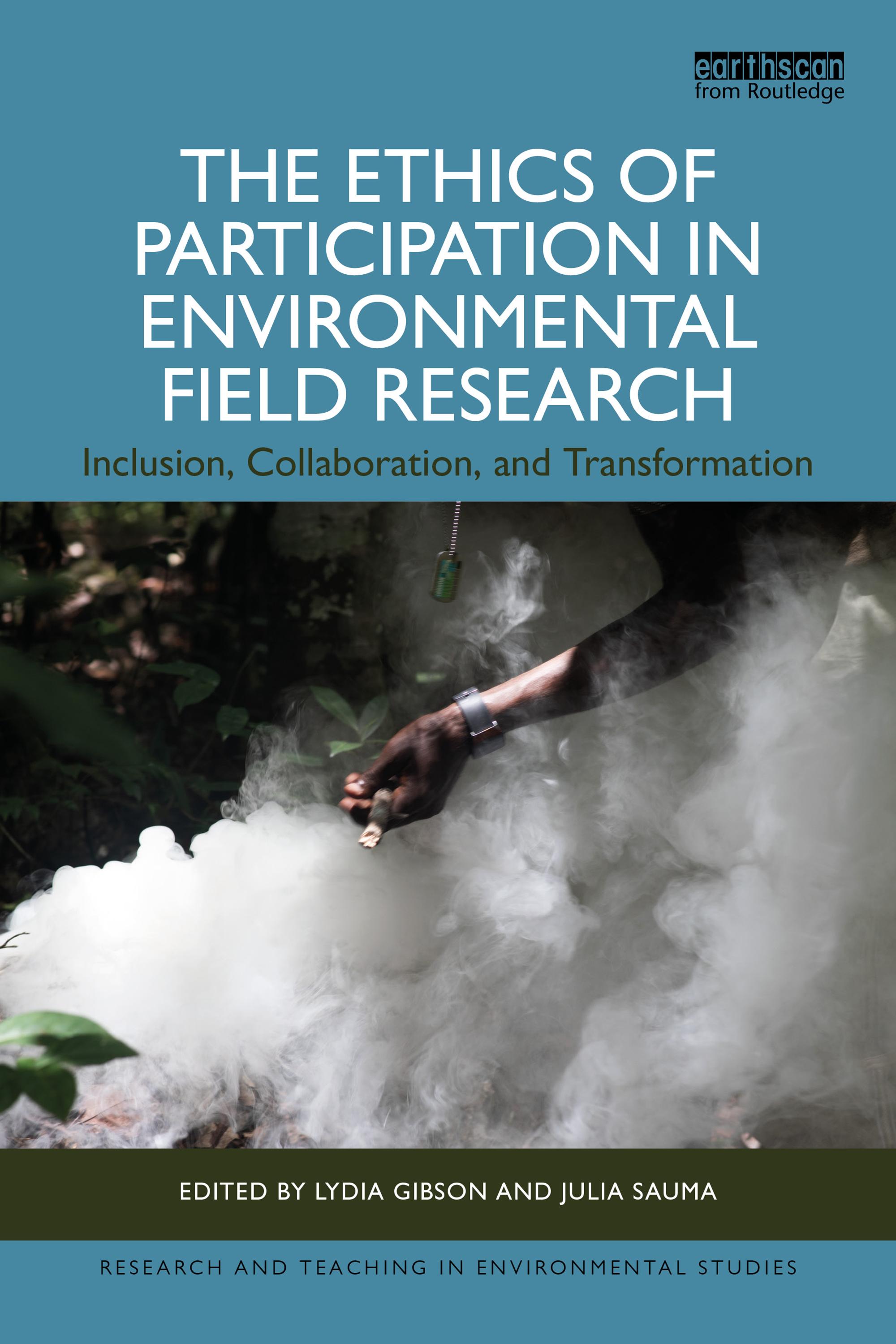
Local participation is increasingly seen as a central and ethical part of environmental research. As such, many environmental efforts are becoming increasingly participatory. Participation, as a string of literature has shown, has many political, economic, social, and epistemic consequences, and ethics is fluid, polyvalent, and contextual. 'Right is right, wrong is wrong' is dangerous rhetoric that centres western experiences and forecloses the myriad realities and relations bundled within and forced upon marginalised experiences. Both participation and ethics – as concepts and praxis – cast decades-long shadows over field research (particularly in anthropology), yet much of these discussions are left at the threshold of interdisciplinary spaces, where participation, traditional and Indigenous knowledge, and co-production are brought in to sanitise and legitimise environmental actions. Where are our lessons learned and what ought we to make of their absence? The first half of this volume offers ethnographic examples that allow us to begin to ask whether participation (in the capitalist machinery and colonial legacies of academic knowledge) is ever even ethical. The second half of the book is dedicated to anti-solutions: refusals to define problems and approaches in fixed, closed terms from which equations, calculations, and solutions can be derived.
This book provokes important new discussions about ethical participation in environmental field research by bringing to the fore the fluid nature of both ethics and participation. The volume aims to provide critical intervention for students and researchers across natural and social sciences whose fieldwork includes engagement with local communities and stakeholders, as well as conservation policymakers and practitioners who consult and work with local communities.
Płać wygodnie kartą, Klarną, Apple Pay lub Google Pay. Nie jesteś zadowolony? Zawsze masz 14-dniową gwarancję zwrotu pieniędzy. Więcej przeczytasz w naszych warunkach. Masz pytania? Napisz do nas na hello@memmo.org.
Memmo ułatwia naukę – gdziekolwiek jesteś na świecie. U nas znajdziesz podręczniki i sprytne narzędzia do nauki w jednym miejscu: streszczenia, quizy, podcasty i fiszki. A do tego Ted, Twój kumpel do nauki, który odpowie na wszystko, co Cię nurtuje. Ponad 50 000 studentów już tu się uczy – stworzone, byś uczył się szybciej i mniej stresował.