
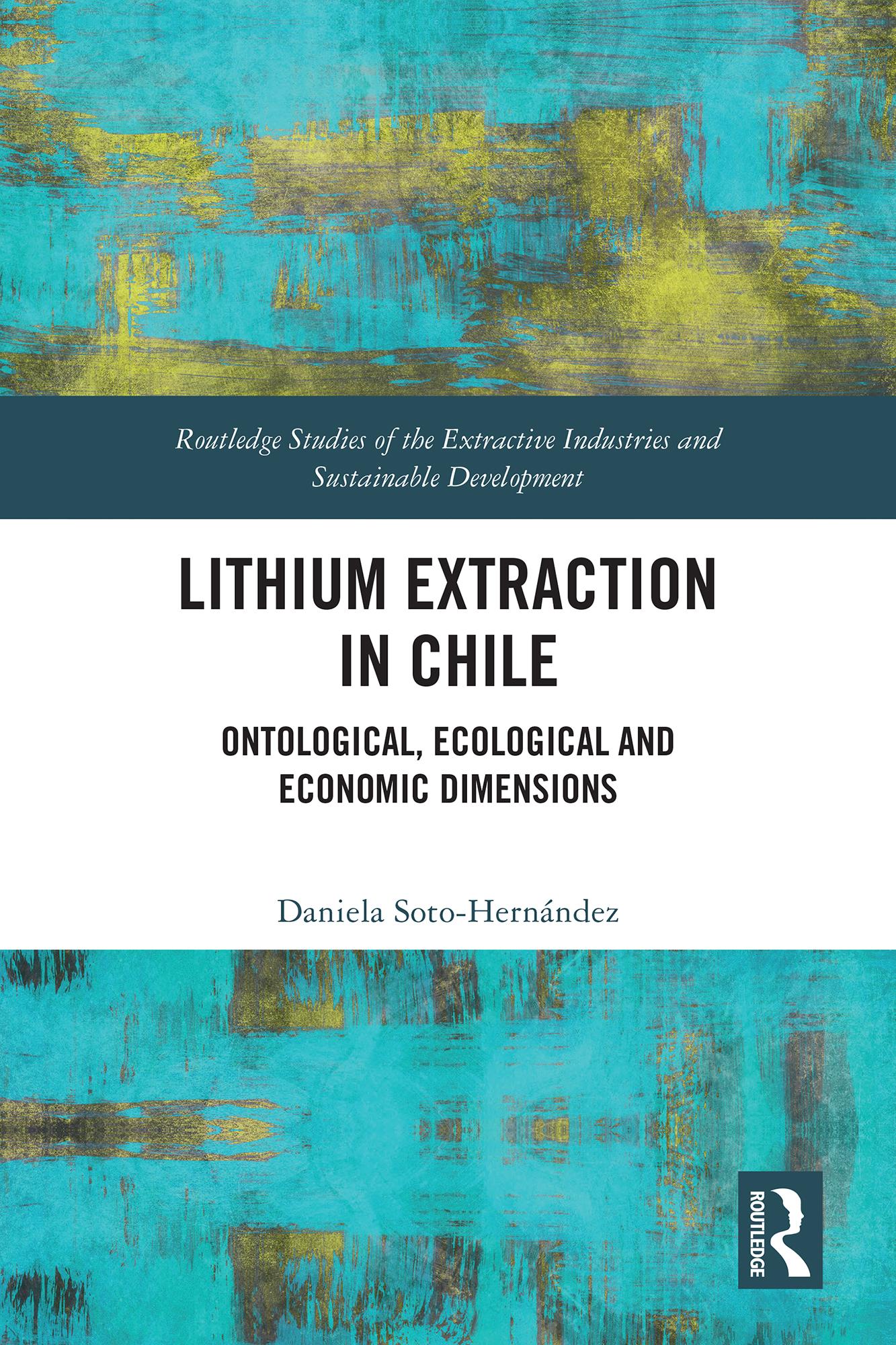
This book explores lithium extraction in Chile as part of the global energy transition, unravelling the ontological, ecological, and economic dimensions behind this type of extractivism.
A transition away from fossil fuels is urgent in the context of climate change and one of the main challenges so far has been to store the variable energy provided by renewable energy sources. Due to its role in the lithium-ion batteries that power electric vehicles, lithium has been framed as a ‘critical mineral’ to transit towards low-carbon economies. Chile is the second lithium-exporting country worldwide and while it aims to expand its production, the delicate wetland ecosystems, and Indigenous territories where lithium comes from face increasing pressure. This book looks at the worlds, ecologies, and economies that are becoming increasingly extracted and the effects of these processes. Drawing on the case of extractivism in the Salar de Atacama watershed in the Antofagasta region in Chile and engaging with Indigenous and non-Indigenous local communities, NGOs, state officials, companies, and lithium workers through a twelve-month ethnography, the book offers a unique perspective into the contested narratives around what is being extracted and the manifold effects of it. By putting the Indigenous cosmovision forward and showing the local experiences with an industry powered by the ongoing energy transition, this book connects the notions of interconnection and fragmentation to provide a wider understanding of future challenges, where ontologies, ecologies, and economies are intertwined. The book weaves together different disciplinary strands and takes them forward to show how the solutions based on extractivism are menacing to destroy the marginalized worlds and ecosystems of human and non-human communities. As such, the book not only fills the gaps in current literature, but also goes further to rethink the ways in which academics engage with natural resources and how the pluriverse is currently experienced in the Salar de Atacama watershed.
This book will be of great interest to academics, students, and environmental advocates studying energy transitions, critical minerals, anti-colonial and indigenous perspectives around development, and lithium extraction.
Płać wygodnie kartą, Klarną, Apple Pay lub Google Pay. Nie jesteś zadowolony? Zawsze masz 14-dniową gwarancję zwrotu pieniędzy. Więcej przeczytasz w naszych warunkach. Masz pytania? Napisz do nas na hello@memmo.org.
Memmo ułatwia naukę – gdziekolwiek jesteś na świecie. U nas znajdziesz podręczniki i sprytne narzędzia do nauki w jednym miejscu: streszczenia, quizy, podcasty i fiszki. A do tego Ted, Twój kumpel do nauki, który odpowie na wszystko, co Cię nurtuje. Ponad 50 000 studentów już tu się uczy – stworzone, byś uczył się szybciej i mniej stresował.