
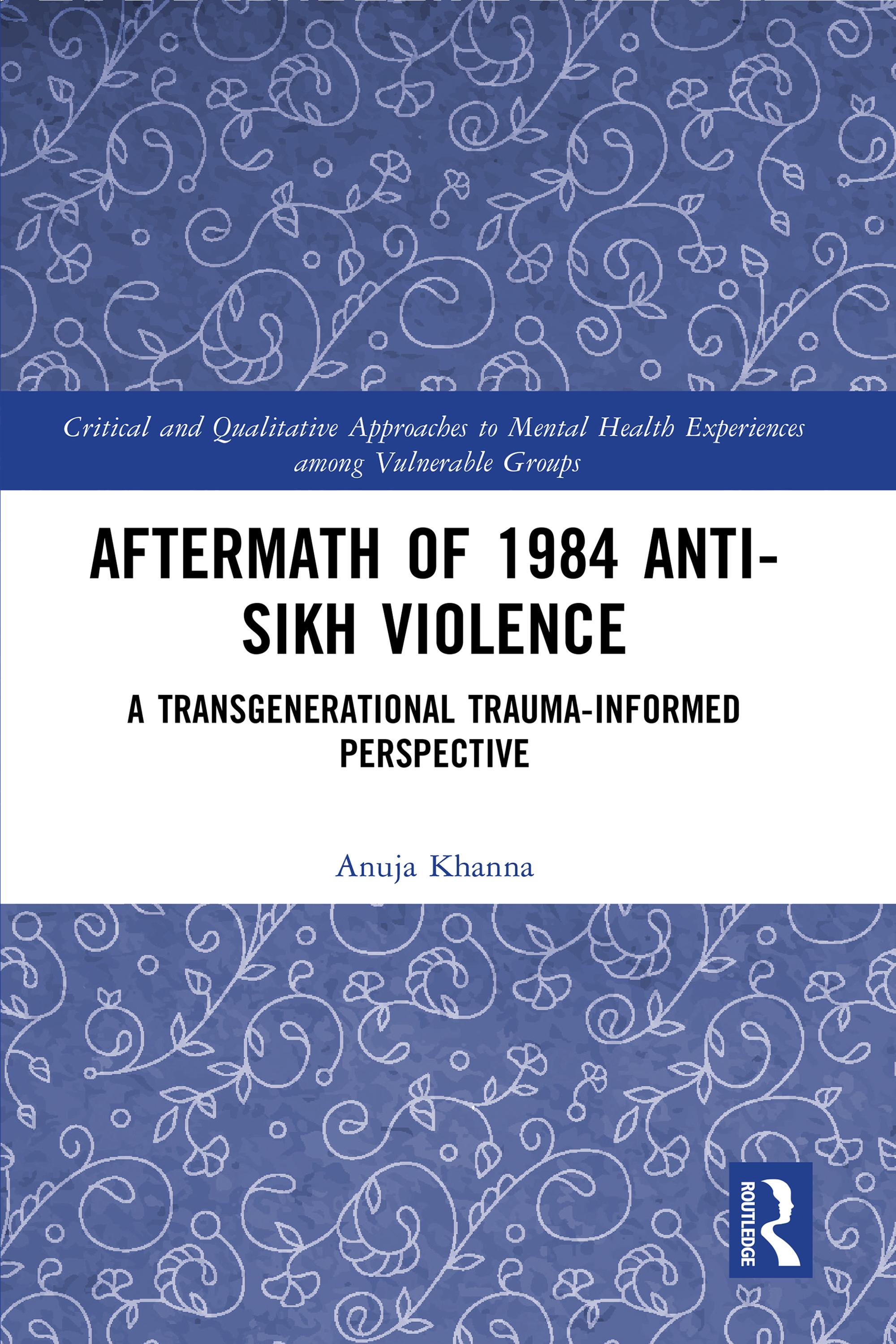
This book explores the inheritance of trauma, distress, and healing from one generation of survivors of the 1984 anti-Sikh violence to the next. It looks at this dyadic relationship and the post-violence context that is marked by their experience of injustice.
The book highlights the psycho-social impacts of violence on survivors and their families' everyday struggles against conditions of injustice, marginalization, deprivation, stigma, and threat to one’s individual and collective identity. Through interviews and ethnographic explorations, it analyses the lived experiences of survivors, understanding the everyday struggles of suffering and healing and their relationship with their families and the next generation.
This book will be of interest to students, teachers, and researchers of psychology, trauma studies, clinical psychology, health psychology, qualitative research, and social psychology. It will also be useful for those interested in interdisciplinary perspectives on mental health, trauma and disaster mental health, ethnography, and qualitative research methodology.
Płać wygodnie kartą, Klarną, Apple Pay lub Google Pay. Nie jesteś zadowolony? Zawsze masz 14-dniową gwarancję zwrotu pieniędzy. Więcej przeczytasz w naszych warunkach. Masz pytania? Napisz do nas na hello@memmo.org.
Memmo ułatwia naukę – gdziekolwiek jesteś na świecie. U nas znajdziesz podręczniki i sprytne narzędzia do nauki w jednym miejscu: streszczenia, quizy, podcasty i fiszki. A do tego Ted, Twój kumpel do nauki, który odpowie na wszystko, co Cię nurtuje. Ponad 50 000 studentów już tu się uczy – stworzone, byś uczył się szybciej i mniej stresował.