
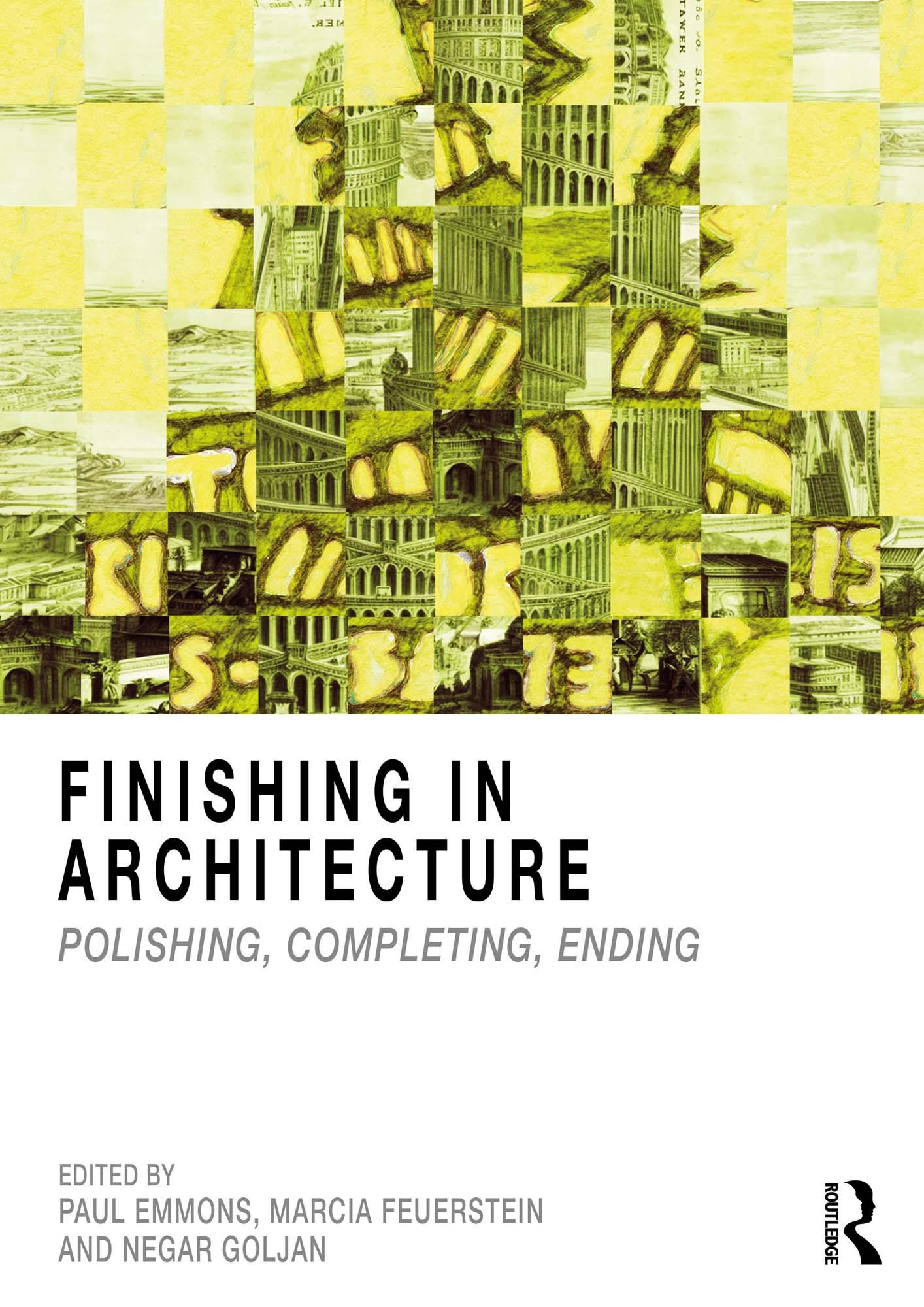
Finishing in Architecture: Polishing, Completing, Ending explores the topic of finishing and the fascinating physical and metaphysical implications of its various conceptions in architecture. Finishing is essential to all human practices and concepts of time, yet simultaneously it is largely impossible to identify an entirely finished state of being. As mortals, we organize our worlds into beginnings and endings, starts and finishes. Architecture’s temporality, however, may contain something of both the mortal and immortal within it – a desire for permanence combined with lamentation over its impossibility.
While many approaches to finishing construct two opposed ontological conditions (the finished and the unfinished), this dualistic ploy neglects the complexity of architectural practice, cultural reception, and historiographic shifts in semiotics during the lifetime of a building. More nuanced approaches are examined in this collection of 38 essays and creative works from a diverse group of scholars, architects, and artists who conceptualize finishing not simply as a final outcome, but as an extended action, a mood that presumes an end is near, all the while working continuously toward (but never achieving) completion. It is here that the concept of finishing is not a state of being but a state of becoming, as an active thickening of time when the end is thought to be imminent but not yet attained. Finishing, more than a final endpoint, is a void state that is extended through efforts framing its territory, while never quite containing it.
From the material to the procedural and the conceptual, this volume explores the practices of finishing in architecture within three currents: surfaces, projects, and most broadly, architectural times. It will be of interest to students and instructors of architecture and design, architectural historians, and other scholars.
Płać wygodnie kartą, Klarną, Apple Pay lub Google Pay. Nie jesteś zadowolony? Zawsze masz 14-dniową gwarancję zwrotu pieniędzy. Więcej przeczytasz w naszych warunkach. Masz pytania? Napisz do nas na hello@memmo.org.
Memmo ułatwia naukę – gdziekolwiek jesteś na świecie. U nas znajdziesz podręczniki i sprytne narzędzia do nauki w jednym miejscu: streszczenia, quizy, podcasty i fiszki. A do tego Ted, Twój kumpel do nauki, który odpowie na wszystko, co Cię nurtuje. Ponad 50 000 studentów już tu się uczy – stworzone, byś uczył się szybciej i mniej stresował.