
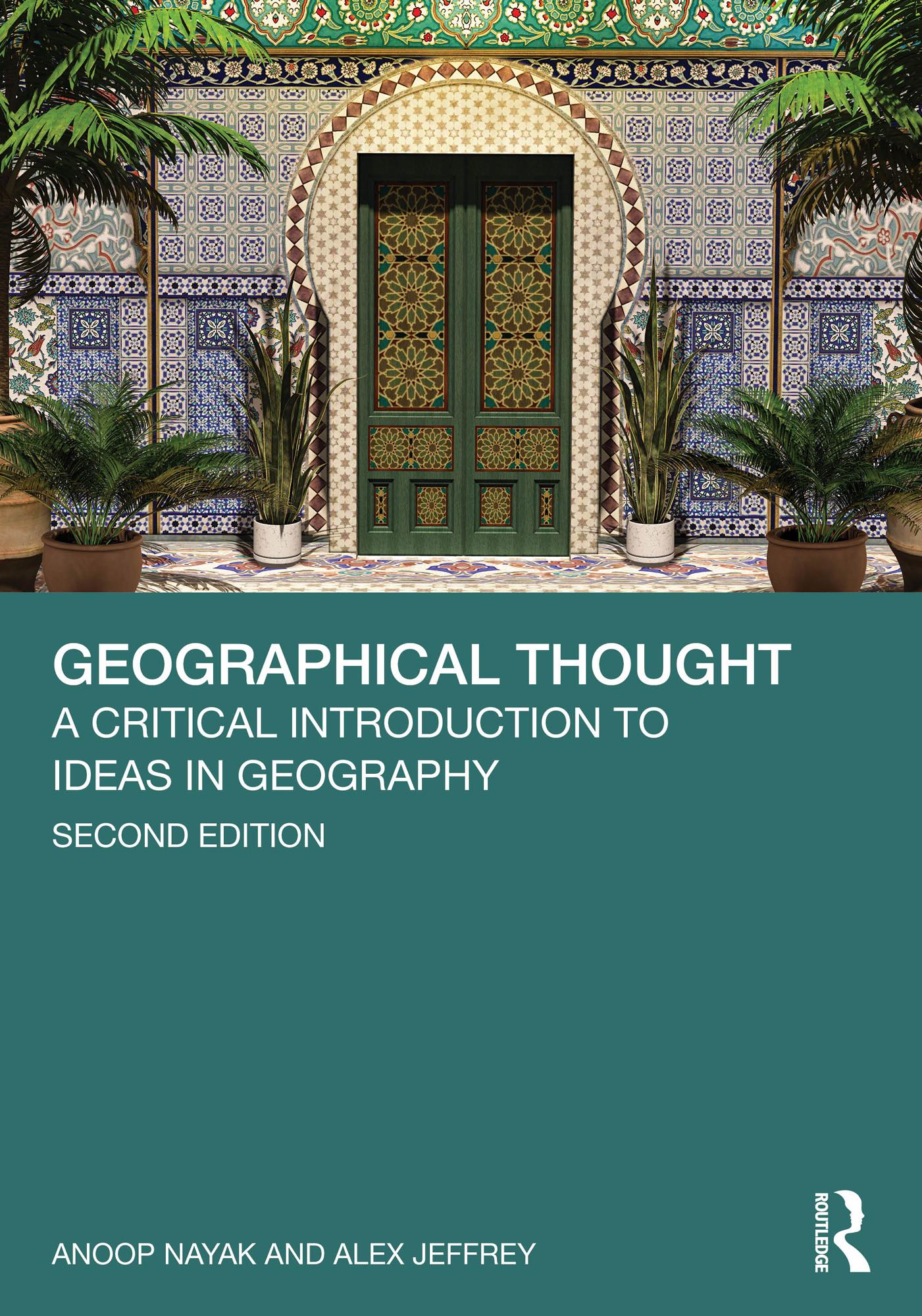
This new second edition of Geographical Thought remains a clear and accessible introduction to the key ideas and figures in human geography. A renewed focus on climate justice is layered throughout the book seguing into a new chapter on decolonising geography. Each of the chapters has been refreshed using the latest scholarship in the field, cutting-edge theory and contemporary case studies. From animal geographies to Black geographies, the current text is brimming with new theories, concepts and ideas.
Across three distinctive parts ('Geographical Foundations', 'Geography at the Intersections' and 'Plural and Relational Geographies'), this book provides an essential introduction to the theories that have shaped the study of societies and space. Opening with an exploration of the founding concepts of human geography in the nineteenth-century academy, Nayak and Jeffrey examine the range of theoretical perspectives that have emerged within human geography over the last century from feminist and Marxist scholarship, through to postcolonial and non-representational theories. Each chapter contains insightful lines of argument that encourage readers towards independent thinking and critical evaluation. The supporting materials include a glossary, visual images, further reading suggestions and dialogue boxes.
This book is an invaluable guide for students new to the discipline, seeking an introduction to the theories and ongoing debates, as well as those looking to deepen their understanding of human geography.
Płać wygodnie kartą, Klarną, Apple Pay lub Google Pay. Nie jesteś zadowolony? Zawsze masz 14-dniową gwarancję zwrotu pieniędzy. Więcej przeczytasz w naszych warunkach. Masz pytania? Napisz do nas na hello@memmo.org.
Memmo ułatwia naukę – gdziekolwiek jesteś na świecie. U nas znajdziesz podręczniki i sprytne narzędzia do nauki w jednym miejscu: streszczenia, quizy, podcasty i fiszki. A do tego Ted, Twój kumpel do nauki, który odpowie na wszystko, co Cię nurtuje. Ponad 50 000 studentów już tu się uczy – stworzone, byś uczył się szybciej i mniej stresował.