
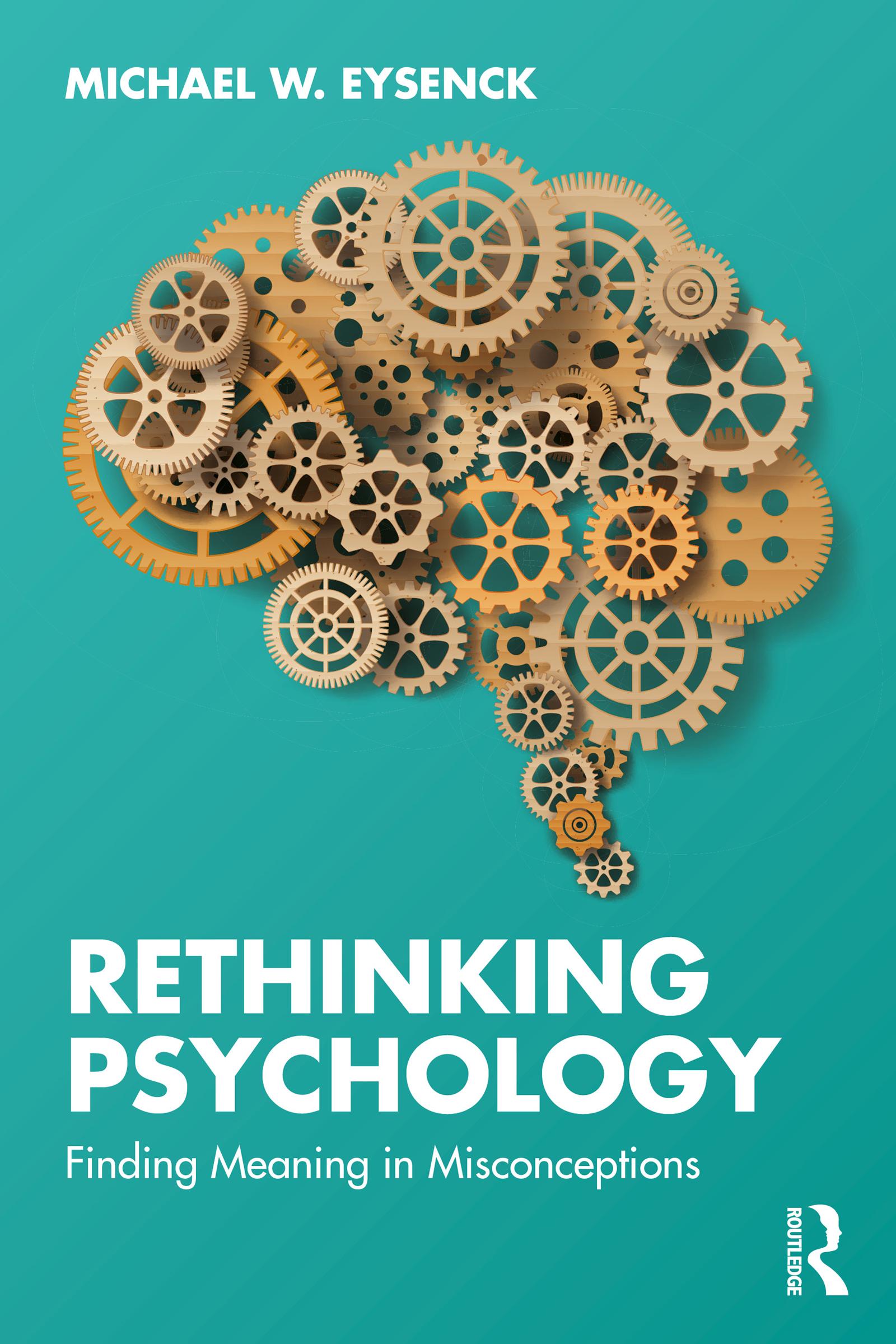
Can subliminal messages motivate behaviour? Can you train your brain to increase your intelligence? Does parenting style affect personality?
Psychologists and non-psychologists looking to understand human behaviour and cognition are forced to contend with a number of complexities unique to the field. Not least amongst these is the fact that psychology lacks the superficially attractive precision of theories in the hard sciences. It is inevitable, then, that non-psychologists are susceptible to numerous psychological myths.
In this thought-provoking exploration of 43 of the most common psychological myths, Michael W. Eysenck examines the complexity of psychological science as well as the distortion of data, not only through the media, but also by researchers, textbook writers, and individuals themselves. He challenges the notion that the substantial progress made by psychology has provided enough convincing experimental evidence to successfully demolish these inaccuracies and explores the ways in which psychological research should be systematically improved so that psychology can take its place as a robust scientific discipline. Highly engaging, this is an informative read for psychologists at all levels, as well as members of the general public interested in challenging their own psychological understanding.
Płać wygodnie kartą, Klarną, Apple Pay lub Google Pay. Nie jesteś zadowolony? Zawsze masz 14-dniową gwarancję zwrotu pieniędzy. Więcej przeczytasz w naszych warunkach. Masz pytania? Napisz do nas na hello@memmo.org.
Memmo ułatwia naukę – gdziekolwiek jesteś na świecie. U nas znajdziesz podręczniki i sprytne narzędzia do nauki w jednym miejscu: streszczenia, quizy, podcasty i fiszki. A do tego Ted, Twój kumpel do nauki, który odpowie na wszystko, co Cię nurtuje. Ponad 50 000 studentów już tu się uczy – stworzone, byś uczył się szybciej i mniej stresował.