
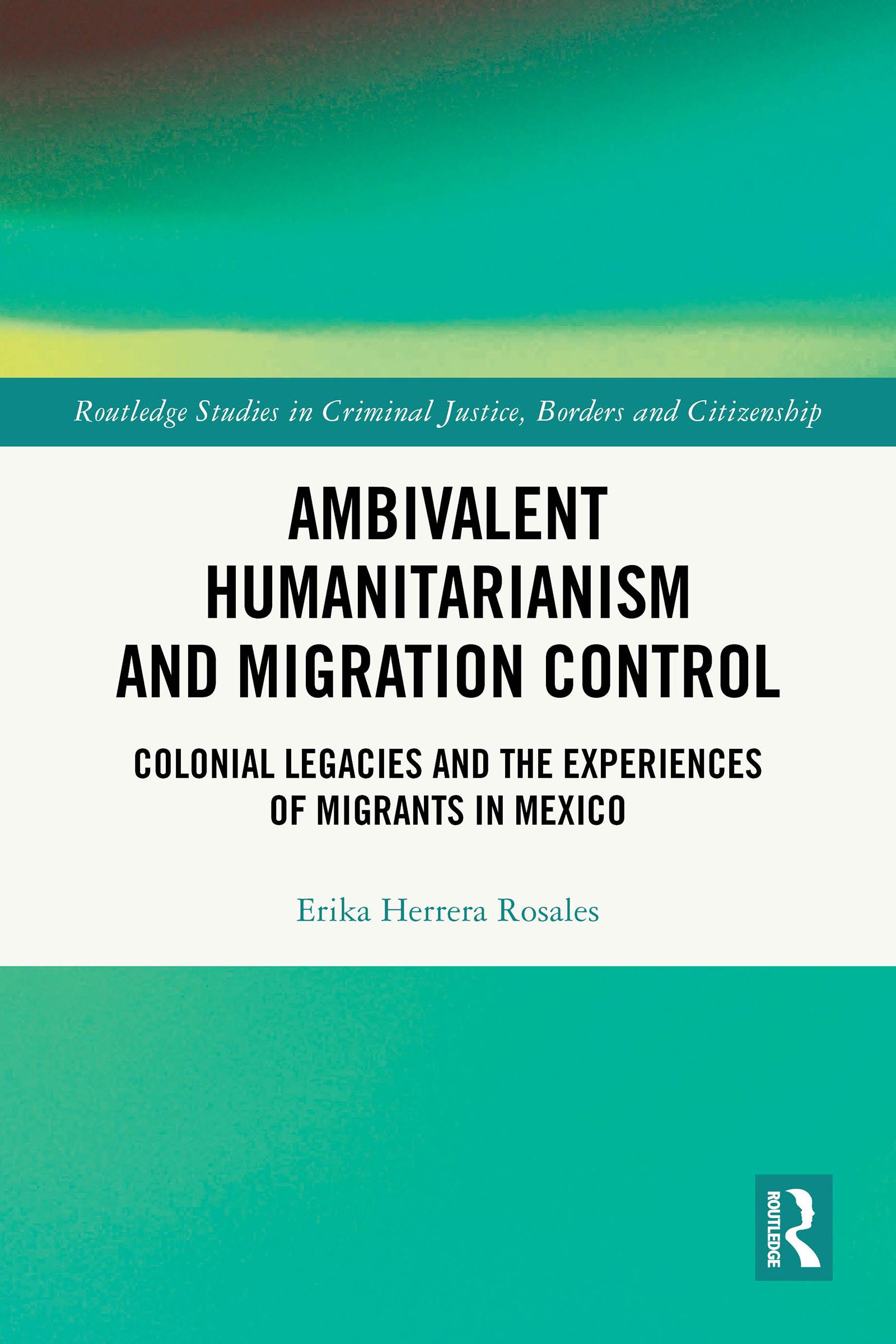
Ambivalent Humanitarianism and Migration Control explores the complex relationship between migrants and local aid organisations. These organisations have become indisputably relevant and highly regarded as allies to Northern Central American migrants trying to reach the United States. Thus, this book examines the implications of humanitarian actors in migration governance and bordering practices, which have serious and long-lasting effects on the lives of migrants.
Through an in-depth research in Mexico, this book suggests that humanitarian organisations are ambivalent institutions because they intend to help and support individuals while reinforcing social and power inequalities. It explores the narratives, roles, and practices of humanitarian workers, and, at the same time, addresses migrants’ resistance. From an interdisciplinary approach that employs critical humanitarian perspectives, post/decolonial theories, and criminological studies, this study provides a comprehensive analysis of migration governance and migrants’ agency.
A highly informative, insightful, and engaging read, Ambivalent Humanitarianism and Migration Control will appeal to students, scholars, and researchers in migration studies, border studies, sociology, and critical criminology. Given its international scope, it also will be of interest to academics, practitioners, and people in Latin America, the United States, the UK, Europe, and beyond.
Płać wygodnie kartą, Klarną, Apple Pay lub Google Pay. Nie jesteś zadowolony? Zawsze masz 14-dniową gwarancję zwrotu pieniędzy. Więcej przeczytasz w naszych warunkach. Masz pytania? Napisz do nas na hello@memmo.org.
Memmo ułatwia naukę – gdziekolwiek jesteś na świecie. U nas znajdziesz podręczniki i sprytne narzędzia do nauki w jednym miejscu: streszczenia, quizy, podcasty i fiszki. A do tego Ted, Twój kumpel do nauki, który odpowie na wszystko, co Cię nurtuje. Ponad 50 000 studentów już tu się uczy – stworzone, byś uczył się szybciej i mniej stresował.