
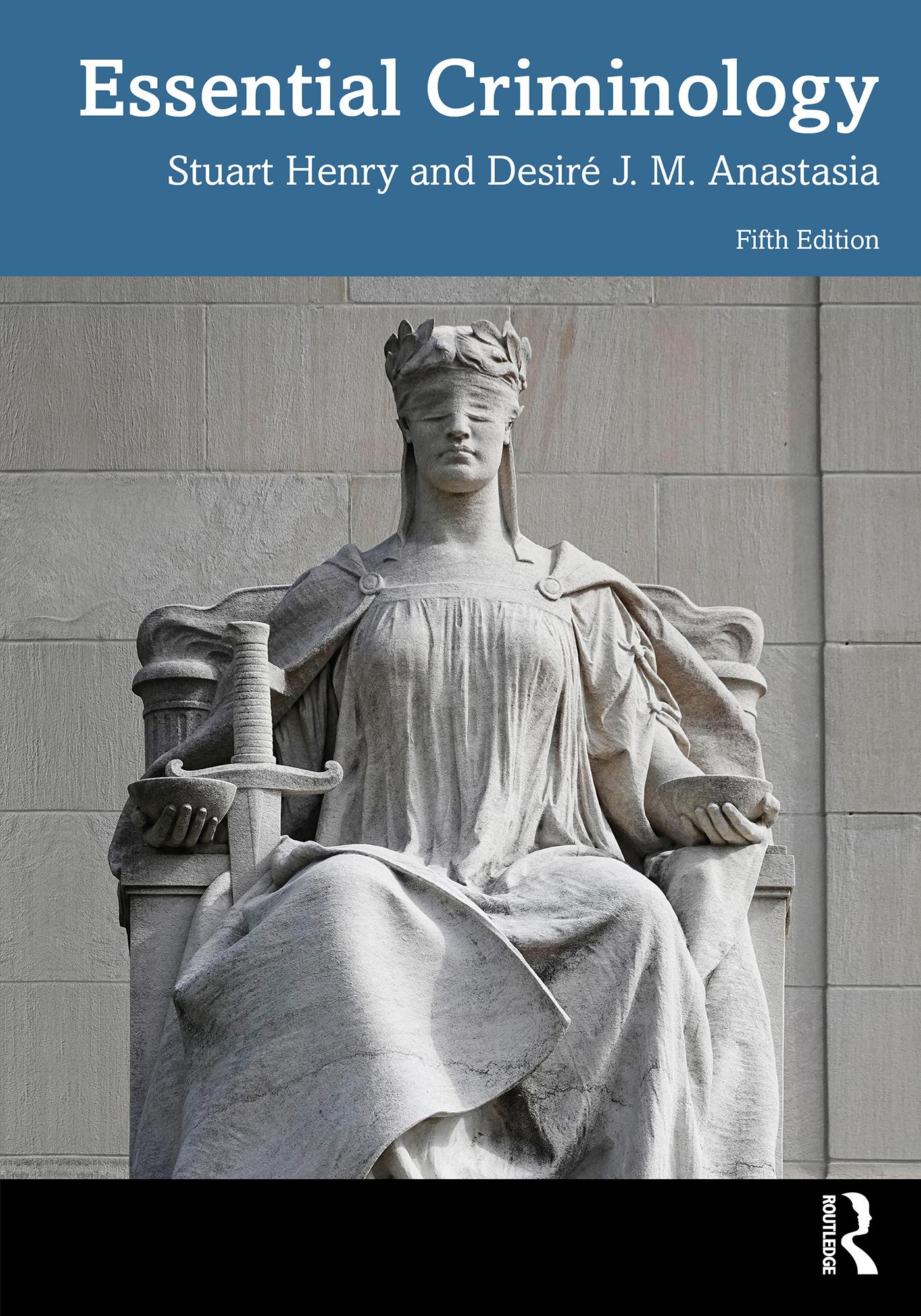
This significantly expanded edition of Essential Criminology covers the broadest range of criminological theories—the essential criminological theories—from longstanding ones such as classical theory and strain theory to recently introduced ones such as ultra-realism and green cultural criminology. Whether all are “essential” depends on one’s theoretical stance. The value of this text is its carefully designed comparative analysis, which helps readers consider their relative contribution to the field.
Originally designed as an alternative to lengthy and expensive introductory texts, Essential Criminology provides a concise, yet comprehensive overview of the field. The book offers a clear, structured, student-friendly, critical analytical examination of the nature of crime, theories of crime causation, and their criminal justice policy implications. Causal theories covered range from micro-level classical and rational choice to biological psychological, social learning, social control, and interactionist perspectives, to macro-level social ecology, anomie/strain, conflict, Marxist, feminist, and postmodernist theories. Over its 26-year history the book has added new theoretical perspectives as these have gained prominence. New to this edition are chapters on critical and ultra-realism, and critical green criminology and discussions of zemiology, critical race theory, and quantum holographic criminology. The authors have also expanded some theoretical frameworks that had previously been underdeveloped such as opportunity theory, subcultural theory, and social constructionism.
Essential Criminology contextualizes criminology in the globally interdependent 21st century, addressing the crimes of terrorism, global pandemics, and climate change. With its cutting-edge updates, illustrative real-world examples, and student-friendly study tools, including analytically comparable summary charts exposing each theory's ontological assumptions, this text was designed primarily for undergraduate criminology courses, but has also been adopted by community colleges and graduate programs in criminology, sociology, and political science.
Płać wygodnie kartą, Klarną, Apple Pay lub Google Pay. Nie jesteś zadowolony? Zawsze masz 14-dniową gwarancję zwrotu pieniędzy. Więcej przeczytasz w naszych warunkach. Masz pytania? Napisz do nas na hello@memmo.org.
Memmo ułatwia naukę – gdziekolwiek jesteś na świecie. U nas znajdziesz podręczniki i sprytne narzędzia do nauki w jednym miejscu: streszczenia, quizy, podcasty i fiszki. A do tego Ted, Twój kumpel do nauki, który odpowie na wszystko, co Cię nurtuje. Ponad 50 000 studentów już tu się uczy – stworzone, byś uczył się szybciej i mniej stresował.