
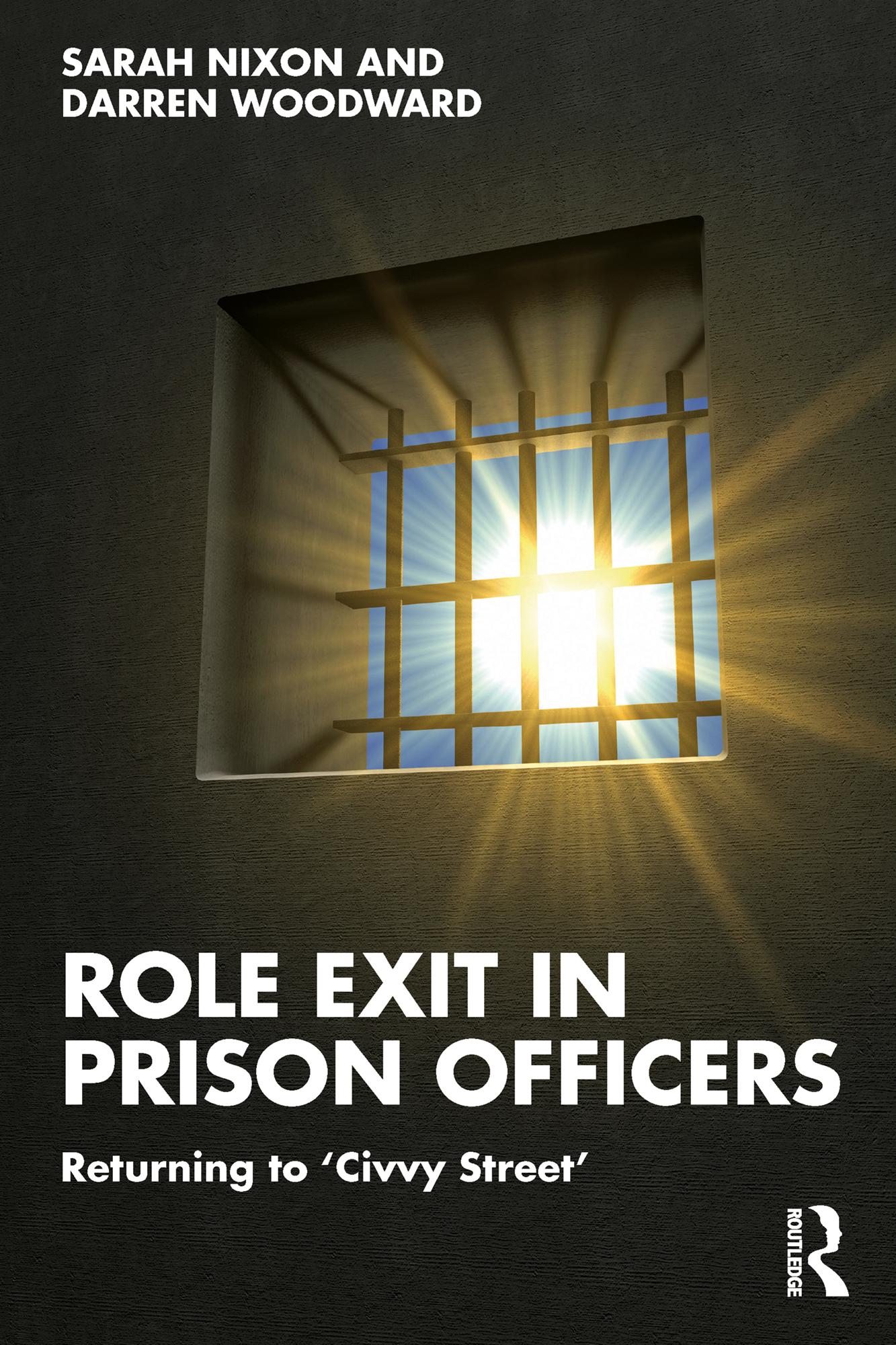
Exploring why prison officers leave His Majesty’s Prison and Probation Service (HMPPS) and the processes and trajectories involved in returning to ‘civilian life’, this book examines the reasons that prison officers want to leave HMPPS and how they transition back to ‘civvy street’.
As well as presenting qualitative data from interviews with ex-prison officers, the authors also draw analytically on their ‘insider’ positionality to offer insights on the lived experience of prison officers both in the role and on their subsequent departure from the service. In doing so, they identify the rewards and challenges of working in a prison environment, while using Ebaugh’s (1988) four-stage model of role exit as a theoretical framework to help understand the process of leaving the prison service. Among the issues addressed are the impact of austerity, the Voluntary Early Departure Scheme, the decline in transmission of knowledge (‘jail craft’) to new recruits, high staff turnover, increased violence and the impact of COVID-19. These are counterbalanced by an exposition of what ex-prison officers recall positively about their time in service, such as loyalty, support, solidarity and pride in the uniform and helping prisoners with their custodial lives. The authors also put forward practical recommendations for ways in which HMPPS could encourage prison officers to stay in post for longer.
Providing authentic insights into the role of ex-prison officers, this book is ideal reading for students and academics of criminology, penology, criminal justice, sociology and criminal psychology. It will also be of interest to criminal justice practitioners and organisations such as Unlocked Graduates, the Howard League for Penal Reform and the Prison Reform Trust.
Płać wygodnie kartą, Klarną, Apple Pay lub Google Pay. Nie jesteś zadowolony? Zawsze masz 14-dniową gwarancję zwrotu pieniędzy. Więcej przeczytasz w naszych warunkach. Masz pytania? Napisz do nas na hello@memmo.org.
Memmo ułatwia naukę – gdziekolwiek jesteś na świecie. U nas znajdziesz podręczniki i sprytne narzędzia do nauki w jednym miejscu: streszczenia, quizy, podcasty i fiszki. A do tego Ted, Twój kumpel do nauki, który odpowie na wszystko, co Cię nurtuje. Ponad 50 000 studentów już tu się uczy – stworzone, byś uczył się szybciej i mniej stresował.