
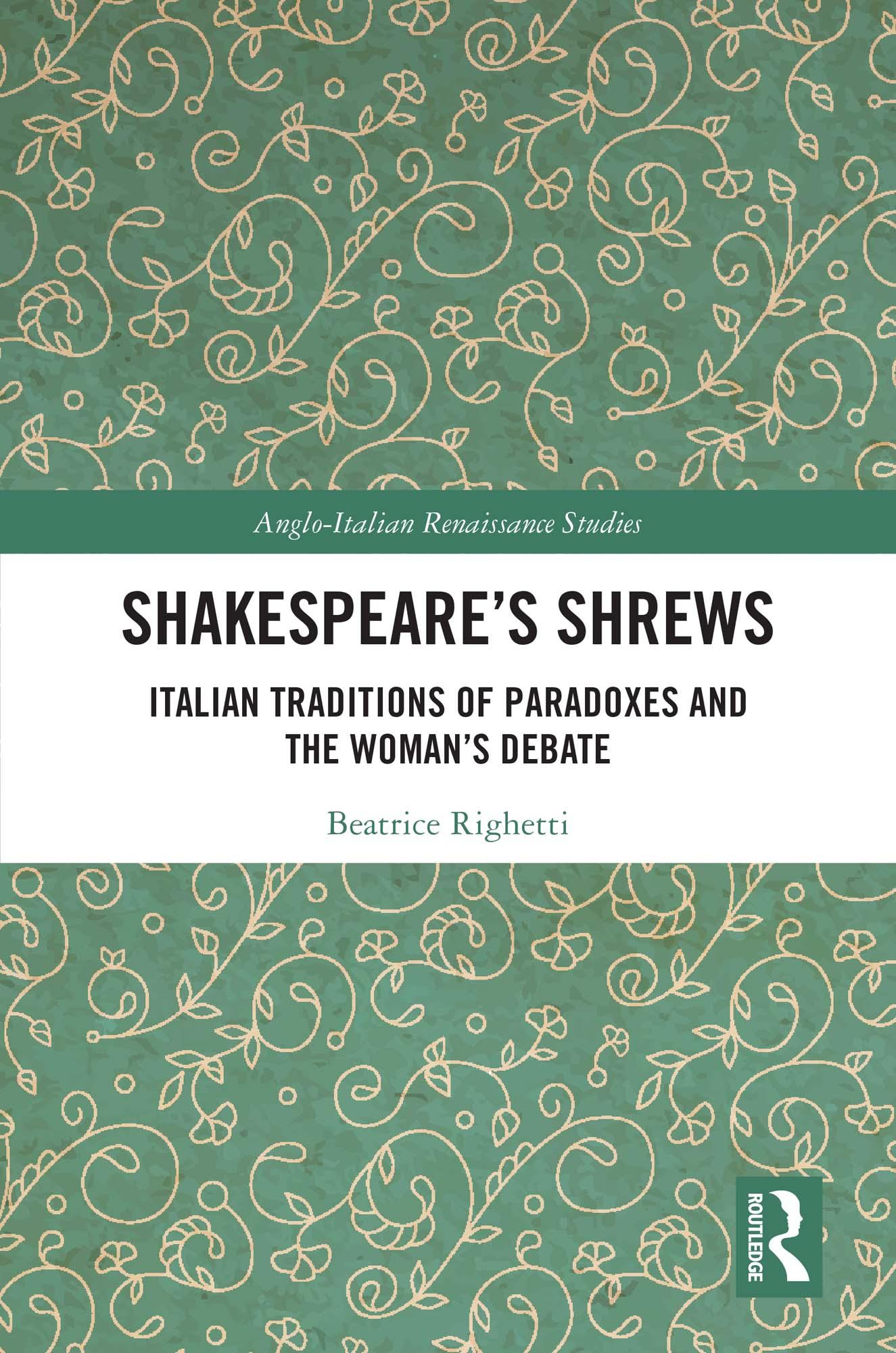
Shakespeare’s Shrews: Italian Traditions of Paradoxes and the Woman’s Debate investigates the echoes of two early modern discourses—paradoxical writing and the woman’s question or querelle des femmes—in the representation of the “Shakespearean shrew” in The Taming of the Shrew, Much Ado About Nothing, and Othello.
This comparative cross‑cultural study explores the English reception of these traditions through the circulation, translation, and adaptation of Italian works such as Ludovico Ariosto’s Orlando Furioso, Baldassare Castiglione’s Il libro del cortegiano, and Ercole and Torquato Tasso’s Dell’ammogliarsi. The enticing interplay of these two discourses is further complicated by their presence in the writing of early modern male and female authors. The examination of Shakespeare’s adaptation of these traditions in his “shrew” character highlights two key findings: the thematic fragmentation of the woman’s question and the evolving role of paradoxes, from figures of speech to “figures of thought”, both influenced by the gender of the speaker.
Płać wygodnie kartą, Klarną, Apple Pay lub Google Pay. Nie jesteś zadowolony? Zawsze masz 14-dniową gwarancję zwrotu pieniędzy. Więcej przeczytasz w naszych warunkach. Masz pytania? Napisz do nas na hello@memmo.org.
Memmo ułatwia naukę – gdziekolwiek jesteś na świecie. U nas znajdziesz podręczniki i sprytne narzędzia do nauki w jednym miejscu: streszczenia, quizy, podcasty i fiszki. A do tego Ted, Twój kumpel do nauki, który odpowie na wszystko, co Cię nurtuje. Ponad 50 000 studentów już tu się uczy – stworzone, byś uczył się szybciej i mniej stresował.