
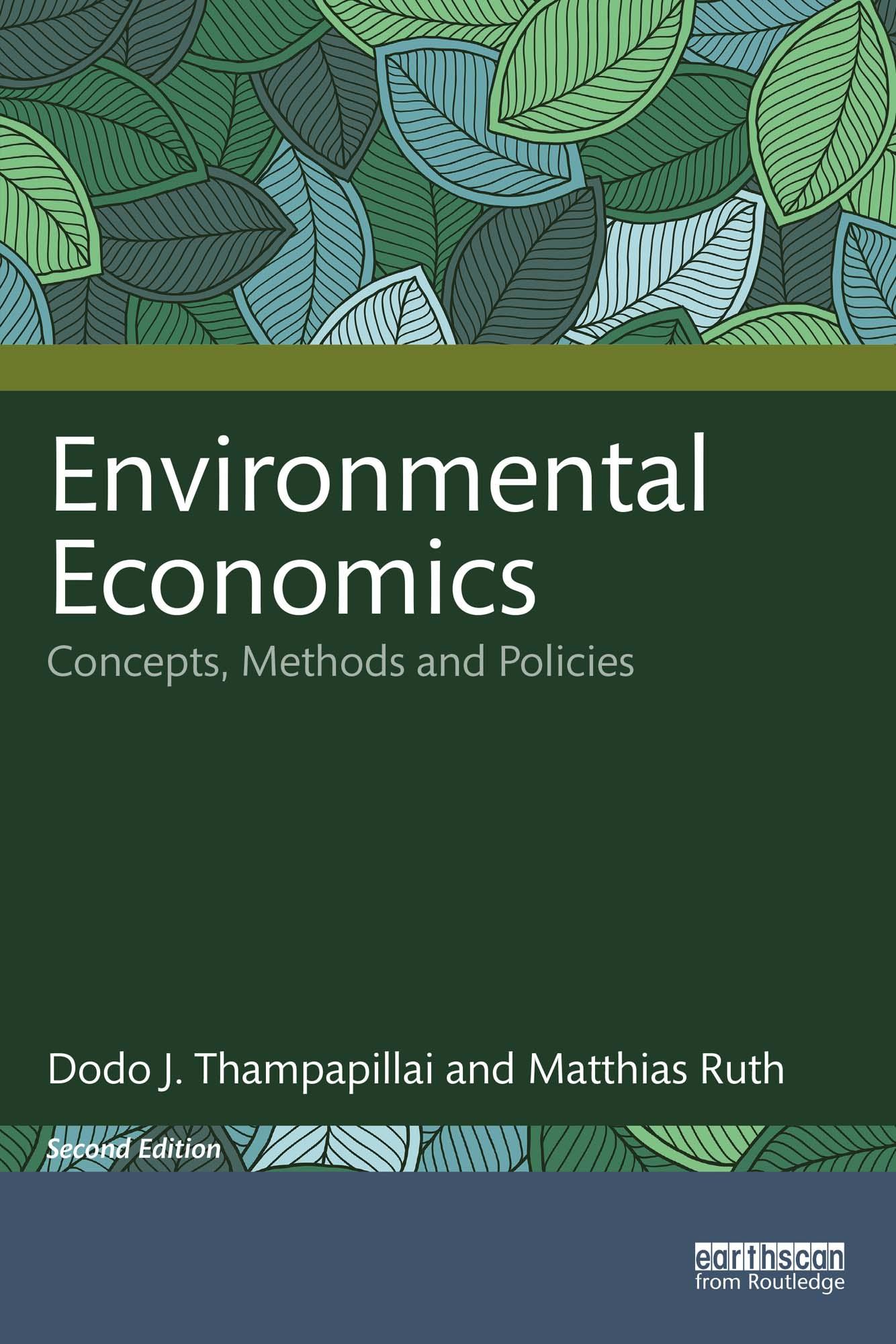
Environmental Economics explores the ways in which economic theory and its applications, as practised and taught today, must be modified to explicitly accommodate the goal of sustainability and the vital role played by environmental capital.
Pivoting around the first and second laws of thermodynamics, as well as the principles of ecological resilience, this book is divided into five key parts, which include extensive coverage of environmental microeconomics and macroeconomics. It drills down into issues and challenges including consumer demand; production and supply; market organisation; renewable and non-renewable resources; environmental valuation; macroeconomic stabilisation and international trade and globalisation. Drawing on case studies from forestry, water, soil, air quality and mining, this book will equip readers with skills that enable the analyses of environmental and economic policy issues with a specific focus on the sustainability of the economy. This new edition has been updated throughout and provides further coverage on topics such as energy transition, market organisation and the role of environmental economics in regulatory decision-making including critiques of contemporary policy directives like tradable pollution permits and net zero emissions. Challenges to achieving stabilisation and emission reduction have been expanded to include wars and conflicts such as those in the Middle East and the Russian invasion of Ukraine. This book further reinforces the premise that there are clear limits to growth and that modesty and moderation are superior alternatives.
Rich in pedagogical features, including key concept boxes and review questions at the end of each chapter, this book will be a vital resource for upper-level undergraduate and postgraduate students studying not only environmental economics/ecological economics but also economics in general.
Płać wygodnie kartą, Klarną, Apple Pay lub Google Pay. Nie jesteś zadowolony? Zawsze masz 14-dniową gwarancję zwrotu pieniędzy. Więcej przeczytasz w naszych warunkach. Masz pytania? Napisz do nas na hello@memmo.org.
Memmo ułatwia naukę – gdziekolwiek jesteś na świecie. U nas znajdziesz podręczniki i sprytne narzędzia do nauki w jednym miejscu: streszczenia, quizy, podcasty i fiszki. A do tego Ted, Twój kumpel do nauki, który odpowie na wszystko, co Cię nurtuje. Ponad 50 000 studentów już tu się uczy – stworzone, byś uczył się szybciej i mniej stresował.