
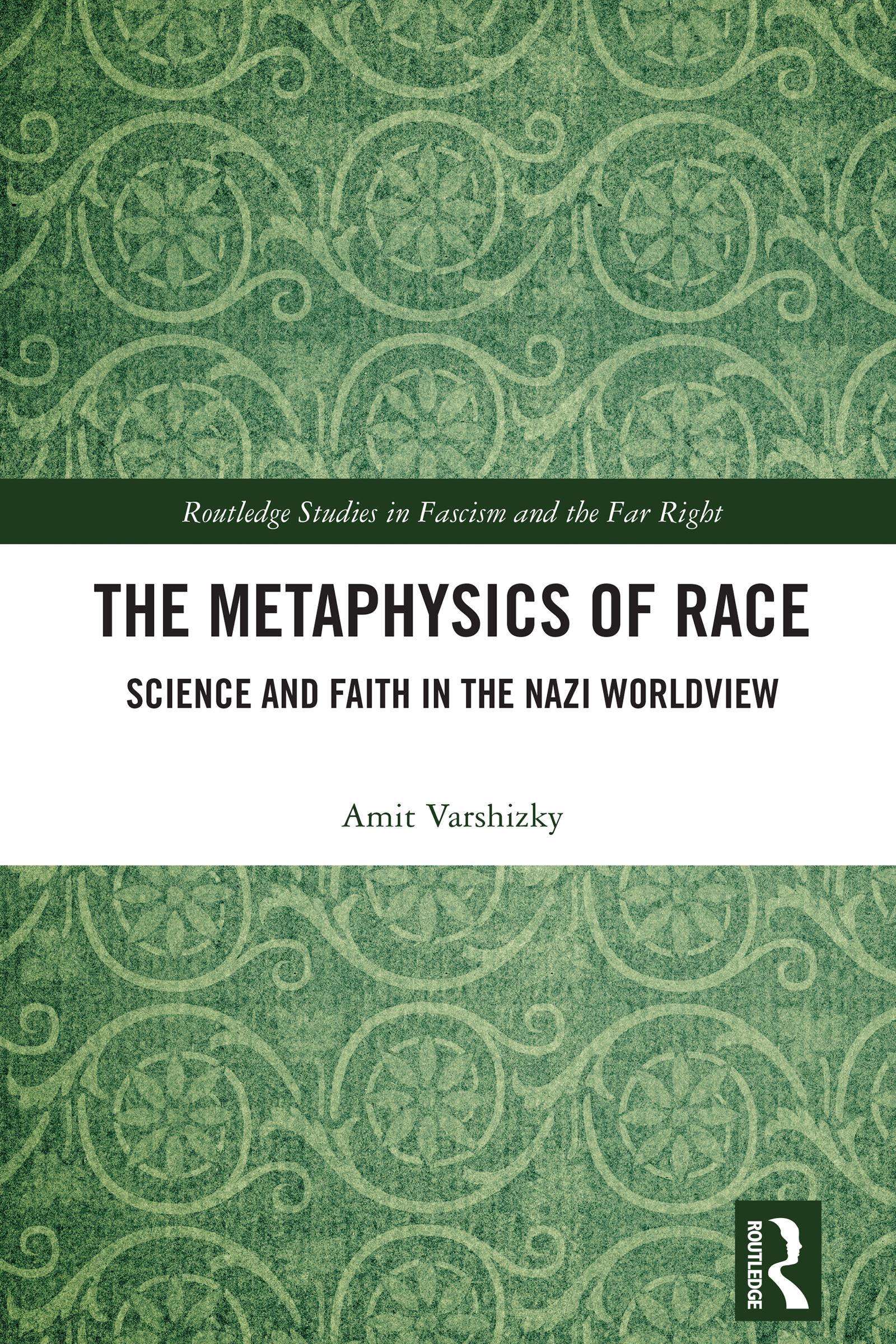
This book seeks to reframe debates on the conflicting scientific and spiritual traditions that underpinned the Nazi worldview, showing how despite the multitude of tensions and rivals among its adherents, it provided a coherent conceptual grid and possessed its own philosophical consistency.
Drawing on a large variety of works, the volume offers insights into the intellectual climate that allowed the radical ideology of National Socialism to take hold. It examines the emergence of nuanced conceptions of race in interwar Germany and the pursuit of a new ethical and existential fulcrum in biology. Accordingly, the volume calls for a re-examination of the place of genetics in Nazi racial thought, drawing attention to the multi-register voices within the framework of interwar racial theory. Varshizky explores the ways in which these ideas provided new justifications for the Nazi revolutionary enterprise and blurred the distinction between fact and value, knowledge and faith, the secular and the sacred, and how they allowed Nazi thinkers to bounce across these epistemological divisions.
This volume will be of interest to scholars of Nazi Germany and World War II, intellectual and cultural history, the history of science, and the philosophy of religion.
Płać wygodnie kartą, Klarną, Apple Pay lub Google Pay. Nie jesteś zadowolony? Zawsze masz 14-dniową gwarancję zwrotu pieniędzy. Więcej przeczytasz w naszych warunkach. Masz pytania? Napisz do nas na hello@memmo.org.
Memmo ułatwia naukę – gdziekolwiek jesteś na świecie. U nas znajdziesz podręczniki i sprytne narzędzia do nauki w jednym miejscu: streszczenia, quizy, podcasty i fiszki. A do tego Ted, Twój kumpel do nauki, który odpowie na wszystko, co Cię nurtuje. Ponad 50 000 studentów już tu się uczy – stworzone, byś uczył się szybciej i mniej stresował.