
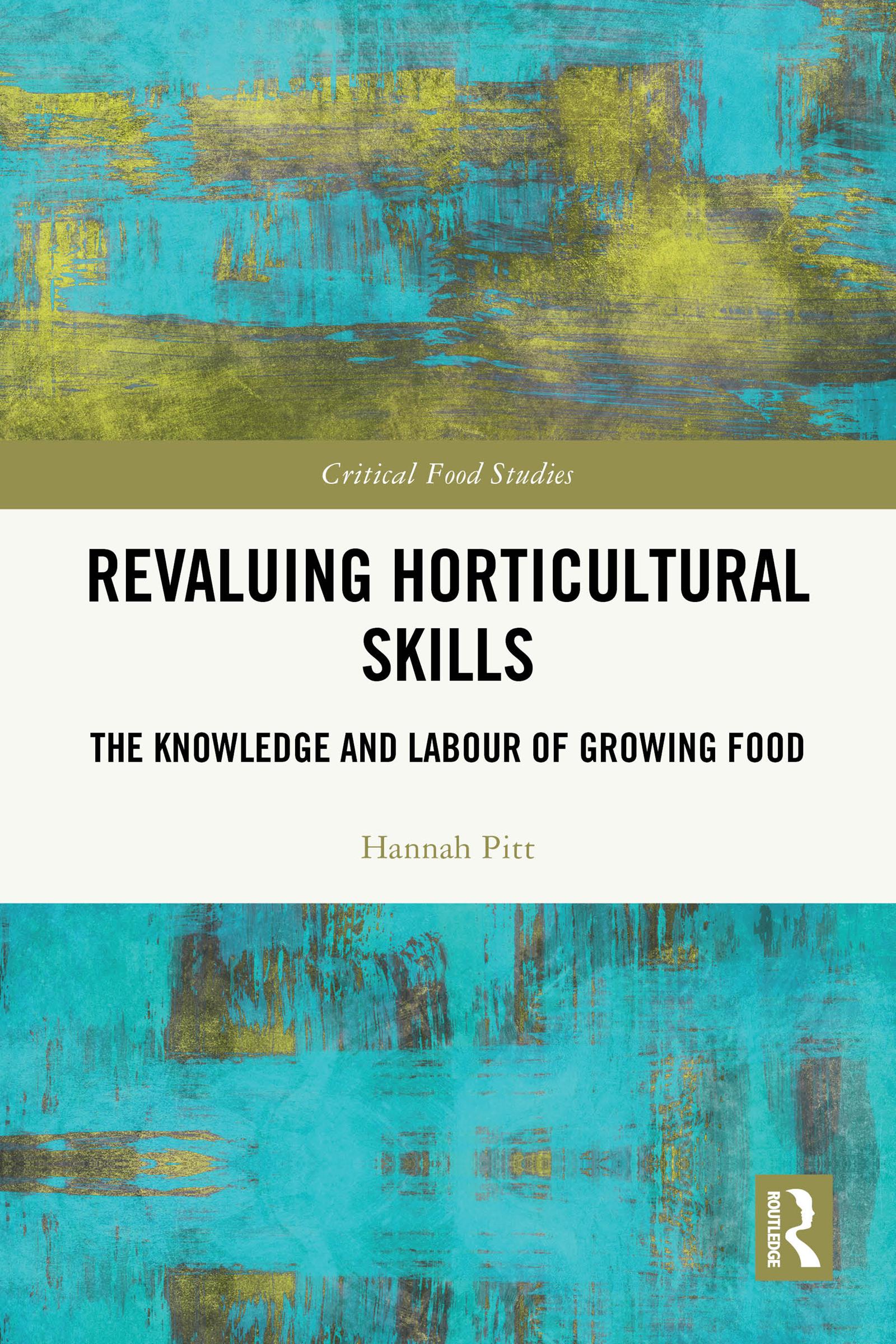
This book highlights the value and skill of horticultural work through stories of food cultivation. It examines the difficulties that arise from the perception that this type of activity is unskilled and the importance of acknowledging the expertise involved in growing food.
The book provides a rare focus on horticulture as a vital part of agri-food systems, offering a social science perspective on the sector’s current and past characteristics. It presents new primary research into horticultural work and workers across UK food growing, using close attention to their abilities to highlight the depth of their knowledge and learning. This is set in the context of global agri-food regimes which press producers to seek ever more precarious labour, undermining food justice. By examining these in the context of internationally connected supply chains, it characterises injustices which recur globally and across food system labour. The conceptual argument starts from an ecological definition of skill as a social practice embedded within its socio-economic landscape, developing this perspective beyond its association with artisanal contexts. Together the empirical and conceptual materials highlight the fallacy of discourse which tends to individualise skill and the challenges around recruitment into food production. To counter this, the book proposes a more collective approach to fostering healthy skills ecosystems, reaching towards commoning through examples of horticultural communities seeking this in the meantime.
It will appeal to postgraduates, researchers and professionals interested in food systems, their workers and related topics of horticultural education, training and human resources, labour, migration and politics of injustice. It draws on perspectives from rural studies, human geography and sociology and connects with international debates in these fields. Food focused scholars and activists will find data and insights to support calls for better work in food systems.
Płać wygodnie kartą, Klarną, Apple Pay lub Google Pay. Nie jesteś zadowolony? Zawsze masz 14-dniową gwarancję zwrotu pieniędzy. Więcej przeczytasz w naszych warunkach. Masz pytania? Napisz do nas na hello@memmo.org.
Memmo ułatwia naukę – gdziekolwiek jesteś na świecie. U nas znajdziesz podręczniki i sprytne narzędzia do nauki w jednym miejscu: streszczenia, quizy, podcasty i fiszki. A do tego Ted, Twój kumpel do nauki, który odpowie na wszystko, co Cię nurtuje. Ponad 50 000 studentów już tu się uczy – stworzone, byś uczył się szybciej i mniej stresował.