
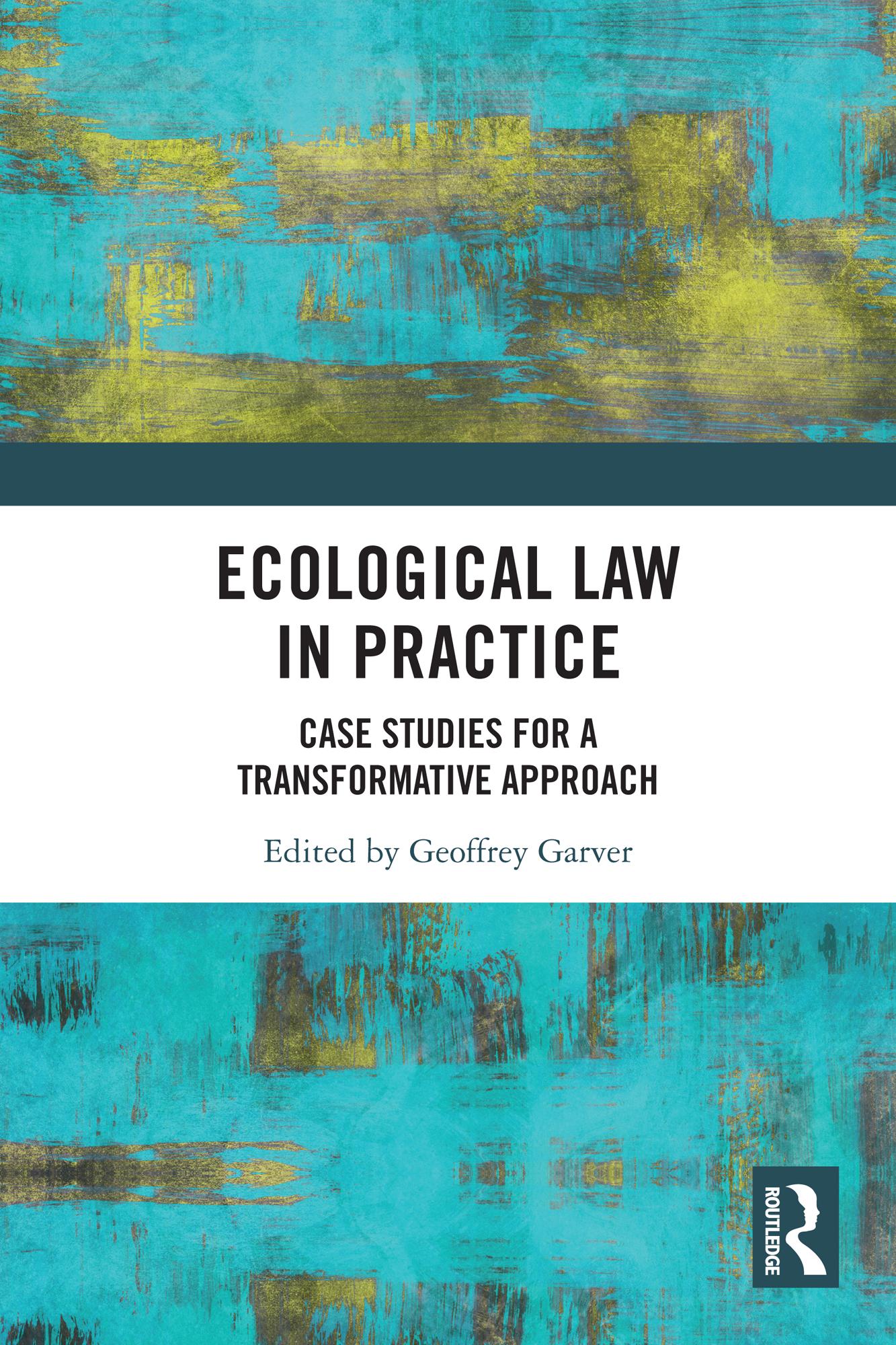
This book presents a series of "ecological law" case studies, designed to illustrate in concrete, real-world ways how ecological law would transform law in a range of diverse contexts.
Ecological law is an emerging, and currently mostly theoretical, discipline grounded in the need to shift away from anthropocentric legal systems, which aim to promote economic growth using strong protections of private property regimes and state sovereignty, to ecological approaches, which emphasize ecocentrism, the primacy of ecological limits, and intragenerational, intergenerational, and interspecies fairness and justice. The ecological law case studies presented in this book apply the theoretical principles and concepts of ecological law to diverse real-world situations or activities in several countries and contexts. Taking up a range of examples from Brazil, Canada, Germany, Mexico, Nigeria, the United States, and internationally, the book demonstrates the concrete relevance of ecological law to contemporary sustainability challenges, as it reveals pathways for overcoming real-world challenges in the implementation and public acceptance of ecological law.
This book will appeal to researchers, scholars, and policy makers working in the area of environmental law and governance, as well as others with relevant interests in sociolegal studies, human geography, political science, and environmental studies.
Płać wygodnie kartą, Klarną, Apple Pay lub Google Pay. Nie jesteś zadowolony? Zawsze masz 14-dniową gwarancję zwrotu pieniędzy. Więcej przeczytasz w naszych warunkach. Masz pytania? Napisz do nas na hello@memmo.org.
Memmo ułatwia naukę – gdziekolwiek jesteś na świecie. U nas znajdziesz podręczniki i sprytne narzędzia do nauki w jednym miejscu: streszczenia, quizy, podcasty i fiszki. A do tego Ted, Twój kumpel do nauki, który odpowie na wszystko, co Cię nurtuje. Ponad 50 000 studentów już tu się uczy – stworzone, byś uczył się szybciej i mniej stresował.