
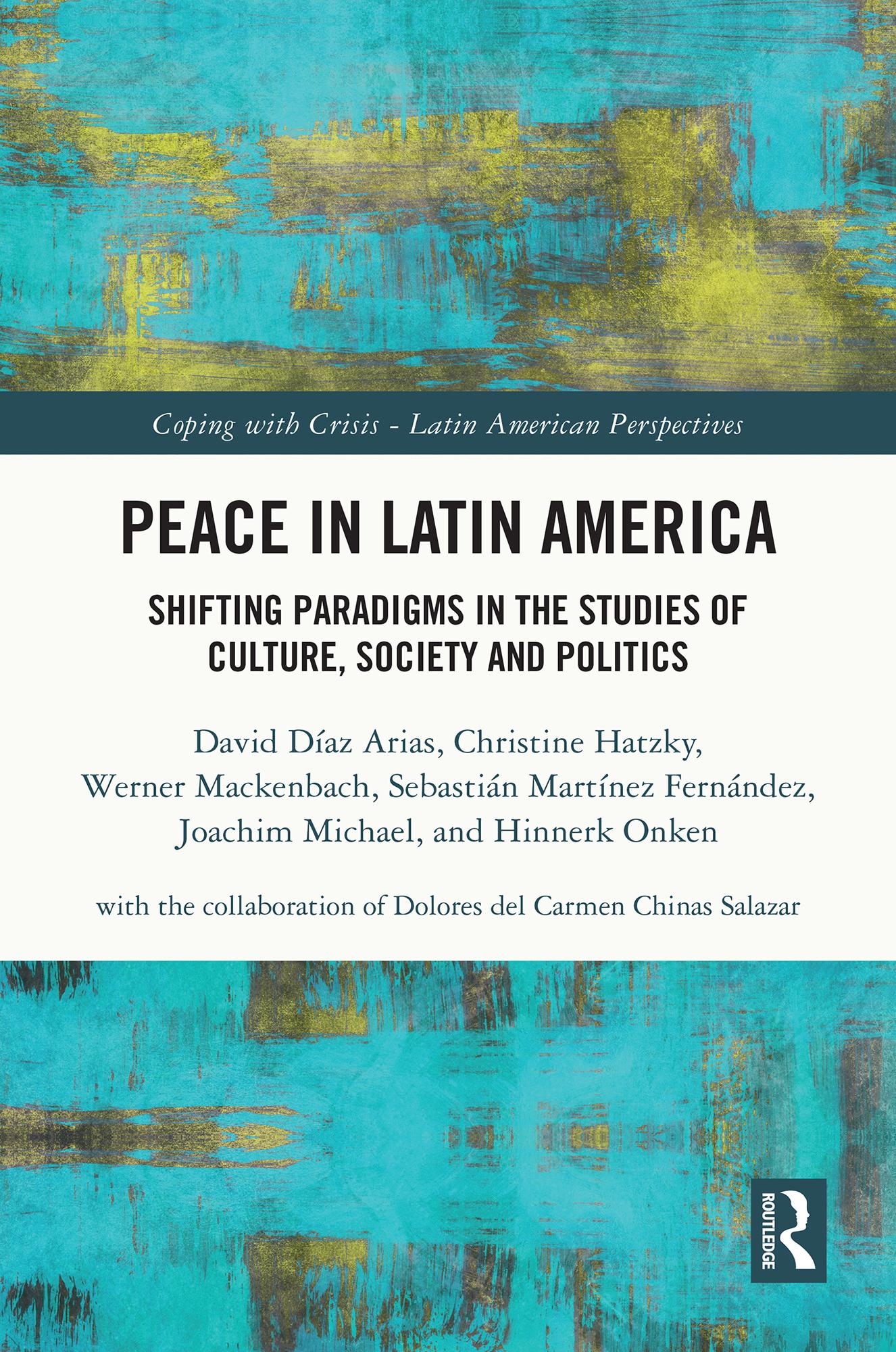
This volume shifts the focus from violence to peace studies in Latin America and sheds light on how social groups and individuals resist to violence and strive to create peaceful or at least less violent conditions of conviviality. Drawing on social sciences, history, and anthropology, but also on cultural, literary, and film studies, the book examines the role of social mobilizations, civic activism, and cultural/artistic initiatives as responses to the crisis of violence, which the state is unable or unwilling to address. In this sense, it debates what a culture of peace could mean in Latin America.
Divided into four chapters, Chapter 1 discusses peace from an epistemological and philosophical perspective. In Chapter 2, the authors discuss the contours of a culture of peace with a particular focus on literary and cinematic narratives. Chapter 3 analyses the public debate about the role of the state in peace processes in the case of Costa Rica/Central America. Chapter 4 examines the importance of civil society activities in peace processes.
Peace in Latin America is written for a wide and diverse audience that includes researchers, professors, specialists, students, civil society activists, and political actors not only from Latin America but from all over the world.
Płać wygodnie kartą, Klarną, Apple Pay lub Google Pay. Nie jesteś zadowolony? Zawsze masz 14-dniową gwarancję zwrotu pieniędzy. Więcej przeczytasz w naszych warunkach. Masz pytania? Napisz do nas na hello@memmo.org.
Memmo ułatwia naukę – gdziekolwiek jesteś na świecie. U nas znajdziesz podręczniki i sprytne narzędzia do nauki w jednym miejscu: streszczenia, quizy, podcasty i fiszki. A do tego Ted, Twój kumpel do nauki, który odpowie na wszystko, co Cię nurtuje. Ponad 50 000 studentów już tu się uczy – stworzone, byś uczył się szybciej i mniej stresował.