
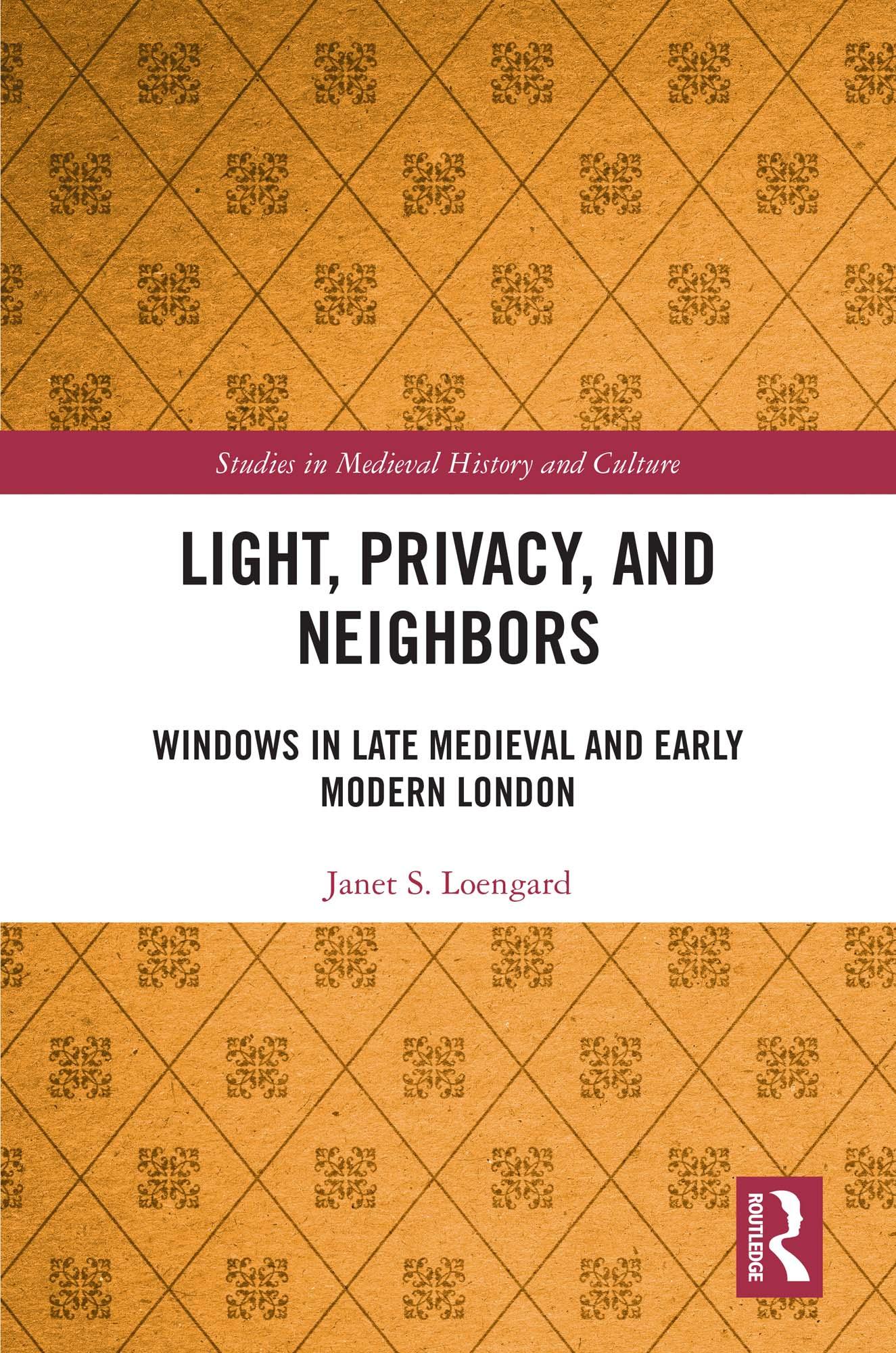
Density of housing in late medieval and early modern London could make access to light and privacy incompatible, provoking neighbor disputes. This book examines the Custom of London on light, which reflected centuries-old ideas about the right to have, or prevent neighbors from having, windows.
The volume explores the background of the Custom and its enforcement by legal action in the Mayor’s Court and by less formal action in the Court of Aldermen, discussing the effect of decisions on the architecture and appearance of the City. It investigates the reasons behind householders’ strongly held feelings about windows, with the need for light and the status evidenced by glazed windows balanced by an insistence on privacy, fear of intruders or accidents, and expense. Over time amendments were made in practice and the Custom survived the Great Fire of 1666, reflecting the continuity of long-held ideas about property rights and acceptable behavior.
With both legal and social themes, the book will be of interest to historians, architects, city planners, lawyers curious about the background for modern law on physical privacy, and anyone fascinated by the history of London.
Płać wygodnie kartą, Klarną, Apple Pay lub Google Pay. Nie jesteś zadowolony? Zawsze masz 14-dniową gwarancję zwrotu pieniędzy. Więcej przeczytasz w naszych warunkach. Masz pytania? Napisz do nas na hello@memmo.org.
Memmo ułatwia naukę – gdziekolwiek jesteś na świecie. U nas znajdziesz podręczniki i sprytne narzędzia do nauki w jednym miejscu: streszczenia, quizy, podcasty i fiszki. A do tego Ted, Twój kumpel do nauki, który odpowie na wszystko, co Cię nurtuje. Ponad 50 000 studentów już tu się uczy – stworzone, byś uczył się szybciej i mniej stresował.