
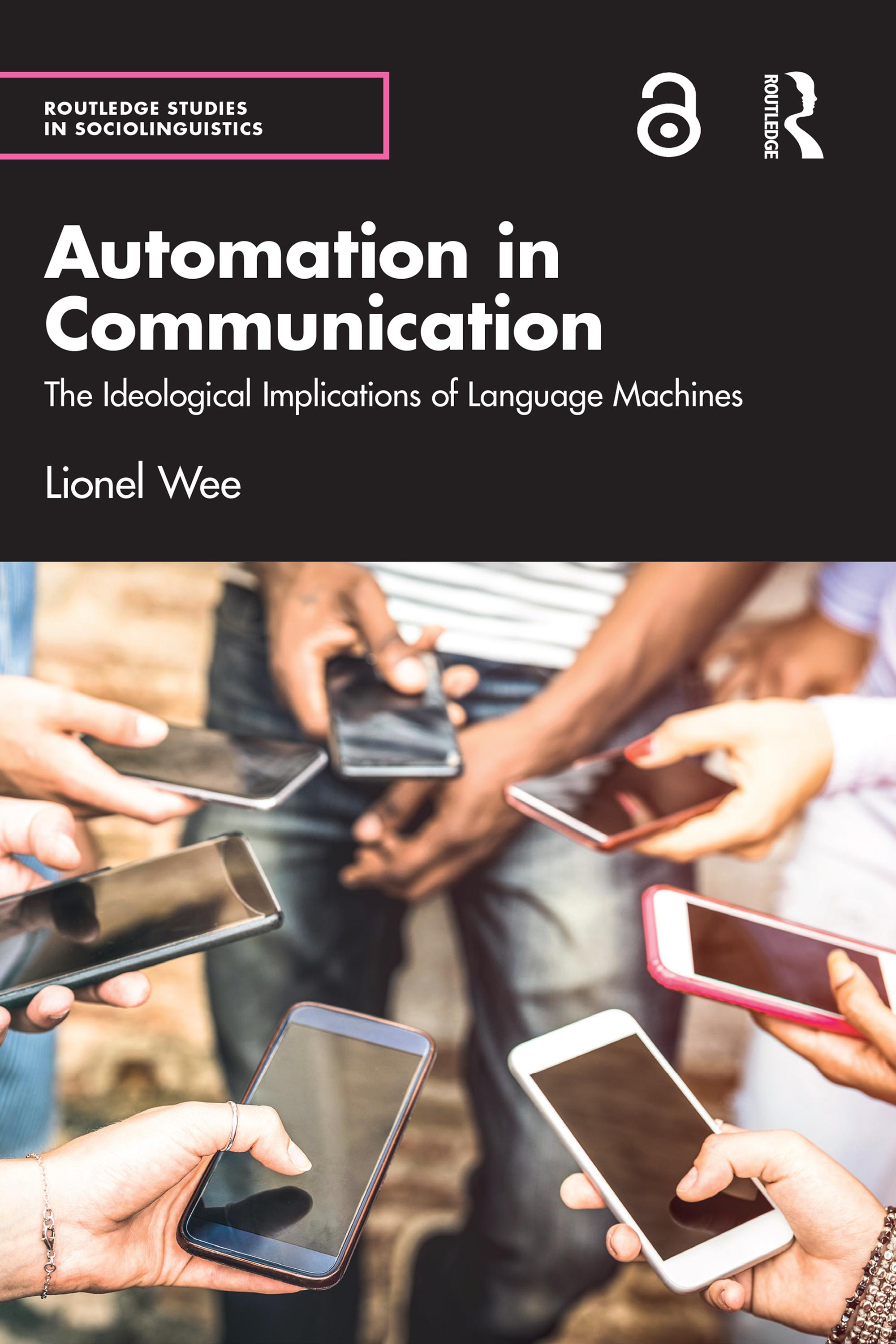
By drawing on multiple examples from healthcare, religion, service encounters and poetry, Lionel Wee presents rich insights into the use of automation in communication through a posthumanist lens.
As communication becomes increasingly automated, the use of automation creates significant conceptual challenges for ideologies about language, beliefs about the nature of language, as well as assumptions about the roles that interpretation, anthropomorphism, and folk theories of mind play when language is used in communication. This book unravels the ideological implications of automation in communication and provides a new theoretical ground to address the major issues raised by automation. Wee discusses the importance of thinking carefully about how we identify and distinguish the roles of speaker and hearer. He also argues that we re-evaluate our understanding of the relationship between language and community.
This book will be vital to students interested in studying the intersections of AI, language and communication, as well as researchers working in communication studies, linguistics and the broader sociology of language in the age of technological change.
Płać wygodnie kartą, Klarną, Apple Pay lub Google Pay. Nie jesteś zadowolony? Zawsze masz 14-dniową gwarancję zwrotu pieniędzy. Więcej przeczytasz w naszych warunkach. Masz pytania? Napisz do nas na hello@memmo.org.
Memmo ułatwia naukę – gdziekolwiek jesteś na świecie. U nas znajdziesz podręczniki i sprytne narzędzia do nauki w jednym miejscu: streszczenia, quizy, podcasty i fiszki. A do tego Ted, Twój kumpel do nauki, który odpowie na wszystko, co Cię nurtuje. Ponad 50 000 studentów już tu się uczy – stworzone, byś uczył się szybciej i mniej stresował.