
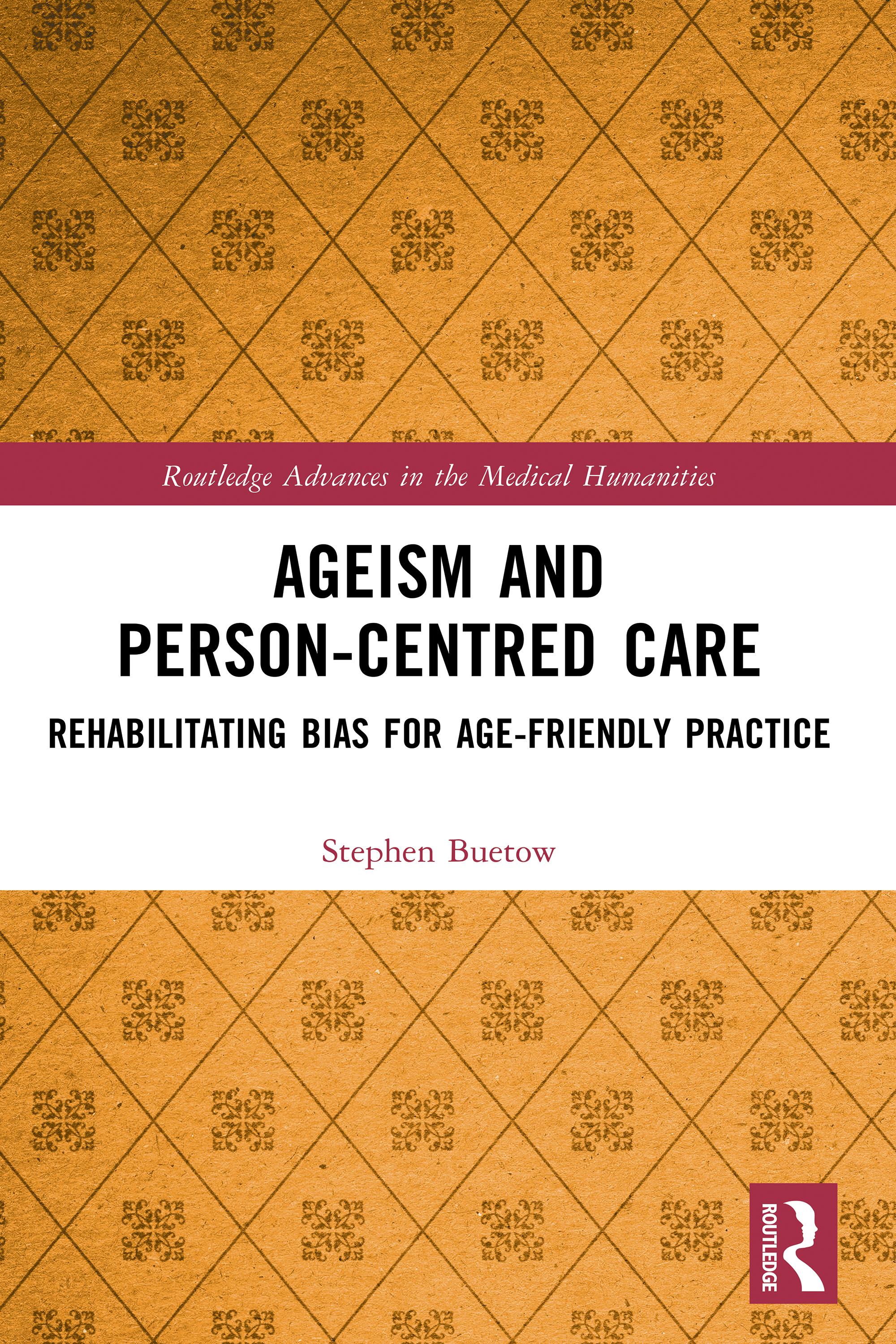
This thought-provoking book exposes the values, judgements, and hierarchies that underlie ageism in care settings. Destabilizing the assumption that biases like ageism are always bad, Buetow suggests that ageism is normatively neutral and that truly person-centred care requires situated acknowledgement of and responsiveness to its negative and positive aspects.
Buetow contends that respecting meaningful age differences between persons as moral agents puts ageism on the radar of care environments, weakening barriers to engagement. His analysis moves from concern for age-friendliness to prudent ageism that enables person-centred care to apply practical wisdom in everyday, age-sensitive judgement and decision-making. Challenging political correctness and advocating for justice rather than social justice, Buetow discusses how prudent ageism may advantage some age groups over others in particular circumstances while providing a moral structure for managing real rather than socially constructed differences.
Looking at how age-sensitive judgments combined with a person first approach can inform research, policy, and practice, this book will interest students and researchers from fields like health and social care, and disciplines, such as sociology, psychology, politics, and philosophy.
Płać wygodnie kartą, Klarną, Apple Pay lub Google Pay. Nie jesteś zadowolony? Zawsze masz 14-dniową gwarancję zwrotu pieniędzy. Więcej przeczytasz w naszych warunkach. Masz pytania? Napisz do nas na hello@memmo.org.
Memmo ułatwia naukę – gdziekolwiek jesteś na świecie. U nas znajdziesz podręczniki i sprytne narzędzia do nauki w jednym miejscu: streszczenia, quizy, podcasty i fiszki. A do tego Ted, Twój kumpel do nauki, który odpowie na wszystko, co Cię nurtuje. Ponad 50 000 studentów już tu się uczy – stworzone, byś uczył się szybciej i mniej stresował.