
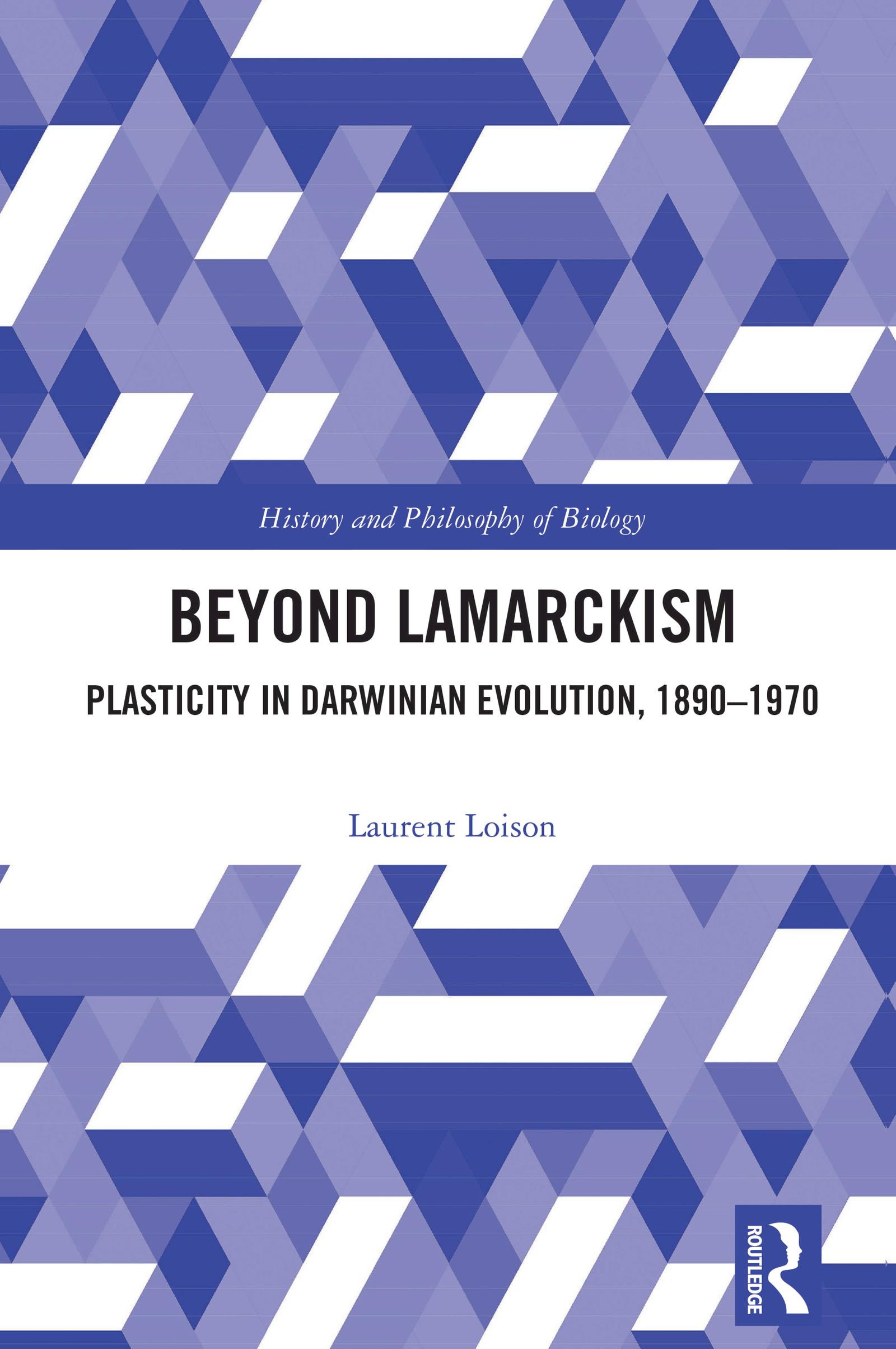
Over the past 20 years, the role of phenotypic plasticity in Darwinian evolution has become a hotly debated topic among biologists and philosophers of science. For instance, in the Extended Evolutionary Synthesis, a new form of evolutionary theory that aims to include processes not taken into account by standard theory (the Modern Synthesis), the question of the remarkable plasticity of living beings is central.
Beyond Lamarckism: Plasticity in Darwinian Evolution, 1890–1970 shows that the evolutionary impact of plasticity was in fact debated long before the emergence of the current debate on the limits of the Modern Synthesis. The question of how the plasticity of organisms could play a causal role in Darwinian evolution was raised on two separate occasions: first, around 1900, with the emergence of the theory of “organic selection” and, second, during the formation of the Modern Synthesis itself, in the mid-20th century. Out of these reflections came a very large number of concepts, models, and many different terms (“organic selection”, “stabilizing selection”, “genetic assimilation”, “Baldwin effect”, etc.), which were often developed independently in various research traditions and empirical contexts. This book also looks at the reasons why these conceptions have been downplayed in the standard understanding of adaptive evolution.
Showing the extraordinary complexity of this history, Beyond Lamarckism is aimed at readers interested in evolutionary theory, whether philosophers, biologists, or historians.
Płać wygodnie kartą, Klarną, Apple Pay lub Google Pay. Nie jesteś zadowolony? Zawsze masz 14-dniową gwarancję zwrotu pieniędzy. Więcej przeczytasz w naszych warunkach. Masz pytania? Napisz do nas na hello@memmo.org.
Memmo ułatwia naukę – gdziekolwiek jesteś na świecie. U nas znajdziesz podręczniki i sprytne narzędzia do nauki w jednym miejscu: streszczenia, quizy, podcasty i fiszki. A do tego Ted, Twój kumpel do nauki, który odpowie na wszystko, co Cię nurtuje. Ponad 50 000 studentów już tu się uczy – stworzone, byś uczył się szybciej i mniej stresował.