
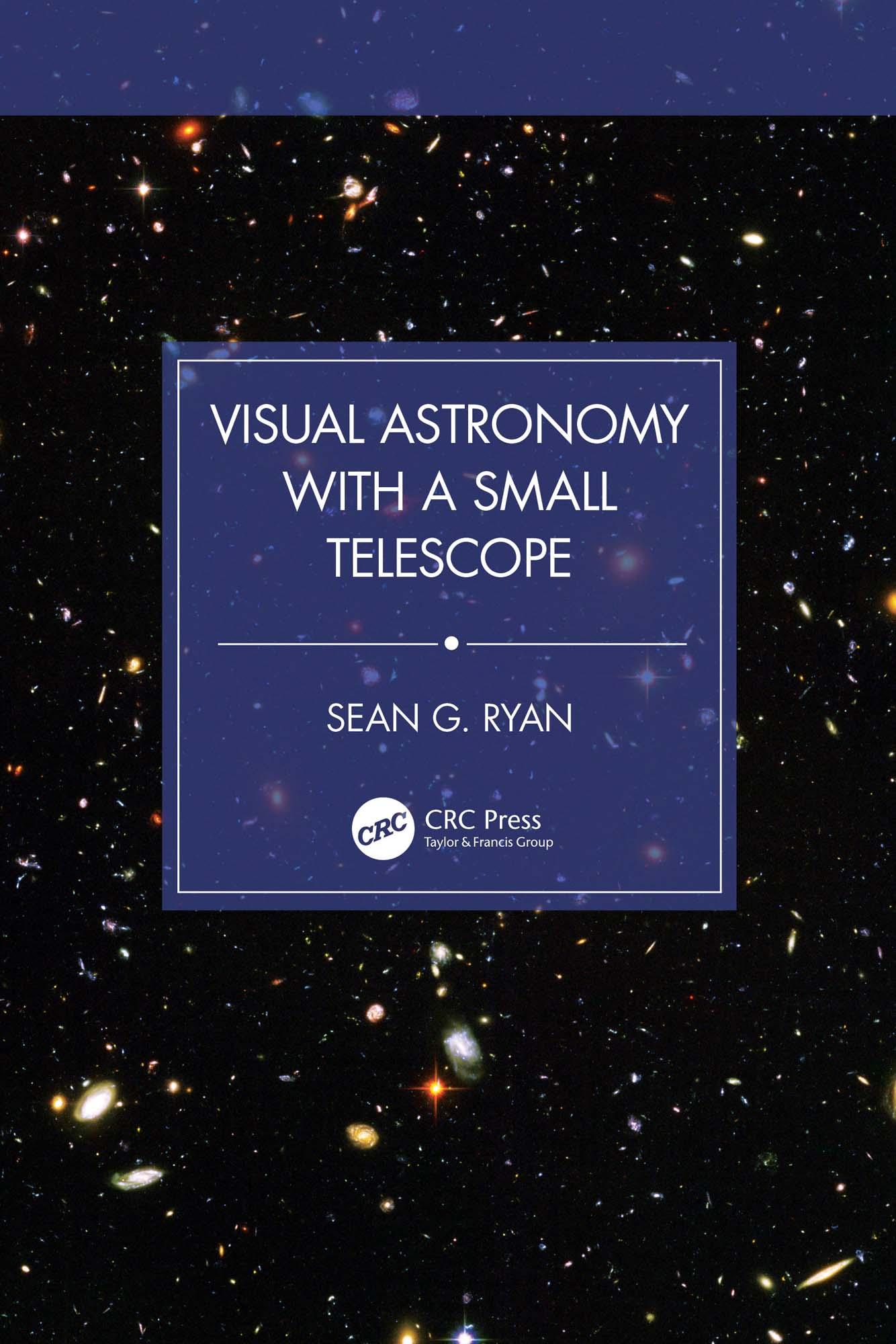
This is a practical guide to using a small astronomical telescope of a size that corresponds to most “first” telescopes – around 75-150 mm, i.e. 3-6 inches, in diameter.
Visual Astronomy with a Small Telescope is for people who are sufficiently interested in astronomy to have purchased a small telescope or received one as a gift, but who are still developing experience of using one. They may have looked at the Moon and major planets and be wondering, “What's next?” There are many books catering for casual star-gazing and many more advanced books dealing with astrophotography and astrophysics, but this is for someone who has acquired their first telescope or soon will and wants to make the most of it.
It explains how the optics of the telescope function, so the reader understands what their telescope can do and how eyepieces should be selected and used depending on the type of object being observed. It details different types of astronomical objects, their astrophysical significance, and how to observe them. It contains 43 detailed, clear charts and describes 380 objects suitable for visual observation with a small telescope and explains how to locate them without needing a computer-controlled telescope. It will help readers make the most of their telescopes to successfully observe the Universe and kick-start a life-long interest in star-gazing.
• Presents essential information on optics, astronomy and astrophysics for anyone with a small telescope.
• Contains 43 detailed charts, based on the constellations and showing stars down to magnitude 8.5, and identifies 380 objects suitable for visual observation with a small telescope.
• Written by a Professor of Astrophysics with experience as both an amateur astronomer and a professional observational astronomer using telescopes at both small and major observatories around the world.
Please see the support materials tab on this webpage to review the errata.
Płać wygodnie kartą, Klarną, Apple Pay lub Google Pay. Nie jesteś zadowolony? Zawsze masz 14-dniową gwarancję zwrotu pieniędzy. Więcej przeczytasz w naszych warunkach. Masz pytania? Napisz do nas na hello@memmo.org.
Memmo ułatwia naukę – gdziekolwiek jesteś na świecie. U nas znajdziesz podręczniki i sprytne narzędzia do nauki w jednym miejscu: streszczenia, quizy, podcasty i fiszki. A do tego Ted, Twój kumpel do nauki, który odpowie na wszystko, co Cię nurtuje. Ponad 50 000 studentów już tu się uczy – stworzone, byś uczył się szybciej i mniej stresował.