
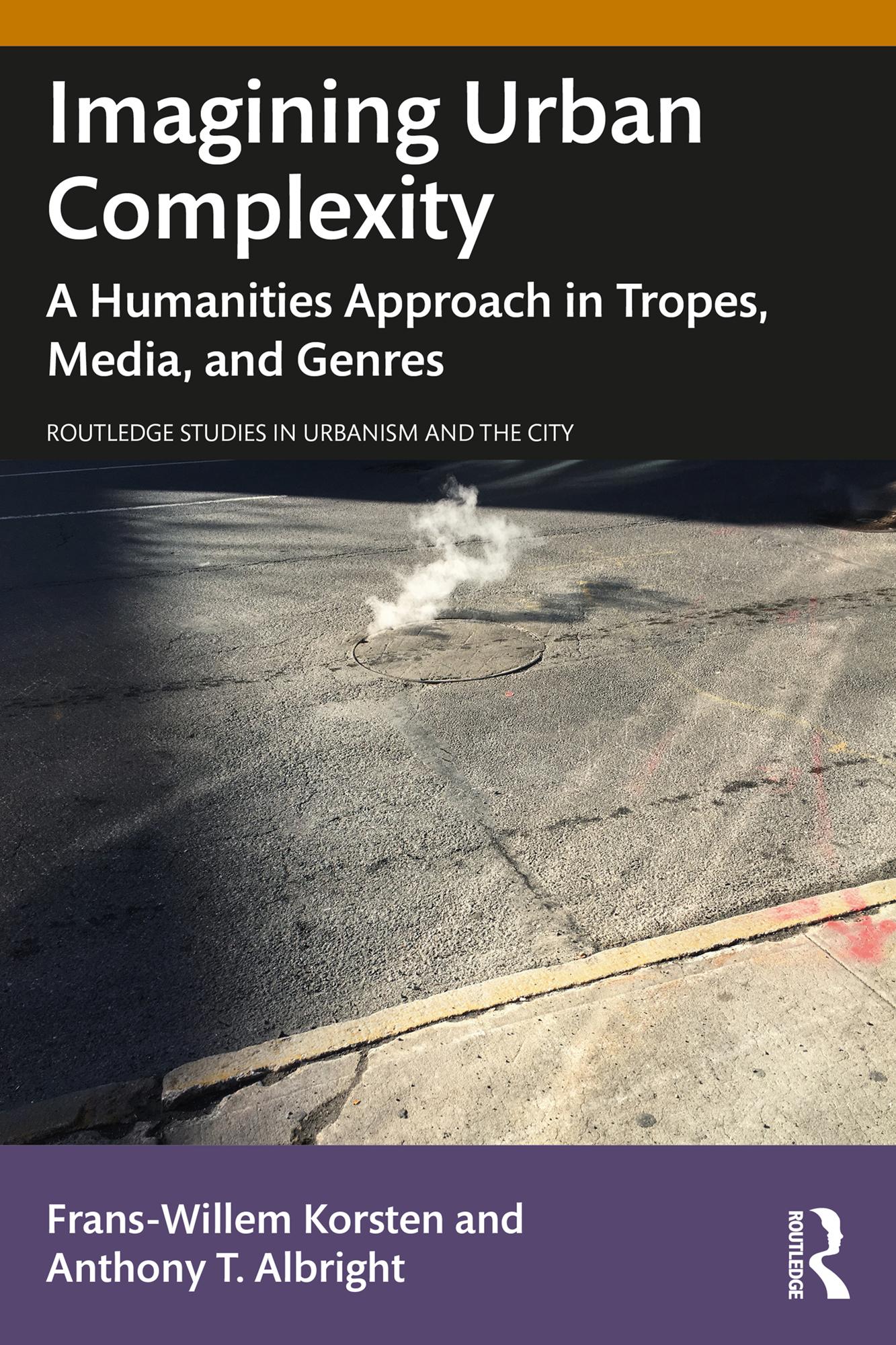
Imagining Urban Complexity introduces passionate and critical perspectives on the link between the humanities and urban studies. It emphasizes tropes, media, and genres as cultural techniques that shape complexity in urban environments by distributing affordances, modes of sensing, and modes of sense-making.
Focusing on urban political and cultural dynamics in 24 global cities, the book shows that urban environments are thematized in literature and art, but are also entities that are shaped, perceived, interpreted, and experienced through sense-making techniques that have long been central concerns of the humanities. These techniques, the book argues, activate a dialectic between urban imaginations and cancellations. Tropes, media, and genres are aesthetically and politically powerful: they propel imaginations and open up multiplicities of urban possibilities, they naturalize actualized orders, and they cancel alternatives. The book moves between close readings of city spaces and more systemic and infrastructural approaches to urban environments, providing tools and strategies that can be adapted and extended to understand urban complexity in different cultural and political contexts.
The book speaks to global audiences from a continental philosophical tradition. It is relevant to undergraduates, postgraduates, and academic researchers in the fields of critical urban studies, urban design, comparative literature, cultural studies, cultural analysis, ecocriticism, political theory, and ethics.
Płać wygodnie kartą, Klarną, Apple Pay lub Google Pay. Nie jesteś zadowolony? Zawsze masz 14-dniową gwarancję zwrotu pieniędzy. Więcej przeczytasz w naszych warunkach. Masz pytania? Napisz do nas na hello@memmo.org.
Memmo ułatwia naukę – gdziekolwiek jesteś na świecie. U nas znajdziesz podręczniki i sprytne narzędzia do nauki w jednym miejscu: streszczenia, quizy, podcasty i fiszki. A do tego Ted, Twój kumpel do nauki, który odpowie na wszystko, co Cię nurtuje. Ponad 50 000 studentów już tu się uczy – stworzone, byś uczył się szybciej i mniej stresował.