
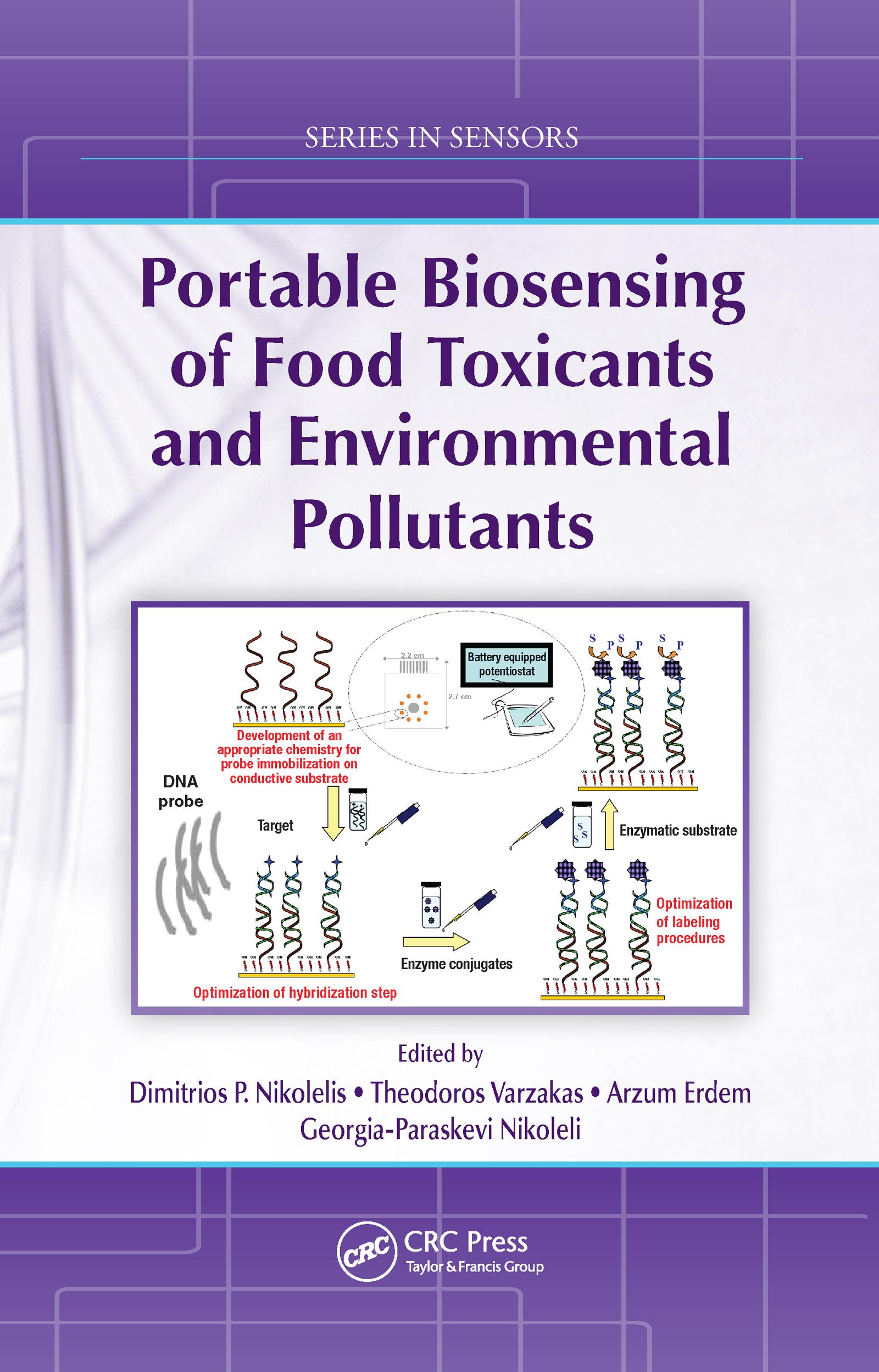
Biosensors are poised to make a large impact in environmental, food, and biomedical applications, as they clearly offer advantages over standard analytical methods, including minimal sample preparation and handling, real-time detection, rapid detection of analytes, and the ability to be used by non-skilled personnel. Covering numerous applications of biosensors used in food and the environment, Portable Biosensing of Food Toxicants and Environmental Pollutants presents basic knowledge on biosensor technology at a postgraduate level and explores the latest advances in chemical sensor technology for researchers.
By providing useful, state-of-the-art information on recent developments in biosensing devices, the book offers both newcomers and experts a roadmap to this technology. In the book, distinguished researchers from around the world show how portable and handheld nanosensors, such as dynamic DNA and protein arrays, enable rapid and accurate detection of environmental pollutants and pathogens.
The book first introduces the basic principles of biosensing for newcomers to the technology. It then explains how the integration of a receptor can provide analytically useful information. It also describes trends in biosensing and examines how a small-sized device can have portability for the in situ determination of toxicants. The book concludes with several examples illustrating how to determine toxicants in food and environmental samples.
Płać wygodnie kartą, Klarną, Apple Pay lub Google Pay. Nie jesteś zadowolony? Zawsze masz 14-dniową gwarancję zwrotu pieniędzy. Więcej przeczytasz w naszych warunkach. Masz pytania? Napisz do nas na hello@memmo.org.
Memmo ułatwia naukę – gdziekolwiek jesteś na świecie. U nas znajdziesz podręczniki i sprytne narzędzia do nauki w jednym miejscu: streszczenia, quizy, podcasty i fiszki. A do tego Ted, Twój kumpel do nauki, który odpowie na wszystko, co Cię nurtuje. Ponad 50 000 studentów już tu się uczy – stworzone, byś uczył się szybciej i mniej stresował.