
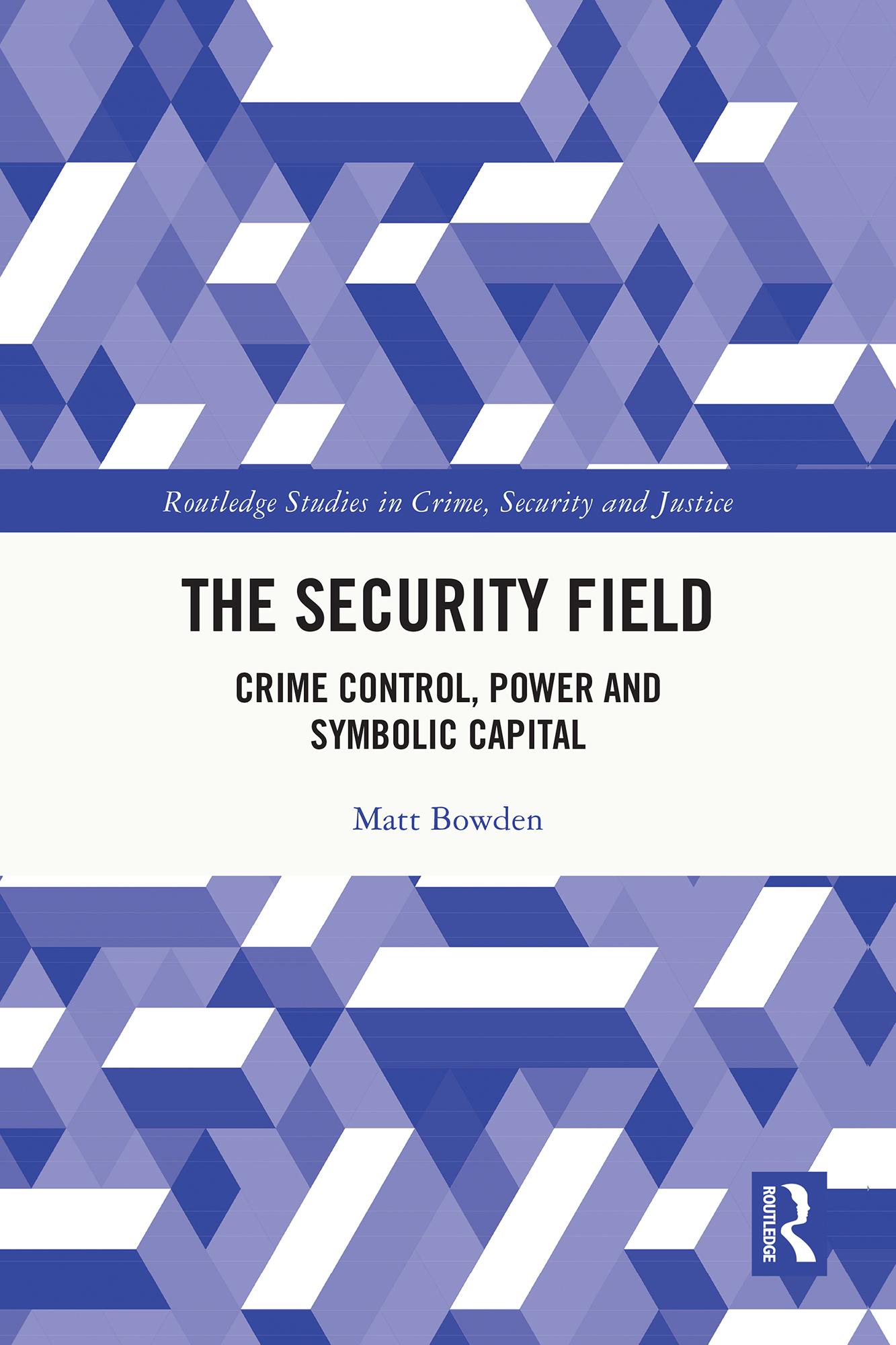
How crime and security are governed has become a critical issue in criminology over the first quarter of the twenty-first century. Today, we see a broader landscape of regulatory players who are involved in the control and management of crime, whether in crime prevention, safety in the community or in providing private security services. The Security Field: Crime Control, Power and Symbolic Capital gets to grips with these changes and argues that this forms an emerging field in which different players appear to compete and co-operate but are ultimately vying to shape and order the field. This book draws on new thinking in the social sciences on questions of crime, fear and security and contributes to the expanding interest on the sociology and criminology of security by offering a Bourdieusian approach to plural policing and the everyday political economy of security.
Drawing from Bourdieu’s concept of field, this book builds a theory of the security field based upon a series of in-depth interviews with security actors such as senior police officers, NGOs, private security professionals, government officials and community safety workers in Ireland. It demonstrates how security producers compete for cultural capital in its many forms – as data, information and relationships – and ultimately as a way of cementing their positions in this emerging field. It shows the dominant power of the formal police and central government in shaping and ordering this relational space. In doing so, The Security Field: Crime Control, Power and Symbolic Capital builds an empirical case from three distinct areas of security production: urban security, community safety and the connections between regulated private security and public crime prevention. It explores the challenges of securitisation in respect of public safety, security and rights and the way in which social problems such as drug use, homelessness and urban marginality are recast as ‘security’ concerns.
An accessible and compelling read, this book will appeal to students and scholars of criminology, sociology, urban studies and security studies.
Płać wygodnie kartą, Klarną, Apple Pay lub Google Pay. Nie jesteś zadowolony? Zawsze masz 14-dniową gwarancję zwrotu pieniędzy. Więcej przeczytasz w naszych warunkach. Masz pytania? Napisz do nas na hello@memmo.org.
Memmo ułatwia naukę – gdziekolwiek jesteś na świecie. U nas znajdziesz podręczniki i sprytne narzędzia do nauki w jednym miejscu: streszczenia, quizy, podcasty i fiszki. A do tego Ted, Twój kumpel do nauki, który odpowie na wszystko, co Cię nurtuje. Ponad 50 000 studentów już tu się uczy – stworzone, byś uczył się szybciej i mniej stresował.